
Petr Filippov / CC BY-SA 3.0, via Wikimedia Commons
Festuca pallens: complete guide
Festuca pallens
Want to see Festuca pallens: complete guide in your garden?
1 minute, no credit card
Overview
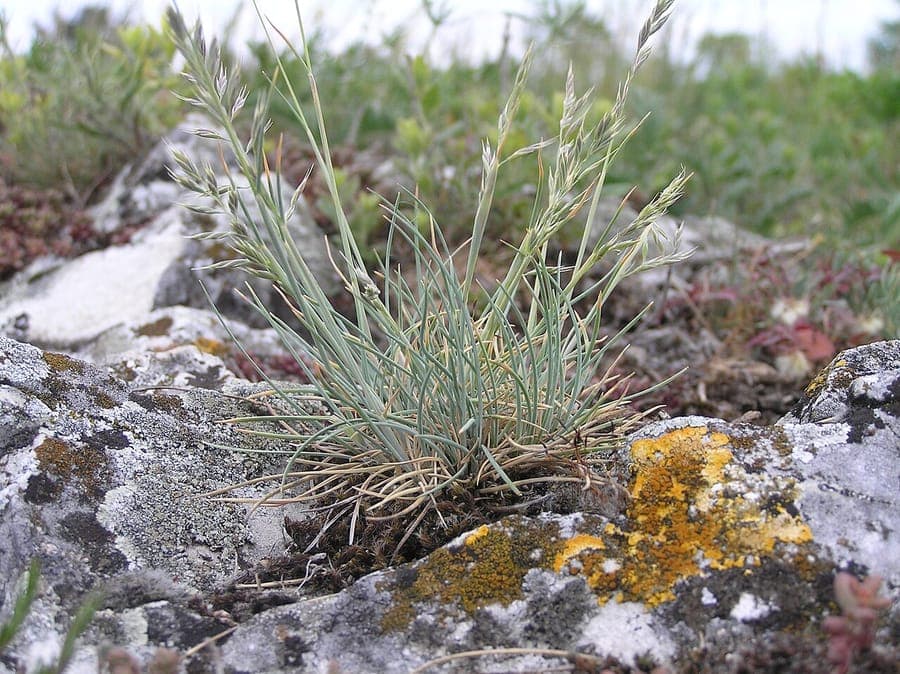
Festuca pallens, commonly known as pale fescue, is a tough, ornamental grass native to rocky slopes and limestone outcrops across central and eastern Europe, including Austria, Germany, Poland and Romania. Belonging to the Poaceae family, it forms neat, cushion-like clumps that stay compact and tidy all year. Reaching just 20–30 cm in height and spreading to about 25 cm wide, it's a smart choice for front borders, rock gardens or dry crevices between paving stones. Its growth habit is strictly clump-forming, meaning it won't invade or spread aggressively.
On gardenworld.app, you can design a drought-resistant planting scheme where Festuca pallens plays a starring role, especially in sunny, well-drained areas that challenge most other plants. It's a go-to for gardeners wanting texture, subtle movement and year-round interest without high maintenance.
Appearance & bloom cycle
This grass stands out with its fine, needle-like leaves in a soft blue-green to silvery hue. The foliage is evergreen in mild winters and forms dense, neat mounds. From late May through June, slender green flowering stems rise to about 40 cm, carrying inconspicuous green flowers that add a soft, airy texture to the border. The seed heads persist into autumn, providing visual interest even after blooming ends.
Unlike some grasses that flop in winter, Festuca pallens holds its shape well. The foliage may bleach slightly in harsh conditions but generally remains attractive. No dramatic seasonal dieback - just steady, reliable presence.
Ideal location
Full sun is best - aim for at least 6 hours of direct light daily. It tolerates light shade, but plants become looser and greener, losing their silvery tone. The ideal spot is dry, open and free-draining. Think rockeries, gravel gardens, raised beds with stony soil, or gaps between stepping stones. Avoid damp, shady corners or areas with heavy competition from tree roots.
If you're unsure about sunlight patterns in your garden, use gardenworld.app to run a sun exposure analysis and pinpoint the perfect spot for your fescue.
Soil requirements
Limestone soils are its natural home, so it thrives in alkaline conditions (pH 7.0–8.5). It demands excellent drainage - sandy, gritty or loamy soils work best. Heavy clay or acidic soils should be amended with horticultural lime and sharp sand or gravel to improve structure and pH. In containers, use a mix of 2 parts multipurpose compost, 1 part sand, and 1 part perlite. Always ensure pots have drainage holes and a base layer of gravel.
Never plant in water-retentive soil; root rot is the main risk.
Free design
Want to see Festuca pallens: complete guide in your garden? Make a free design now.
Watering
Once established, Festuca pallens is extremely drought-tolerant. For the first 4–6 weeks after planting, water weekly to help roots settle. After that, it rarely needs supplemental watering, even in hot summers. Overwatering is more dangerous than underwatering - it leads to weak growth and fungal issues. In prolonged dry spells, a deep soak every 10–14 days is sufficient.
This grass is a top pick for xeriscaping or low-water gardens. It holds up well in USDA zones 4–8, where summer droughts are common.
Pruning
Minimal pruning is needed. In early spring (March), remove any dead or damaged foliage with sharp scissors. Don't cut into the crown - this grass doesn't regrow from bare stems. A light tidy-up is all it requires. No need for seasonal shearing or division unless clumps start to thin after 5+ years.
Maintenance calendar
- January: Leave undisturbed. Monitor for waterlogging.
- February: Check clumps for winter damage.
- March: Light spring clean-up. Remove dead leaves.
- April: New growth emerges. No feeding needed.
- May: Flower stems begin to rise.
- June: Peak bloom. Watch for excess moisture.
- July: Heat-tolerant - no extra care.
- August: Final check during dry spells.
- September: Let seed heads remain for autumn texture.
- October: No action. Plant enters dormancy.
- November: Ensure good drainage before winter rains.
- December: Fully winter-hardy - no protection needed.
Winter hardiness
Festuca pallens is hardy in USDA zones 4 to 8. It tolerates temperatures down to -30°C as long as the soil doesn't stay wet. In cold, damp winters, crown rot can occur. No mulch needed in most climates, but in zone 4, a light layer of straw can help - remove it in early spring to prevent mould.
Companion plants
Pair it with other drought- and lime-loving plants: Thymus, Sedum 'Matrona', Dianthus, or small Echinacea varieties. It contrasts beautifully with silver-foliaged plants like Artemisia or Stachys. Avoid moisture-hungry species like Hostas or ferns. In a gravel garden, it works well with low-growing conifers or Alliums.
Closing
Festuca pallens is a quiet achiever in the garden - not flashy, but dependable and elegant. It brings structure and soft texture to dry, sunny spots where little else thrives. Available at most garden centres, especially those specialising in alpine or rock garden plants. Look for firm, blue-green tufts without browning or sogginess. With the right spot and little attention, it will thrive for years, adding quiet beauty to your planting scheme.
Want to see Festuca pallens: complete guide in your garden? Make a free design now.
Upload a photo, pick a style, and get a photorealistic design with plant list in under a minute.
No credit card required


Similar plants
Sporobolus pungens: complete guide
Sporobolus pungens
Sporobolus pungens is a stoloniferous Mediterranean coastal grass with outstanding salt and drought tolerance, perfect for seaside and dry gardens.
Mediterranean aegilops: complete guide
Aegilops biuncialis
Everything about Aegilops biuncialis, a Mediterranean annual grass with ornamental spikes and outstanding drought tolerance for dry gardens.
Silver bluestem: complete guide
Bothriochloa saccharoides
Full guide to Bothriochloa saccharoides (silver bluestem): site, soil, watering, winter hardiness, pruning, and garden companions.