
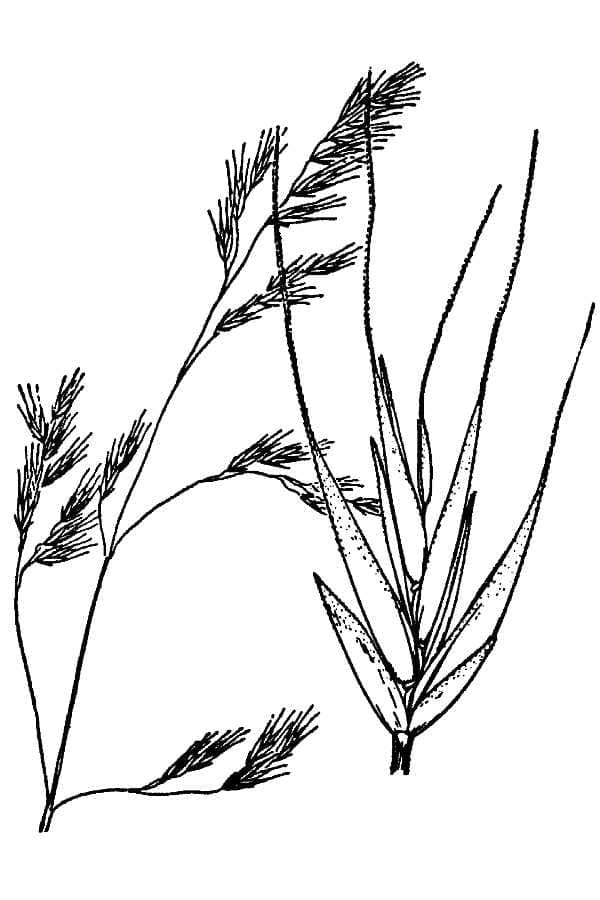
Hitchcock, A. S. (rev. A. Chase) / Public domain, via Wikimedia Commons
Western fescue: complete guide
Festuca occidentalis
Want to see Western fescue: complete guide in your garden?
1 minute, no credit card
Western fescue, scientifically Festuca occidentalis, is a North American native grass species from the Poaceae family. This graceful grass is prized for its compact growth habit, blue-green coloration, and exceptional drought tolerance. The grass grows in tight, loose bunches reaching 30 to 60 centimeters tall, making it ideal for border edges, rock gardens, and xeric mountain gardens.
Western fescue thrives in cold zones with low precipitation and naturally grows from Alaska southwestward through North America. This grass species is truly drought tolerant and winter hardy to very low temperatures. The foliage displays a subtle grey-green color that contrasts beautifully with other garden plants. From May through July, the grass produces pale yellow flower spikes that sway gently in the breeze. These delicate inflorescences contribute to the plant's graceful character.
Appearance
Western fescue grows in attractive, loose bunches with narrow linear leaves. The foliage displays medium texture and grey-green to slightly blue-tinged coloration. The plant typically reaches 30 to 60 centimeters in height with similar spread. Flower panicles emerge in June-July and are pale yellow to straw colored, measuring approximately 8 to 12 centimeters long. These inflorescences remain relatively inconspicuous yet contribute to the overall natural beauty.
Ideal location and light
Western fescue performs best in full sun locations. Position the grass where it receives at least 6 hours of direct sunlight daily. The plant tolerates partial shade but grows more compact in full sun. In hot climates, light afternoon shade may be acceptable. The grass excels in open fields and on slopes where sunlight flows unobstructed.
Soil and nutrition
Western fescue proves unfussy about soil type. It thrives in well-draining, sand to loam soils. The plant grows even in poor, low-nutrient soils characteristic of mountain meadows. This North American native naturally inhabits mountain regions with moderate soils. Prefer pH 6.0 to 7.5. Heavy clay soils can be amended with sand to improve structure.
Free design
Want to see Western fescue: complete guide in your garden? Make a free design now.
Watering
Western fescue is extremely drought tolerant, particularly once established. Regular watering during the first growing season helps roots establish deeply. After establishment, the grass withstands extended dry periods characteristic of its native habitat. In climates with normal rainfall, supplemental watering becomes unnecessary. Water only during extreme drought. Excessive moisture can promote fungal disease.
Pruning and maintenance
Western fescue requires minimal maintenance. Pruning is unnecessary, but you can remove old growth in spring (March-April) by gently cutting the grass back to approximately 10 centimeters. This stimulates fresh new growth. Otherwise, simply allow the grass to grow naturally. The plant becomes neither invasive nor unruly.
Maintenance calendar
March-April: Gently trim old material if desired. Provide minimal feeding. May-June: Enjoy vigorous growth and flowering. No watering unless extremely dry. July-September: Plant remains highly decorative. Allow natural growth. October-February: Grass remains evergreen. No specific maintenance required.
Winter hardiness
Western fescue ranks as winter hardy in USDA zones 4 to 9, with probable hardiness in even colder zones. This grass survives temperatures to minus 35 degrees Celsius. In cold regions, some winter discoloration may occur, but plants recover quickly in spring. No winter protection is necessary in temperate climates.
Propagation
Western fescue divides easily in spring. Carefully dig the plant and divide it into small bunches, each retaining roots. Replant at regular spacing. Seed propagation is also possible but requires patience. Seed can be sown in spring on cool, moist seed compost.
Companion plants
Western fescue combines beautifully with other drought-tolerant plants. Stonecrops (Sedum), Penstemon, Lupine, and Geum create stunning combinations. Low alpine rock plants can be underplanted. Yellow or purple flowers contrast nicely against the blue-green grass. Alpine garden specimens like mountain mint and low-growing sedums work excellently.
Conclusion
Western fescue represents an outstanding grass species for those seeking dry-climate, hardy, reliable plants. With its compact growth, longevity, and minimal maintenance requirements, it proves valuable in contemporary gardens. Available at quality garden centers throughout North America and increasingly in Europe.
Want to see Western fescue: complete guide in your garden? Make a free design now.
Upload a photo, pick a style, and get a photorealistic design with plant list in under a minute.
No credit card required


Similar plants
Sporobolus pungens: complete guide
Sporobolus pungens
Sporobolus pungens is a stoloniferous Mediterranean coastal grass with outstanding salt and drought tolerance, perfect for seaside and dry gardens.
Mediterranean aegilops: complete guide
Aegilops biuncialis
Everything about Aegilops biuncialis, a Mediterranean annual grass with ornamental spikes and outstanding drought tolerance for dry gardens.
Silver bluestem: complete guide
Bothriochloa saccharoides
Full guide to Bothriochloa saccharoides (silver bluestem): site, soil, watering, winter hardiness, pruning, and garden companions.