
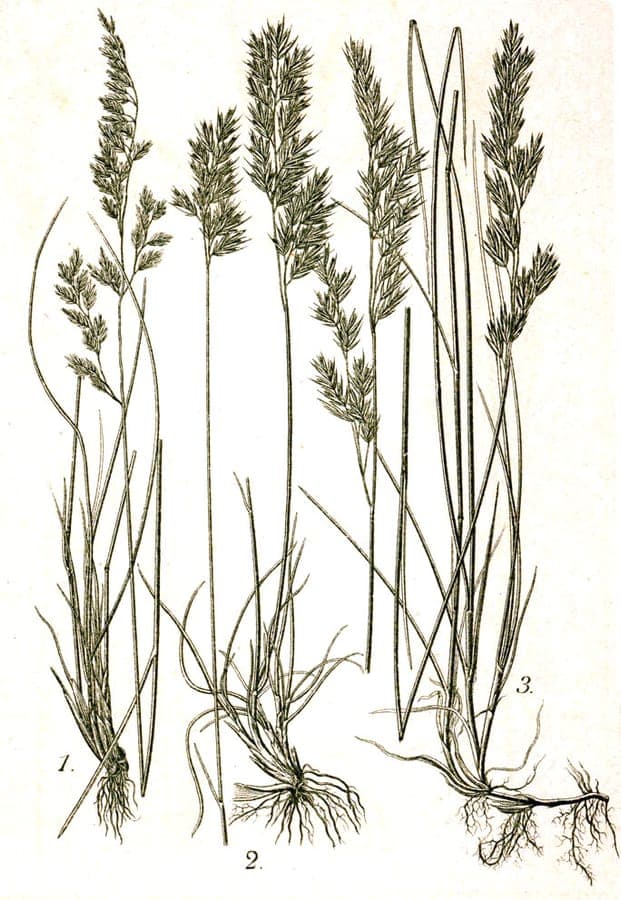
Johann Georg Sturm (Painter: Jacob Sturm) / Public domain, via Wikimedia Commons
Shade fescue: complete guide
Festuca heterophylla
Want to see Shade fescue: complete guide in your garden?
1 minute, no credit card
Overview
Festuca heterophylla, commonly known as shade fescue, is a subtle yet striking ornamental grass that deserves a spot in more UK and northern European gardens. Native to woodland margins across countries like France, Germany and Great Britain, this small perennial grass thrives in conditions where many other grasses fail - partial to full shade and well-drained, lean soils. It's not flashy, but it brings year-round texture and quiet elegance to garden borders, rockeries and underplanting schemes.
Unlike sun-loving grasses such as Miscanthus or Stipa, shade fescue prefers dappled light or the cool side of shrubs and trees. On gardenworld.app, you can simulate how this grass performs under different canopy densities, helping you place it exactly where it'll thrive without trial and error.
Appearance & bloom cycle
Shade fescue forms tight, cushion-like clumps up to 25 cm tall, with fine, needle-like leaves that range from soft grey-green to a striking blue-grey, depending on light exposure and soil pH. The foliage remains evergreen in milder winters but may turn brown during prolonged cold spells.
In late spring, around May to June, delicate panicles rise to about 35 cm, carrying tiny purplish flowers that catch the breeze. These aren't showy, but they add movement and attract small pollinators like hoverflies and solitary bees. By late summer, the seed heads disperse naturally, giving a soft, airy effect.
The plant grows slowly, maintaining its shape for 4–5 years before the centre may start to thin. At that point, lifting and dividing in early spring will rejuvenate it.
Ideal location
This grass excels in partial shade - think north-facing borders, beneath light-canopy trees like birch or hornbeam, or tucked between larger perennials that provide morning sun and afternoon shade. It handles dry shade surprisingly well, a rare trait among ornamental grasses.
Avoid full sun in hot climates, as intense afternoon rays can scorch the fine leaves and dry out the root zone too quickly. In urban gardens with pollution and compacted soil, shade fescue still manages to hold its own, making it a smart choice for courtyards or shaded patios.
Use gardenworld.app to map sun patterns in your garden and find the perfect microclimate for Festuca heterophylla, especially if you're working with tricky, shaded corners.
Soil requirements
Well-drained soil is non-negotiable. Shade fescue hates wet feet and will rot in heavy clay if drainage isn't improved. Amend the soil with grit, horticultural sand or pumice to a depth of at least 15 cm. A pH between 5.5 and 7.5 is ideal - slightly acidic to neutral.
Avoid rich, fertile soils. Too much organic matter encourages weak, floppy growth. This grass thrives on neglect: poor soil keeps it compact and intensifies the blue leaf tones. No fertiliser needed.
Free design
Want to see Shade fescue: complete guide in your garden? Make a free design now.
Watering
Once established, shade fescue is drought-tolerant. During the first growing season, water weekly if rainfall is less than 25 mm per week. Give young plants about 5–10 litres per week during dry spells.
Water at the base, not overhead, to prevent fungal issues. Early morning is best. Rainwater is preferred - tap water with high lime content can cause leaf discolouration over time.
Pruning
Prune once a year, in early March. Cut back old foliage to about 5 cm above ground level using sharp shears or hedge trimmers. Remove all dead material - leaving it in place can harbour slugs and promote fungal growth.
Unlike some grasses, it doesn't require frequent division. Every 4–5 years, lift the clump in spring, split it with a spade or knife, and replant sections 20 cm apart to maintain vigour.
Maintenance calendar
- January: Check for frost damage, remove any soggy foliage
- February: Prepare for pruning, gather tools
- March: Cut back old growth, divide if needed
- April: New growth emerges, no feeding required
- May: Flower spikes begin to form
- June: Full bloom, monitor for dryness
- July: Low maintenance, watch for pests
- August: Drought resilient, minimal watering
- September: Assess clump density, consider dividing
- October: Allow seed heads to disperse or cut for tidiness
- November: Leave standing for winter interest
- December: Dormant period, no care needed
Winter hardiness
Shade fescue is hardy in USDA zones 5 to 8 (-23°C to -12°C). In the UK (zone 8), it survives most winters without protection. Evergreen in mild areas, it may brown in harsh conditions but recovers quickly in spring.
No winter mulch is needed unless your soil is very wet. In those cases, a light top-dressing of gravel or pine bark helps shed excess moisture from the crown.
Companion plants
Pair shade fescue with plants that share its preference for dry, shady conditions. Excellent companions include Helleborus orientalis, Alchemilla mollis, Geranium macrorrhizum, and ferns like Dryopteris filix-mas. The blue-grey foliage contrasts beautifully with golden variegated ivy or white-flowering Anemone nemorosa.
Avoid vigorous spreaders like mint or ground elder. Stick to slow, clump-forming perennials to keep competition low.
Closing
Festuca heterophylla is a quiet achiever in the shade garden. It asks for little - good drainage, light shade, no fertiliser - and gives back with year-round structure and subtle beauty. Look for it in spring at garden centres across the UK, or order online from reputable nurseries.
For design inspiration, use gardenworld.app to layer shade fescue into your planting plan and visualise how it complements other foliage textures and seasonal blooms.
Want to see Shade fescue: complete guide in your garden? Make a free design now.
Upload a photo, pick a style, and get a photorealistic design with plant list in under a minute.
No credit card required


Similar plants
Sporobolus pungens: complete guide
Sporobolus pungens
Sporobolus pungens is a stoloniferous Mediterranean coastal grass with outstanding salt and drought tolerance, perfect for seaside and dry gardens.
Mediterranean aegilops: complete guide
Aegilops biuncialis
Everything about Aegilops biuncialis, a Mediterranean annual grass with ornamental spikes and outstanding drought tolerance for dry gardens.
Silver bluestem: complete guide
Bothriochloa saccharoides
Full guide to Bothriochloa saccharoides (silver bluestem): site, soil, watering, winter hardiness, pruning, and garden companions.