
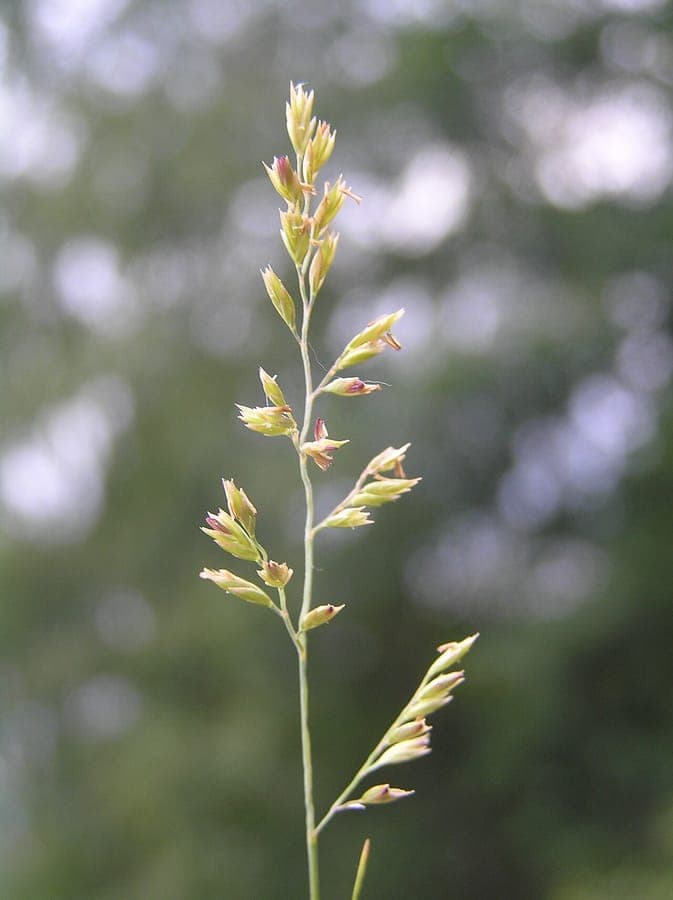
Petr Filippov / CC BY-SA 3.0, via Wikimedia Commons
Fine-leaf sheep fescue: complete guide
Festuca filiformis
Want to see Fine-leaf sheep fescue: complete guide in your garden?
1 minute, no credit card
Overview
Fine-leaf sheep fescue (Festuca filiformis) is a quietly resilient ornamental grass that brings subtle texture and year-round interest to the garden. Native to a broad swath of Europe-from Great Britain and France to Finland and central Russia-this cool-season grass thrives in regions with cold winters and dry summers. It's perfectly suited to USDA hardiness zones 4 through 8, making it a reliable performer across much of the UK, northern Europe, and large parts of North America. Standing no taller than 25 cm, it forms compact, cushion-like clumps that slowly expand to about 30 cm in diameter over several years.
Unlike more aggressive grasses, Festuca filiformis is well-behaved and non-invasive, making it ideal for small-scale gardens, edging, or rockeries. Its narrow, hair-like leaves have a soft, silvery-blue hue that glows in full sun. This plant doesn't demand attention, but once you notice it, you'll find yourself using it repeatedly. On gardenworld.app, you can design a planting scheme that highlights fine-leaf sheep fescue in dry, sunny spots where other plants struggle.
Appearance & bloom cycle
The foliage is the star here. Leaves are barely 1 mm wide and up to 20 cm long, forming dense, upright tufts that remain neat and tidy all season. In early summer-typically June to July-slender flower stalks rise about 30 cm above the foliage. These carry airy, pale lilac or beige inflorescences that catch the light beautifully. The bloom is delicate and short-lived, but the seed heads dry gracefully, adding subtle texture through late summer and autumn.
By late fall, the clump takes on a soft, tawny hue, and while it may flatten slightly under snow or heavy rain, it rarely collapses outright. It stays semi-evergreen in milder climates, with new growth emerging in early spring. There's no dramatic seasonal dieback-just a quiet transition that suits low-maintenance and naturalistic gardens.
Ideal location
Full sun is essential. This grass needs at least six hours of direct sunlight daily to maintain its tight form and vibrant color. In partial shade, the clumps become loose and floppy, eventually falling open in the center. Plant it in open, exposed areas: rock gardens, gravel beds, between pavers, or as a front-border accent. Avoid damp, shaded corners-these conditions lead to rot and fungal issues.
If you're unsure whether your garden gets enough sun, gardenworld.app offers sunlight analysis tools to help you place Festuca filiformis exactly where it will thrive.
Soil requirements
Well-drained soil is non-negotiable. Fine-leaf sheep fescue tolerates poor, sandy, or gravelly soils but fails in heavy clay or waterlogged conditions. If your soil is dense, amend it with coarse sand or perlite to a depth of 15–20 cm. A neutral to slightly acidic pH (5.5–7.5) is ideal, but the plant is adaptable as long as drainage is good.
Do not enrich the soil with compost or manure. Rich soils encourage weak, floppy growth and reduce winter hardiness. This grass performs best in lean conditions-its natural habitat includes dry meadows and rocky outcrops, not fertile garden beds.
Free design
Want to see Fine-leaf sheep fescue: complete guide in your garden? Make a free design now.
Watering
Water regularly during the first six weeks after planting-about once a week, unless rain covers it. After that, established plants are highly drought-tolerant and rarely need supplemental watering. In prolonged dry spells (over four weeks without rain), give a deep soak every 10–14 days. Avoid frequent light sprinklings, which encourage shallow roots.
Once established, this grass survives on rainfall alone in most temperate climates. Overwatering is a greater threat than drought.
Pruning
No pruning is needed for flowering, but in late winter or early spring (February to March), gently rake out old, dead blades by hand. Avoid using shears-this can damage emerging new growth. The goal is to remove debris and open up the center of the clump, allowing light and air to reach the base. Discard the debris to reduce disease risk.
Maintenance calendar
- Jan: Dormant; no action needed
- Feb: Begin clearing dead foliage
- Mar: Remove old leaves; new growth appears
- Apr: Active growth resumes; no fertiliser
- May: Growth accelerates; check spacing
- Jun: Flowering begins; height peaks
- Jul: Seed heads visible; minimal care
- Aug: Seed heads dry; texture develops
- Sep: Growth slows; reduce watering
- Oct: Prepare for dormancy; no pruning
- Nov: Foliage fades; clump remains intact
- Dec: Fully dormant; withstands frost
Winter hardiness
Fine-leaf sheep fescue is extremely cold-hardy, surviving temperatures down to -34°C (USDA zone 4). The foliage may bronze in winter but rarely dies back completely. Snow cover can flatten it temporarily, but it rebounds in spring. No mulch or protection is needed. The real danger is winter wetness-ensure the site drains well to prevent crown rot.
Companion plants
Pair with drought-tolerant perennials like Sedum spectabile, Thymus vulgaris, Achillea millefolium, or Nepeta faassenii. The silvery foliage contrasts beautifully with purple, yellow, or white blooms. Avoid moisture-loving plants like hostas or ferns. For best visual impact, plant in groups of 3–5, spaced 20 cm apart.
Closing
Fine-leaf sheep fescue is a quiet achiever-a plant that asks for little but gives much. Its fine texture, drought resistance, and winter presence make it a go-to for modern, sustainable gardens. You'll find it at garden centres across the UK and Europe, including Intratuin, Gamma, OBI, and Hornbach. This year, try using it to soften hardscapes or unify mixed plantings. For inspiration, visit gardenworld.app and create a design that puts Festuca filiformis at the heart of a low-water, high-character garden.
Want to see Fine-leaf sheep fescue: complete guide in your garden? Make a free design now.
Upload a photo, pick a style, and get a photorealistic design with plant list in under a minute.
No credit card required


Similar plants
Sporobolus pungens: complete guide
Sporobolus pungens
Sporobolus pungens is a stoloniferous Mediterranean coastal grass with outstanding salt and drought tolerance, perfect for seaside and dry gardens.
Mediterranean aegilops: complete guide
Aegilops biuncialis
Everything about Aegilops biuncialis, a Mediterranean annual grass with ornamental spikes and outstanding drought tolerance for dry gardens.
Silver bluestem: complete guide
Bothriochloa saccharoides
Full guide to Bothriochloa saccharoides (silver bluestem): site, soil, watering, winter hardiness, pruning, and garden companions.