
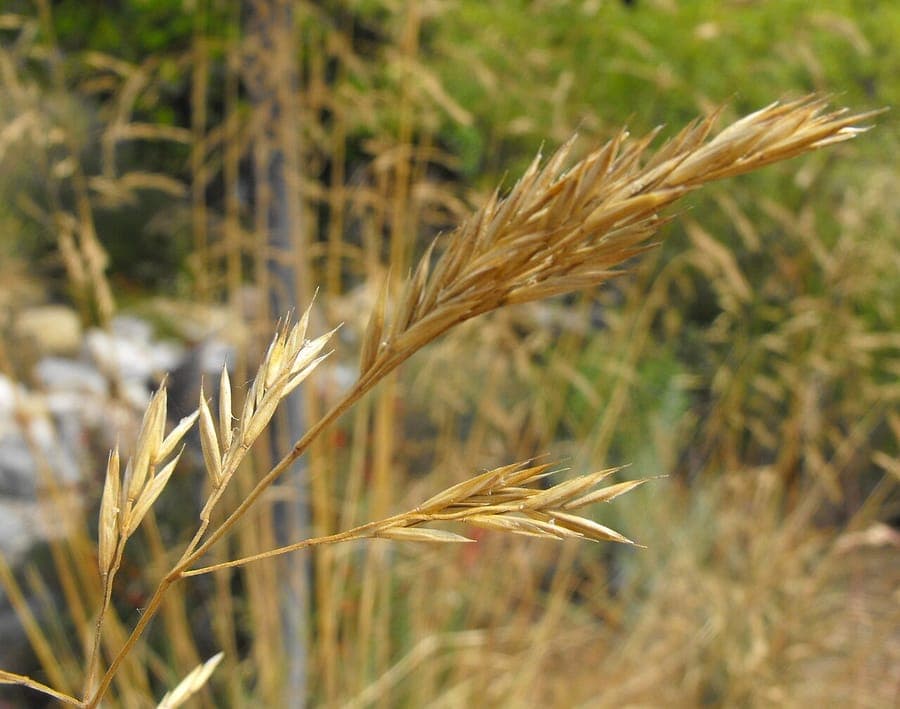
Stickpen / Public domain, via Wikimedia Commons
Festuca californica: complete guide
Festuca californica
Want to see Festuca californica: complete guide in your garden?
1 minute, no credit card
Overview
Festuca californica, known as California fescue, is a very popular ornamental grass that is endemic to Oregon and California. This grass reaches 60-90 centimeters in its natural habitats and forms elegant dense clumps.
The plant owes its popularity to its highly ornamental appearance, drought tolerance, and beautiful golden-brown fall coloring. It is an excellent choice for wildlife gardens, dry borders, and Mediterranean garden designs.
Appearance & bloom
Festuca californica forms dense, upright clumps approximately 45-60 centimeters tall. The foliage is mid-green to blue-green, fine in texture. During the bloom period (May-July), the grass reaches 60-90 centimeters including panicles.
The panicles are approximately 15-20 centimeters long, light purple-brown in color, and very decorative. They give the grass a very elegant appearance. The panicles remain attractive for a long time, even after seed dispersal.
In fall, the foliage turns golden-brown to red-brown, providing very attractive garden contrast. This fall coloring is actually the highlight of the growing year.
Ideal location
Festuca californica requires full sun - minimum 6-8 hours direct sunlight daily. In shade, the grass becomes thin and untidy. In very hot climates, light afternoon shade may be beneficial, especially in areas above 35 degrees Celsius.
The plant is very wind tolerant - this is actually beneficial for maintaining a compact form. It belongs in open, sunny areas, not in sheltered corners.
Sea influence is not a problem - this grass also grows well in coastal zones with salt aerosol.
Soil
Festuca californica requires very well-drained soil. This grass performs poorly in heavy clay or wet soils. It thrives best in sandy, loamy, or gravelly substrate.
The plant thrives in poor, nutrient-poor soils. Nutrient-rich soil can lead to rank growth that is less attractive. pH 6.0-7.5 is ideal.
The grass thrives in calcareous soils and marine clay soils. Add sand and gravel to heavy soils for better drainage.
Watering
Festuca californica is very drought tolerant once established. After the first year, the grass can grow almost without supplemental water in average rainfall areas.
During planting (first summer), regular watering is needed until deep rooting. After that, drastically reduce watering - only water in extreme drought.
Excessive water causes problems. The grass performs much worse with stagnant water than drought. In very rainy climates, drainage improvements may be needed.
Free design
Want to see Festuca californica: complete guide in your garden? Make a free design now.
Pruning
Festuca californica requires minimal pruning. Leave the panicles - they are very decorative, even after they have finished blooming. They provide food for birds and other wildlife.
In spring (March-April), you can "lightly tidy" the grass by gently removing dead foliage. This stimulates fresh growth.
Dead panicles can be removed in late winter, but many gardeners leave them for winter interest.
Maintenance calendar
Spring (March-May): Plant in early spring. Water regularly until well-rooted. Gently remove previous year's dead foliage. No feeding needed.
Summer (June-August): Check water only in extreme drought. Enjoy blooming. Plant thrives in heat. No feeding needed.
Autumn (September-October): No maintenance needed. Enjoy golden-brown fall coloring. Seeds ripen and fall naturally.
Winter (November-February): Leave dead panicles for winter interest. Remove only in March. Plant survives without problems.
Winter hardiness
Festuca californica is winter hardy to approximately -10 degrees Celsius (zone 8-9). In temperate climates (zone 7), it can grow reasonably well, but extreme cold (-20 degrees or colder) may cause problems.
In very cold climates (zone 6 and colder), this grass will not permanently survive. Grow it as an annual or protect it against extreme frost.
In Mediterranean and warm-temperate climates, this grass is a very hardy choice that lasts for years.
Companion plants
Festuca californica combines beautifully with other drought-tolerant plants: Salvia, Coreopsis, Rudbeckia, Achillea, other California natives. The fine texture of this grass provides good contrast with softer forms.
In wildlife-friendly gardens, this grass is an excellent choice - the seeds feed birds throughout fall and winter.
In containers, this grass can grow spectacularly with desert plants and other drought lovers.
Closing
Festuca californica is a fantastic choice for anyone seeking an ornamental grass with true California character. It combines elegance with practical drought tolerance.
The golden-brown fall coloring is actually the highlight. This grass transforms your garden into a warm, golden landscape in September-October.
Available from specialized native plant nurseries. Growing from seed gives fast, economical results. Small plugs also grow quickly.
Want to see Festuca californica: complete guide in your garden? Make a free design now.
Upload a photo, pick a style, and get a photorealistic design with plant list in under a minute.
No credit card required


Similar plants
Sporobolus pungens: complete guide
Sporobolus pungens
Sporobolus pungens is a stoloniferous Mediterranean coastal grass with outstanding salt and drought tolerance, perfect for seaside and dry gardens.
Mediterranean aegilops: complete guide
Aegilops biuncialis
Everything about Aegilops biuncialis, a Mediterranean annual grass with ornamental spikes and outstanding drought tolerance for dry gardens.
Silver bluestem: complete guide
Bothriochloa saccharoides
Full guide to Bothriochloa saccharoides (silver bluestem): site, soil, watering, winter hardiness, pruning, and garden companions.