
Jan Kops / Public domain, via Wikimedia Commons
Reed fescue: complete guide
Festuca arundinacea
Want to see Reed fescue: complete guide in your garden?
1 minute, no credit card
Overview
Reed fescue (Festuca arundinacea) is a tough, clump-forming perennial grass in the Poaceae family that thrives in tough garden conditions. Originally from Europe, it's now widely naturalised across temperate zones and commonly used in agriculture, roadside planting, and sustainable landscaping. While often seen as a pasture grass, it has real potential in ornamental gardens – especially when you're after structure, movement, and resilience.
Don't overlook it just because it's common. Reed fescue brings subtle texture and year-round interest, especially in winter when the dried foliage catches frost and low light. It's not flashy, but it's dependable. If you're planning a naturalistic planting, gardenworld.app can help you design a layout that integrates reed fescue with complementary plants and proper spacing.
Appearance & bloom cycle
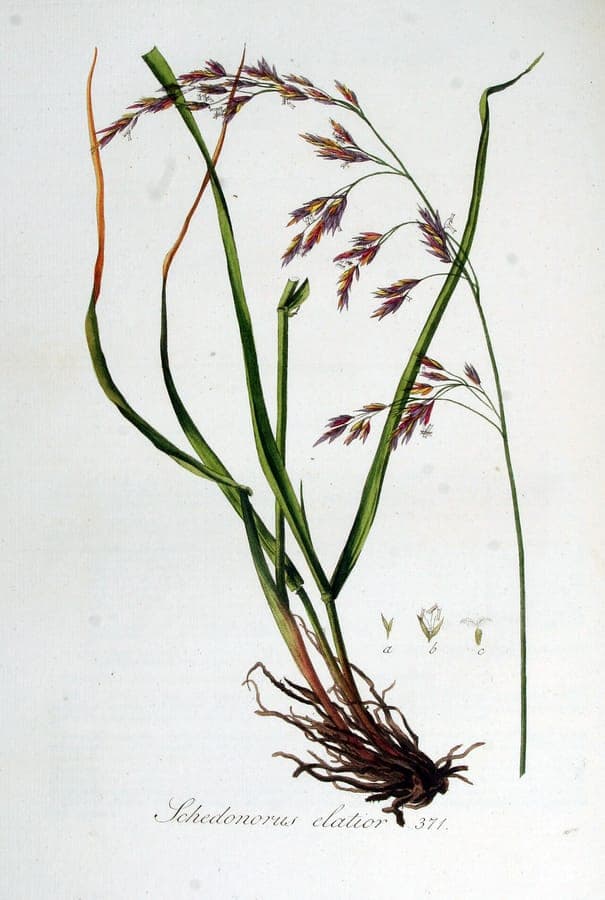
Reed fescue grows 60–120 cm tall, with narrow, rolled leaves that are blue-green to grey-green in colour. The foliage forms dense tussocks that stay upright through most seasons. From late May to July, airy panicles rise above the foliage – delicate, open flower heads that reach 20–30 cm in length. They're not showy like some ornamental grasses, but they add lightness and movement, especially in a breeze.
After blooming, seeds develop and disperse easily by wind. By autumn, the plant shifts to golden-brown, maintaining strong structure well into winter. Even under snow, the tufts remain visible, offering texture and habitat for overwintering insects. The central part of older clumps (4+ years) may start to die out – a natural process that signals it's time to divide.
Ideal location
Full sun is best – aim for at least 6 hours of direct sunlight daily. It tolerates partial shade, but in low light, the stems tend to flop, reducing its visual impact. Reed fescue works well in meadow plantings, slopes, gravel gardens, or as a background element in mixed borders.
Its deep root system makes it excellent for stabilising banks or dry, exposed areas. It handles coastal conditions and moderate wind. Avoid dense shade or constantly waterlogged soils, as it may get outcompeted by more aggressive grasses. For smart placement ideas, use gardenworld.app to visualise how reed fescue fits into your garden's sun and wind patterns.
Soil requirements
This grass isn't fussy. It grows in sandy, loamy, or clay soils as long as drainage is reasonable. It tolerates pH from slightly acidic (5.5) to slightly alkaline (7.8). It doesn't need fertile soil – in fact, rich soils encourage weak, floppy growth and reduce winter hardiness.
Avoid amending the soil with compost or fertiliser. If your soil is compacted, loosen it to 20 cm depth before planting, but don't over-enrich. Reed fescue prefers lean conditions and will outperform many ornamental grasses in poor, dry spots.
Free design
Want to see Reed fescue: complete guide in your garden? Make a free design now.
Watering
Once established (after first growing season), it's highly drought-tolerant. Young plants need regular watering – about once a week during dry spells in June and July, applying 10 litres per m² to encourage deep roots.
In average UK or Pacific Northwest conditions, rainfall is usually sufficient after establishment. During prolonged summer droughts, occasional deep watering helps, but the grass often survives with minimal intervention. Overwatering leads to weak growth and fungal issues.
Pruning
No pruning is strictly required, but cutting back in early spring (March or early April) improves appearance and promotes fresh growth. Trim old foliage to 15–20 cm above ground level using shears or a hand-held strimmer. Avoid cutting into the crown – that can damage new shoots.
If the clump is thinning in the centre, divide it every 4–5 years. Lift the plant in early spring, split with a sharp spade into 15 cm sections, and replant 30–40 cm apart. Discard the woody centre.
Maintenance calendar
- January: No action. Check for collapsed foliage.
- February: Prepare tools for spring cutback.
- March: Cut back old growth, divide if needed.
- April: Watch for new shoots, control weeds.
- May: Flowering begins, no extra care.
- June: Peak bloom, seed heads form.
- July: Blooming fades, no watering needed.
- August: Monitor young plants in drought.
- September: Let seed heads stand.
- October: Leave standing for winter interest.
- November: No cutting; provide shelter for insects.
- December: Fully dormant; frost-hardy.
Winter hardiness
Reed fescue is semi-evergreen and hardy to USDA zones 4–8 (-25°C). It survives harsh winters without protection. The standing foliage insulates the crown and supports wildlife. Avoid cutting it down in autumn – wait until late winter or early spring.
In colder zones, a light mulch may help, but only if soil stays well-drained. Wet, frozen soil is more damaging than cold alone.
Companion plants
Pair with upright grasses like Calamagrostis x acutiflora 'Karl Foerster' or Sporobolus heterolepis. For colour contrast, add Echinacea purpurea, Rudbeckia fulgida, or Salvia nemorosa. These share similar needs: sun, good drainage, and low fertility.
Avoid invasive species like Phalaris arundinacea or Reynoutria japonica. In wilder areas, it works well with shrubs like Cornus sericea or Rosa glauca.
Closing
Reed fescue is a resilient, low-input grass that deserves a place in more gardens. It handles tough spots, prevents erosion, and adds quiet beauty through the seasons. You'll find it at garden centres across the UK and North America, often sold as plugs or seed.
Look for reputable suppliers to avoid overly aggressive cultivars. And when designing your planting scheme, try gardenworld.app to model spacing, light exposure, and seasonal changes - so your reed fescue thrives without taking over.
Want to see Reed fescue: complete guide in your garden? Make a free design now.
Upload a photo, pick a style, and get a photorealistic design with plant list in under a minute.
No credit card required


Similar plants
Sporobolus pungens: complete guide
Sporobolus pungens
Sporobolus pungens is a stoloniferous Mediterranean coastal grass with outstanding salt and drought tolerance, perfect for seaside and dry gardens.
Mediterranean aegilops: complete guide
Aegilops biuncialis
Everything about Aegilops biuncialis, a Mediterranean annual grass with ornamental spikes and outstanding drought tolerance for dry gardens.
Silver bluestem: complete guide
Bothriochloa saccharoides
Full guide to Bothriochloa saccharoides (silver bluestem): site, soil, watering, winter hardiness, pruning, and garden companions.