
Krzysztof Ziarnek, Kenraiz / CC BY-SA 4.0, via Wikimedia Commons
Wood fescue: complete guide
Festuca altissima
Want to see Wood fescue: complete guide in your garden?
1 minute, no credit card
Overview
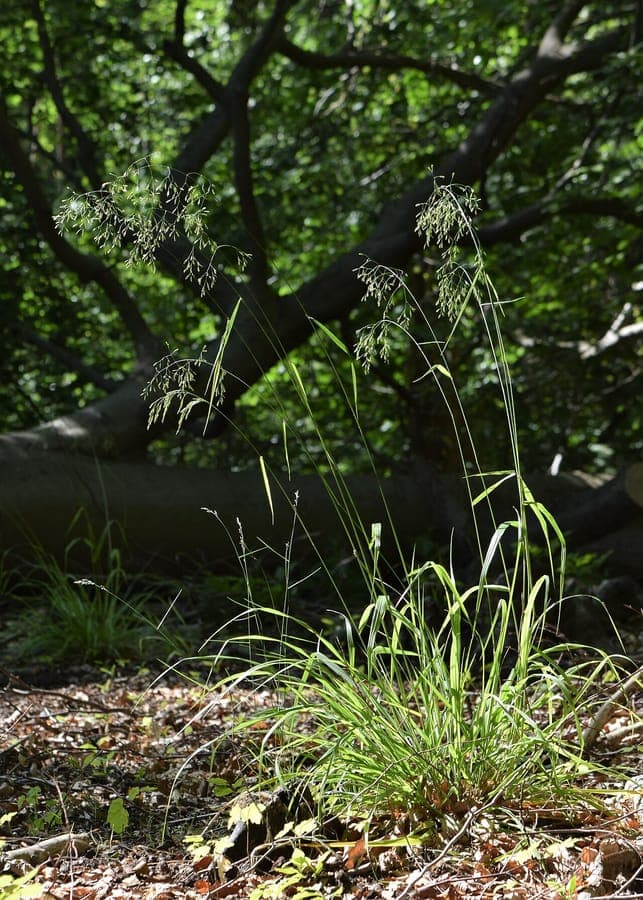
Festuca altissima, commonly known as Wood fescue, is a clump-forming perennial grass native to woodland areas across central and eastern Europe. It's not the flashiest plant in the garden, but it brings quiet structure and movement to shaded borders and naturalistic plantings. Standing between 60–90 cm tall when in bloom, this grass forms tight, fountain-like tufts of fine, blue-green leaves that add texture without overwhelming. In the UK and northern Europe, it thrives in conditions where many ornamental grasses struggle-especially under light tree cover or on north-facing slopes.
Unlike spreading grasses, Wood fescue stays put, making it ideal for controlled designs. It's also a great option for gardeners looking to support local ecology, as it provides shelter for overwintering insects and small invertebrates. If you're planning a low-impact, shade-friendly border, Festuca altissima is worth considering. With gardenworld.app, you can design a planting scheme that balances this grass with other shade-tolerant perennials for year-round interest.
Appearance & bloom cycle
The foliage of Festuca altissima is narrow, stiff, and slightly glaucous, forming upright, arching mounds roughly 30–40 cm high. From late May through June, slender flowering stems rise above the foliage, reaching up to 90 cm. The panicles are open, wispy, and pale greenish-purple, catching the light beautifully in dappled shade. As seeds mature in late summer, the inflorescences turn a soft golden brown, persisting into autumn and even early winter.
There's no dramatic flowering moment-just a gradual, subtle shift in tone and texture. The plant remains semi-evergreen in milder climates, though older leaves may turn brown in harsh winters. New growth emerges in February, giving it an early presence in the garden. Its delicate silhouette works well in naturalistic designs, adding movement without bulk.
Ideal location
Plant Wood fescue in partial to full shade. It performs best in dappled light beneath deciduous trees or along the north side of buildings. Avoid hot, south-facing spots with full afternoon sun-this can scorch the leaves and dry out the clump. That said, it can tolerate morning sun if the soil retains some moisture.
In garden borders, it's excellent as an understory plant, especially among ferns, hellebores, or hostas. It also works in gravel gardens with taller companions, as long as shade is provided. Use gardenworld.app to overlay light patterns in your garden and identify the best spots for shade-loving plants like this one.
Soil requirements
Wood fescue prefers well-drained, humus-rich soil with a slightly acidic to neutral pH (5.5–7.0). It doesn't like waterlogged conditions, so avoid heavy clay unless amended with grit and organic matter. Sandy loams are ideal, especially when enriched with leaf mould.
If your soil is compacted or poorly draining, consider raising the bed slightly or mixing in coarse sand and compost. Mulching with leaf litter in autumn mimics its natural woodland habitat and helps retain moisture without smothering the crown.
Free design
Want to see Wood fescue: complete guide in your garden? Make a free design now.
Watering
Once established, Festuca altissima is drought-tolerant in cooler climates. Water only during prolonged dry spells, especially in the first year after planting. When needed, apply water deeply but infrequently-about once a week during extended droughts in June or July.
Avoid overhead watering, as this can promote fungal issues. Container-grown plants may need more frequent watering, but ensure pots have good drainage. Elevate them on pot feet to prevent waterlogging in winter.
Pruning
Do not cut back in autumn. Leave the old foliage through winter to protect the crown and provide habitat. In late winter or early March, trim the entire clump down to 10–15 cm above ground level.
Use hand shears or a pruning saw for dense tufts. For large clumps, you can divide them at the same time using a spade or garden fork. Remove any dead or weakened material, but avoid cutting into the heart of the plant. Never use string trimmers-they shred the leaves and damage the base.
Maintenance calendar
- Jan: Check clumps for heaving or waterlogging
- Feb: Begin pruning old foliage, prepare for spring growth
- Mar: Divide and replant if needed; apply light mulch
- Apr: Monitor new growth; no feeding required
- May: Flower stems emerge; watch for drought stress
- Jun: Peak bloom; ensure adequate moisture in dry years
- Jul: Low maintenance; avoid fertilizing
- Aug: Water only if drought persists
- Sep: Leave seed heads intact for winter interest
- Oct: No pruning; observe autumn colour shift
- Nov: Leave standing; provide winter structure
- Dec: Protect container plants from wet conditions
Winter hardiness
Festuca altissima is hardy to USDA zone 5 (–20°C). In the UK (zones 7–8), it survives winter without protection. The main threat is not cold, but wet soil during freeze-thaw cycles. In containers, this increases the risk of crown rot.
Ensure planting areas drain well. For potted plants, use a gritty mix and elevate pots to improve airflow. A light mulch around-but not touching-the base can help in exposed gardens.
Companion plants
Pair with shade-tolerant perennials that enjoy similar conditions: Athyrium filix-femina, Geranium macrorrhizum, or Tellima grandiflora. It also combines well with other grasses like Carex montana or Hakonechloa macra for layered texture.
Avoid invasive or overly vigorous plants that could smother it. Stick to clump-forming species that allow space and light. In a mixed border, Wood fescue adds height and movement without dominating.
Closing
Wood fescue may not grab attention, but it's a reliable, long-term performer in shady corners. It's low-maintenance, ecologically valuable, and adds subtle beauty across seasons. Look for it at local garden centres, especially those focusing on native or woodland plants. Chains like B&Q, Wyevale, or independent nurseries often stock it in spring.
If you're unsure how it will fit into your space, try visualising it with gardenworld.app. Their design tools help you see how Festuca altissima matures over time and interacts with neighbouring plants.
Want to see Wood fescue: complete guide in your garden? Make a free design now.
Upload a photo, pick a style, and get a photorealistic design with plant list in under a minute.
No credit card required


Similar plants
Sporobolus pungens: complete guide
Sporobolus pungens
Sporobolus pungens is a stoloniferous Mediterranean coastal grass with outstanding salt and drought tolerance, perfect for seaside and dry gardens.
Mediterranean aegilops: complete guide
Aegilops biuncialis
Everything about Aegilops biuncialis, a Mediterranean annual grass with ornamental spikes and outstanding drought tolerance for dry gardens.
Silver bluestem: complete guide
Bothriochloa saccharoides
Full guide to Bothriochloa saccharoides (silver bluestem): site, soil, watering, winter hardiness, pruning, and garden companions.