
J Brew / CC BY-SA 2.0, via Wikimedia Commons
Farfugium japonicum: complete guide
Farfugium japonicum
Want to see Farfugium japonicum: complete guide in your garden?
1 minute, no credit card
Overview
Farfugium japonicum, commonly known as the Leopardplant or Ligularia, is a fascinating foliage plant hailing from South China and East Asia. This member of the Asteraceae family (the same family as daisies and sunflowers) distinguishes itself through enormous, unique leaves with striking white or yellow spots or bands.
Farfugium japonicum has been used in Japanese garden designs for centuries and is now popular in large-scale gardening throughout Europe. The plant excels in semi-shaded environments and creates dramatic backdrops for other shade-loving plants. With its evergreen nature and slow growth, it requires minimal annual maintenance.
Appearance and Bloom
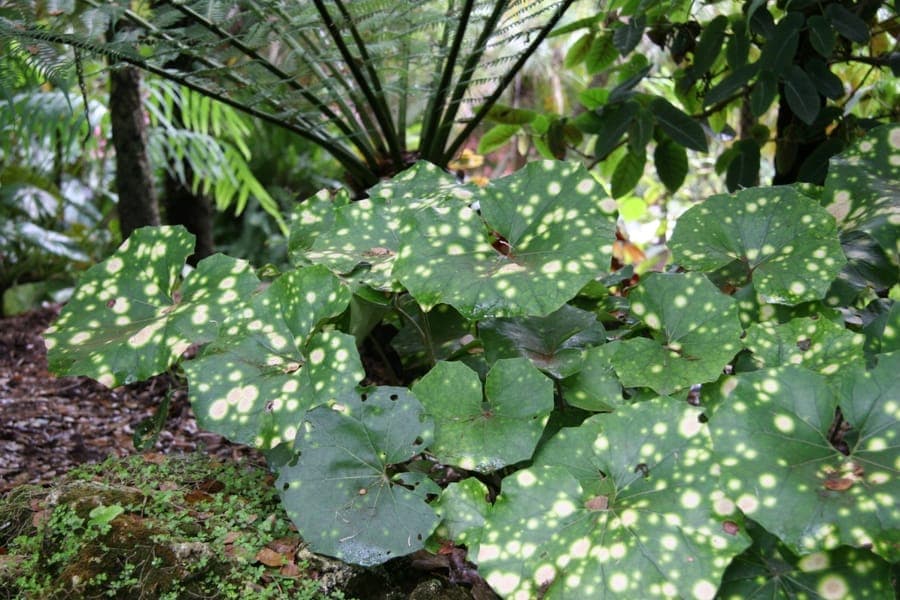
Farfugium japonicum shines through its spectacular, large leaves - over 30 centimeters long and up to 25 centimeters wide. The leaves are dark green with irregular yellow or white spots, speckles, or bands that resemble leopard spots - hence the common name.
The plant forms dense clusters of heart-shaped, glossy leaves that slowly develop from March-May. The blooms are less prominent but charming nonetheless - small, yellow flower heads appear on long, thin stems in mid to late autumn. These flowers attract bees and butterflies, adding extra structural interest to the plant.
Ideal Location
Farfugium japonicum is a shade-lover and thrives best in semi-shade or partial shade. Place the plant where it receives indirect, filtered sunlight for 2-4 hours daily. Too much sun (more than 6 hours direct sunlight) can scorch the leaves and cause their characteristic spots to fade.
The plant is ideal for woodland gardens, under large trees, or along north-facing walls. It also thrives in heavily shaded gardens, though it will produce fewer flowers in very dark locations. Protect from strong wind gusts that can damage the large leaves.
Soil
Farfugium japonicum feels at home in moist, nutrient-rich soils. Add plenty of organic matter (compost, leaf mold) to garden soil. The plant tolerates slightly acidic soils well and thrives in the pH 5.5-7.0 range.
Well-draining soil is important - while the plant appreciates moister soil than xeriscaping residents, stagnant water is detrimental. For container culture, use quality, nutrient-rich potting soil enriched with organic material.
Free design
Want to see Farfugium japonicum: complete guide in your garden? Make a free design now.
Watering
Farfugium japonicum appreciates consistently moist (but not waterlogged) soil. Water regularly during the growing season, especially during dry spells. The plant can tolerate brief droughts, but thrives when regularly watered.
In containers, monitor moisture carefully. Keep soil moist but not soggy. In winter, as growth slows, watering can be gradually reduced. Mist the leaves occasionally - the plant appreciates higher humidity.
Pruning
Farfugium japonicum requires minimal pruning. Remove only dead, damaged, or yellowing leaves throughout the season. Old flower stems can be cut back after blooming.
In very cold regions, cut the plant back to ground level in early spring. The plant will quickly regrow and form vigorous new growth. Avoid heavy pruning of the plant's core.
Maintenance Calendar
March-May: Growth begins. Remove dead winter leaves. Watch for pest/slug issues. Monitor new growth.
June-August: Full growth. Regular watering. Check for slugs/snails. Possible fertilizing.
September-October: Bloom. Gradually reduce watering. Prepare for autumn.
November-February: Dormancy. Minimal watering. In cold regions, possibly cut back to ground level.
Winter Hardiness
Farfugium japonicum is moderately frost-hardy, tolerating around -12 to -15 degrees Celsius during brief periods. In milder climates (zones 8-11), the plant can remain outdoors year-round. In cold regions (zones 7 and colder), the plant should be protected with thick mulch around the base, or overwintered as a container plant.
The plant tolerates light frost well, but prolonged freezing can be deadly. In very cold winters, cut the plant back to ground level - it will regrow from the roots in spring.
Companion Plants
Farfugium japonicum combines beautifully with other shade-lovers: Hosta varieties, Ferns, Hellebores, Astilbe, and Carex grasses. The large, spotted leaves contrast beautifully with the fine, feathery foliage of Ferns and Astilbe. Also plant with shade bloomers like Helleborus and Enkianthus.
Closing
Farfugium japonicum offers a dramatic, low-maintenance option for shade and semi-shade gardens. With regular watering, minimal pruning, and protection from extreme frost, this plant can provide ornamental value for years. Suitable retailers worldwide.
Discover more shade-loving plants on gardenworld.app and complete your semi-shade garden today!
Want to see Farfugium japonicum: complete guide in your garden? Make a free design now.
Upload a photo, pick a style, and get a photorealistic design with plant list in under a minute.
No credit card required


Similar plants
Calendula stellata: complete guide
Calendula stellata
Complete guide to Calendula stellata, the star-flowered marigold from Sicily: location, soil, watering and companion planting tips.
Korean chrysanthemum: complete guide
Chrysanthemum x rubellum
Chrysanthemum x rubellum is a hardy autumn perennial with single pink to copper flowers from August to November. Care and combinations.
Helianthus divaricatus: complete guide
Helianthus divaricatus
Helianthus divaricatus is a North American woodland sunflower with yellow summer blooms, ideal for naturalistic borders and shady edges.