
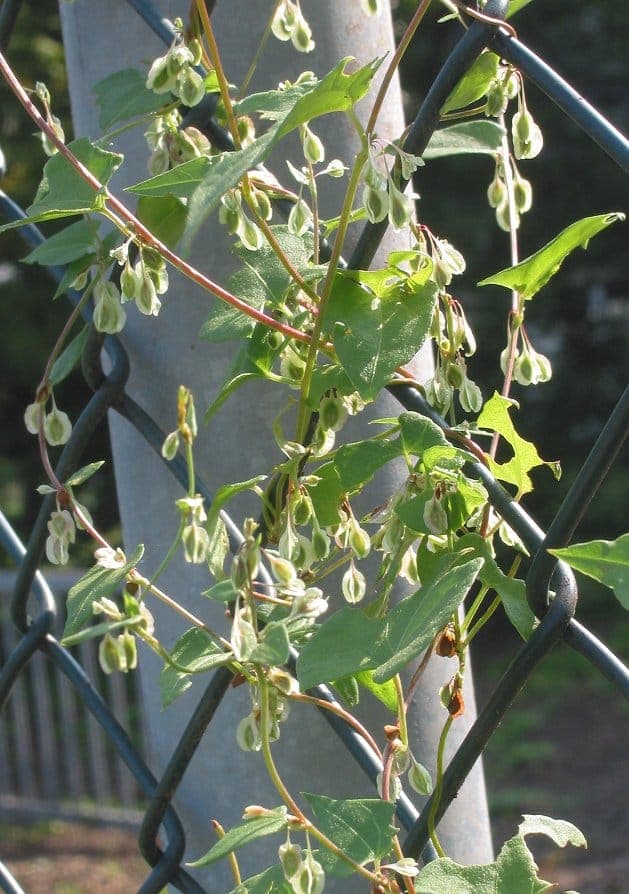
Rasbak at Dutch Wikipedia / CC BY-SA 3.0, via Wikimedia Commons
Copse-bindweed: complete guide
Fallopia dumetorum
Want to see Copse-bindweed: complete guide in your garden?
1 minute, no credit card
Overview
Fallopia dumetorum, commonly known as Copse-bindweed, is a vigorous, herbaceous climber native to central and eastern Europe, extending into parts of Asia. In the UK and other temperate regions, it's best suited to wilder garden corners, woodland edges, or informal hedgerows. Don't expect the neatness of a cottage garden perennial - this plant thrives on freedom. It can reach 200 cm in height in a single growing season, using surrounding shrubs and structures to scramble upwards.
While it shares the Polygonaceae family with the notorious Japanese knotweed, Copse-bindweed is far less aggressive and doesn't form dense monocultures. That said, it still needs space and shouldn't be planted near delicate alpines or slow-growing perennials. On gardenworld.app, you can design a planting scheme that anticipates its spread, ensuring it enhances rather than overwhelms your garden.
Appearance & bloom cycle
The foliage is narrow, lance-shaped, and bright green, forming a dense backdrop from late spring onward. From June through October, slender racemes of small white flowers appear, often with a faint pink tinge at the base. These blooms are highly attractive to pollinators - particularly hoverflies, bees, and small butterflies.
The flowering period is impressively long, making it a valuable late-summer nectar source. Unlike some relatives, it doesn't produce showy seed heads, but the dried stems persist into winter, adding skeletal interest to the dormant garden. No significant fruit or ornamental berries to speak of.
Ideal location
Copse-bindweed prefers partial sun to light shade - a rating of 6 on the light scale, meaning 4–6 hours of direct sunlight daily. It performs well in dappled woodland conditions or against a north-facing fence with morning sun. Avoid full shade, which leads to leggy growth and sparse flowering.
Use it to soften fences, cover unsightly supports, or weave through native hedges. It's excellent for masking compost bins or utility areas without the need for formal pruning. Plant it where it can climb into small trees or shrubs, but keep it away from trellises supporting lighter plants like clematis or sweet peas.
Soil requirements
This species is adaptable but prefers well-drained soil with a pH between 6.5 and 7.0. It tolerates clay, loam, and sandy soils alike, provided they don't waterlog. If your soil is heavy clay, mix in compost or grit to improve drainage.
No heavy feeding is needed - a light mulch of compost in early spring is sufficient. Avoid high-nitrogen fertilisers, which promote leafy growth at the expense of flowers. On gardenworld.app, you can input your soil type and get plant recommendations that match its chemistry, helping you avoid nutrient imbalances.
Free design
Want to see Copse-bindweed: complete guide in your garden? Make a free design now.
Watering
During the first growing season, water regularly to establish the root system. After that, Copse-bindweed is moderately drought-tolerant. In prolonged dry spells, especially during flowering, give a deep soak once a week.
Water at the base to prevent fungal issues on the foliage. Morning watering is best, allowing leaves to dry before nightfall. Rainwater is ideal, particularly in areas with alkaline tap water.
Pruning
Pruning isn't essential, but a hard cutback in late winter or early spring keeps growth tidy. Trim stems down to 10–15 cm above ground level. This encourages bushier, healthier growth and prevents the plant from becoming too tangled.
If trained on a support, remove any wayward shoots that stray into neighbouring plants. Always dispose of cut material properly - don't compost if seeds are present, as they may spread.
Maintenance calendar
- Jan: Inspect old stems, cut back if not done in autumn
- Feb: Prepare for spring, apply light compost mulch
- Mar: Complete pruning, watch for new shoots
- Apr: Begin regular watering if spring is dry
- May: Monitor for weeds, especially in young plantings
- Jun: Flowers begin, pollinator activity peaks
- Jul: Maintain moisture during dry periods
- Aug: Continue flowering, check for mildew in humid weather
- Sep: No pruning, allow plant to set seed for wildlife
- Oct: Flowering ends, leave stems for winter interest
- Nov: Clear away dead foliage if desired
- Dec: Dormant period, minimal care required
Winter hardiness
Copse-bindweed is hardy in USDA zones 5–9, making it suitable for most of the UK and northern Europe. The aerial parts die back in winter, but the rhizomatous roots survive frost and regenerate reliably each spring.
A light leaf mulch can protect roots in exposed or sandy sites. Leave old stems standing through winter - they provide shelter for overwintering insects and add texture to the winter garden.
Companion plants
Pair with sturdy, upright perennials that won't be smothered: ornamental grasses like Calamagrostis, native shrubs such as Cornus or Rhamnus, and tall wildflowers like Echinacea or Molinia. Avoid fragile or slow-growing species.
It works well in mixed native hedges with hawthorn, hazel, or dog rose. Avoid planting near cultivated roses or climbing hydrangeas - competition for light and space can be an issue.
Closing
Copse-bindweed isn't a show-stopper in the traditional sense, but it's a resilient, functional plant for low-intervention gardens. It asks for little and gives back in pollinator support and structural value. Best used in informal, wildlife-friendly spaces where its natural habits can shine.
Available at garden centres across the UK. For reliable stock, check larger independents or native plant nurseries. Be cautious - it's sometimes mislabelled. To ensure compatibility with your existing planting, use gardenworld.app to visualise spacing and growth patterns before buying.
Want to see Copse-bindweed: complete guide in your garden? Make a free design now.
Upload a photo, pick a style, and get a photorealistic design with plant list in under a minute.
No credit card required


Similar plants
Crosby's wild buckwheat: complete guide
Eriogonum crosbyae
Full guide to growing Eriogonum crosbyae: ideal site, soil, watering, winter hardiness and companion plants for this rare western wild buckwheat.
Spreading buckwheat: complete guide
Eriogonum effusum
Full guide to growing Eriogonum effusum: ideal site, soil, watering, winter hardiness and companion plants for this prairie subshrub from the American West.
Tall woolly buckwheat: complete guide
Eriogonum elatum
Full guide to Eriogonum elatum: siting, soil, watering, pruning and companion plants for this elegant white-flowered buckwheat from the western United States.