
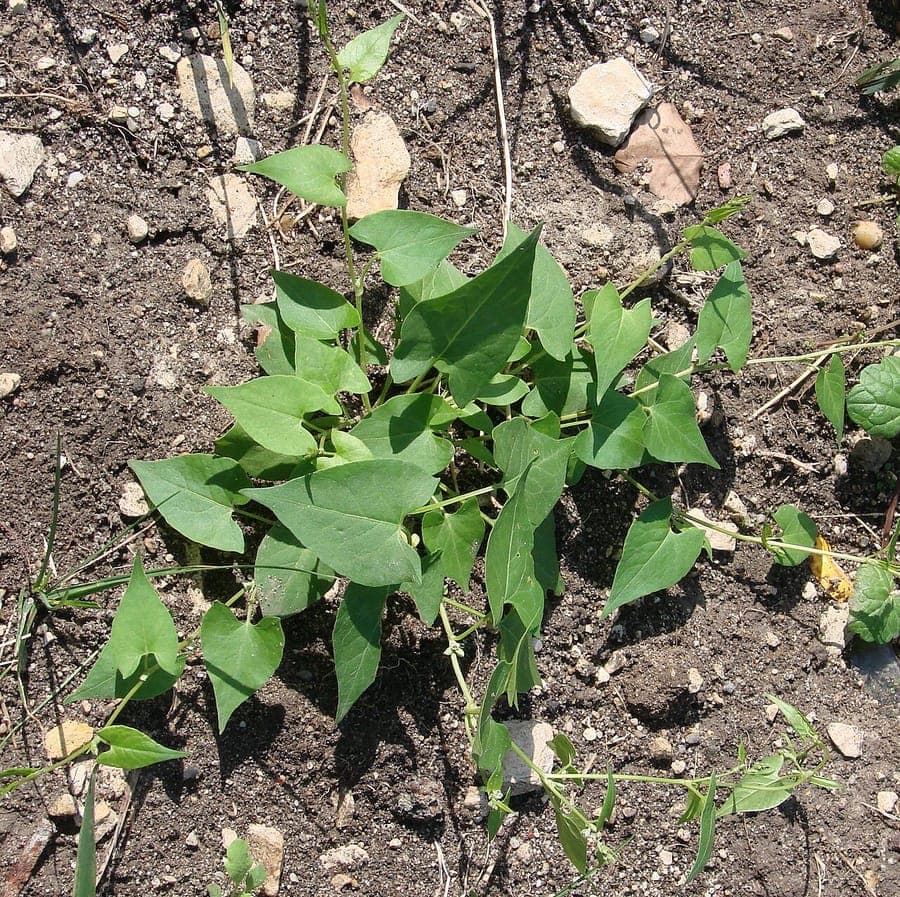
Aung / Public domain, via Wikimedia Commons
Black bindweed: complete guide
Fallopia convolvulus
Want to see Black bindweed: complete guide in your garden?
1 minute, no credit card
Overview
Black bindweed, or Fallopia convolvulus, is a fast-growing, twining herbaceous vine from the buckwheat family (Polygonaceae). Often dismissed as a persistent weed, it's actually a resilient pioneer species that thrives in disturbed soils. Native to large parts of Europe and Asia, it's now widespread in temperate regions, including the UK and North America. While it can be a nuisance in cultivated beds, its aggressive growth makes it useful in restoration projects or wild garden corners where soil stabilization is needed.
For gardeners embracing a more naturalistic approach, Black bindweed offers an opportunity to work with nature rather than against it. On gardenworld.app, you can design planting schemes that channel its climbing energy into productive roles, like softening hard edges or filling bare patches between shrubs. The plant grows up to 2 meters long, using its wiry, twisting stems to climb over other vegetation, fences, or trellises.
Appearance & bloom cycle
Black bindweed has narrow, arrowhead-shaped leaves, 2–6 cm long, with a smooth, slightly waxy texture. The stems are slender and green, often with a reddish tinge, and climb by twining around nearby supports. From June through October, it produces small, greenish-white flowers in loose, terminal clusters. These blooms are inconspicuous but attract hoverflies, small bees, and other pollinators.
After flowering, the plant develops tiny, dark brown to black triangular fruits – the source of its common name. These seeds remain viable in the soil for years, contributing to its persistence. Growth is rapid in warm summer months, with stems adding several centimeters per day under ideal conditions.
Ideal location
Black bindweed prefers a light level of 7 out of 10, meaning it does best in full sun to partial shade. It struggles in deep shade, where it becomes leggy and weak. Optimal spots include sunny borders, dry slopes, or neglected corners of the garden where other plants fail to establish. It's especially common in disturbed soils like construction sites or abandoned plots.
If you're designing a low-maintenance or wildlife-friendly garden, consider giving Black bindweed a controlled role. On gardenworld.app, you can create a custom layout that integrates this plant without risking garden takeover, using companion planting and physical barriers.
Soil requirements
This plant isn't picky about soil fertility and grows well in poor to moderately rich soils. It prefers a pH between 6.5 and 7.0 – slightly acidic to neutral. Avoid waterlogged clay, but it tolerates sandy or loamy soils as long as drainage is adequate. Good aeration is key; compacted soils reduce vigor.
One benefit: its dense root network can help bind loose soil, reducing erosion on slopes. However, because it spreads easily by seed, it's wise to mulch around established plants to suppress germination. A 5–8 cm layer of wood chips or compost works well.
Free design
Want to see Black bindweed: complete guide in your garden? Make a free design now.
Watering
Black bindweed has moderate water needs. Once established, it survives dry spells thanks to its fibrous root system. Young plants in their first season may need supplemental watering during prolonged droughts, especially in full sun. Water at the base to prevent foliar diseases like powdery mildew.
Avoid frequent overhead irrigation. If rainfall is below 25 mm per week during summer, provide a deep soak once a week to keep growth steady.
Pruning
Pruning isn't required for the plant's health, but it's essential for garden control. Cut back stems in mid-summer (July) before seeds set. Use sharp shears and remove all cuttings to prevent re-rooting. For aesthetic purposes, you can train it along a trellis, but monitor growth weekly during peak season.
Deadheading isn't practical due to the number of flowers, but removing flowering tips can delay seed production.
Maintenance calendar
- Jan: Dormant; no action needed
- Feb: Dormant
- Mar: Check for early sprouts
- Apr: Remove seedlings by hand
- May: Watch for rapid vine extension
- Jun: Flowers begin; inspect support structures
- Jul: Prune back if overgrown
- Aug: Peak bloom; cut before seeds mature
- Sep: Final trim if needed
- Oct: Remove dead stems
- Nov: Clear debris to reduce seed bank
- Dec: Dormant
Winter hardiness
Black bindweed is hardy in USDA zones 5–9. Above-ground growth dies back in autumn, but seeds or root fragments survive winter and re-sprout in spring. In milder zones, occasional overwintering of green stems may occur.
Companion plants
Pair Black bindweed with tall, robust perennials that can withstand competition. Good choices include Echinacea purpurea, Molinia caerulea, or Verbascum. Avoid planting near low-growing alpines or delicate annuals. Use structural plants to create natural barriers that limit its spread.
Closing
Black bindweed isn't a typical ornamental, but in the right context, it can play a functional role in the garden. Use it to cover bare ground, attract pollinators, or support ecological succession. Just stay vigilant-letting it go unchecked can lead to dominance. With thoughtful planning, available through tools on gardenworld.app, you can harness its vigor without losing control. Available at garden centres across the UK, this plant demands respect. Buy seeds or plants if you're ready to manage them, or observe them in the wild to learn their habits before introducing them to your plot.
Want to see Black bindweed: complete guide in your garden? Make a free design now.
Upload a photo, pick a style, and get a photorealistic design with plant list in under a minute.
No credit card required


Similar plants
Crosby's wild buckwheat: complete guide
Eriogonum crosbyae
Full guide to growing Eriogonum crosbyae: ideal site, soil, watering, winter hardiness and companion plants for this rare western wild buckwheat.
Spreading buckwheat: complete guide
Eriogonum effusum
Full guide to growing Eriogonum effusum: ideal site, soil, watering, winter hardiness and companion plants for this prairie subshrub from the American West.
Tall woolly buckwheat: complete guide
Eriogonum elatum
Full guide to Eriogonum elatum: siting, soil, watering, pruning and companion plants for this elegant white-flowered buckwheat from the western United States.