
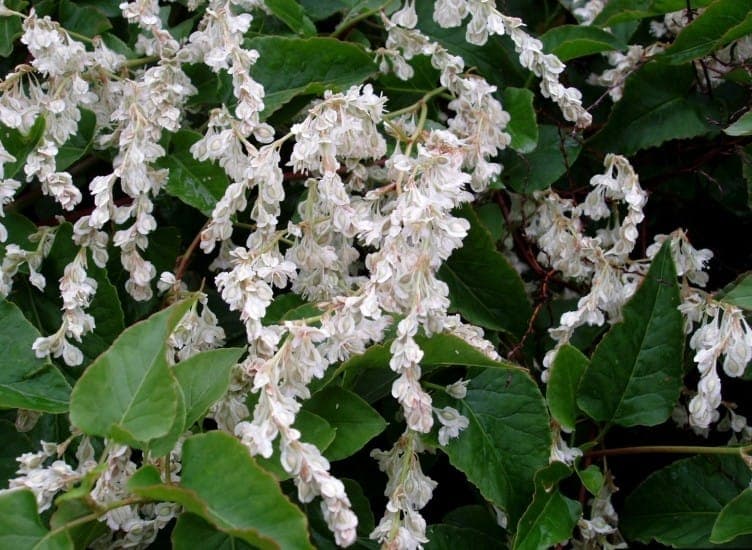
Jan Samanek, State Phytosanitary Administration, Czechia / CC BY 3.0 us, via Wikimedia Commons
Chinese fleecevine: complete guide
Fallopia baldschuanica
Want to see Chinese fleecevine: complete guide in your garden?
1 minute, no credit card
Overview
Fallopia baldschuanica, commonly known as Chinese fleecevine, is a fast-growing, ornamental climber that's gaining popularity in UK and North American gardens for its lush, cascading blooms. Native to mountainous regions of Central Asia - specifically Afghanistan, Pakistan, and Tajikistan - this plant thrives in hot, dry summers and adapts well to temperate climates. It's often used to cover pergolas, fences, and trellises, reaching heights of 6 to 8 meters with a spread of up to 3 meters. Unlike some invasive relatives in the Polygonaceae family, this species is well-mannered and easy to manage with proper pruning.
On gardenworld.app, you can design a garden layout that integrates this climber seamlessly, including structural support and spacing recommendations.
Appearance & bloom cycle
Chinese fleecevine features slender, woody stems that twine around supports with ease. The leaves are ovate to heart-shaped, dark green, and slightly hairy on the underside. From mid-July through September, it produces long, drooping panicles of tiny white flowers that give the plant a soft, misty appearance - hence the name 'fleecevine'. These blooms persist for up to 12 weeks and attract pollinators like bees and hoverflies. As the season progresses, the flowers develop into feathery seed heads that add winter interest. The plant is deciduous, shedding its leaves in late autumn.
Ideal location
This climber performs best in full sun to light shade. Aim for at least 6 hours of direct sunlight daily for maximum flowering. South- or west-facing walls, fences, or pergolas are ideal. Provide a sturdy support system - metal trellises, wooden arbors, or strong wire mesh. The flowering stems become heavy, so weak structures won't hold up. Avoid overly sheltered spots with poor air circulation, as this can encourage fungal issues like powdery mildew. In exposed areas, young growth may need temporary wind protection in spring.
Soil requirements
Fallopia baldschuanica is adaptable to a wide range of soil types, including loamy, sandy, and even moderately clay soils, as long as drainage is good. A pH between 5.5 and 7.5 is optimal. If planting in heavy clay, amend the soil with grit or compost to improve structure. In containers, use a mix of loam-based compost and perlite (2:1 ratio). Avoid overly rich soils - excessive nutrients promote leafy growth at the expense of flowers.
Watering
During the first growing season, water regularly - about once a week, more during dry spells. Once established (after year one), the plant is highly drought-tolerant thanks to its deep root system. Water only during prolonged dry periods, especially while in bloom. Overwatering can lead to root rot, so let the soil dry slightly between waterings. For potted plants, ensure containers have drainage holes and avoid letting them sit in water.
Free design
Want to see Chinese fleecevine: complete guide in your garden? Make a free design now.
Pruning
Annual pruning is essential for healthy growth and abundant flowering. Cut back hard in late winter or early spring (February to March). Reduce old stems to 30–50 cm above ground or to the main framework. This encourages vigorous new shoots that will flower later in the season. Avoid pruning in late summer or autumn, as this can trigger tender growth that won't survive winter. Light trimming to shape or remove stray shoots is fine during summer.
Maintenance calendar
- January: Inspect the main stem for damage. Keep the base clear of debris.
- February: Begin hard pruning. Remove dead or weak wood.
- March: Finish pruning. Apply a light top dressing of organic matter if desired.
- April: New shoots emerge. Watch for slugs and snails.
- May: Growth accelerates. Guide young stems onto supports.
- June: Flower buds start forming. Avoid wetting foliage.
- July: Blooms begin. Water during dry spells.
- August: Peak flowering. Support heavy stems if needed.
- September: Flowers continue. Check for aphids.
- October: Bloom period ends. No pruning now.
- November: Leaves drop. Clear fallen foliage from the base.
- December: Plant is dormant. No action required.
Gardeners using gardenworld.app can sync this maintenance schedule with local weather alerts and get personalized reminders based on their growing zone.
Winter hardiness
Chinese fleecevine is hardy to USDA zones 6–9 (-23°C to -1°C). In zone 6, mulch the base with dry leaves or straw for the first few winters. Mature plants usually survive without protection in zones 7 and above. The woody stems remain intact through winter, providing structure. Potted plants should be moved to a sheltered spot or wrapped to protect roots from freezing.
Companion plants
Pair Fallopia baldschuanica with sun-loving, drought-tolerant perennials like lavender, echinacea, Russian sage, or yarrow. Avoid overcrowding at the base - use low-maintenance ground covers like sedum or thyme. Roses or clematis can share a support if spaced properly. Ensure good airflow between plants to prevent mildew. Steer clear of aggressive spreaders like mint or ground elder near the root zone.
Closing
Fallopia baldschuanica is a reliable, low-fuss climber that delivers dramatic summer impact with minimal care. With a sunny spot, sturdy support, and one annual prune, it will reward you with months of elegant white blooms. It suits both modern and cottage-style gardens. For design ideas and planting plans, visit gardenworld.app - where your dream garden starts with the right plant in the right place.
Want to see Chinese fleecevine: complete guide in your garden? Make a free design now.
Upload a photo, pick a style, and get a photorealistic design with plant list in under a minute.
No credit card required


Similar plants
Crosby's wild buckwheat: complete guide
Eriogonum crosbyae
Full guide to growing Eriogonum crosbyae: ideal site, soil, watering, winter hardiness and companion plants for this rare western wild buckwheat.
Spreading buckwheat: complete guide
Eriogonum effusum
Full guide to growing Eriogonum effusum: ideal site, soil, watering, winter hardiness and companion plants for this prairie subshrub from the American West.
Tall woolly buckwheat: complete guide
Eriogonum elatum
Full guide to Eriogonum elatum: siting, soil, watering, pruning and companion plants for this elegant white-flowered buckwheat from the western United States.