
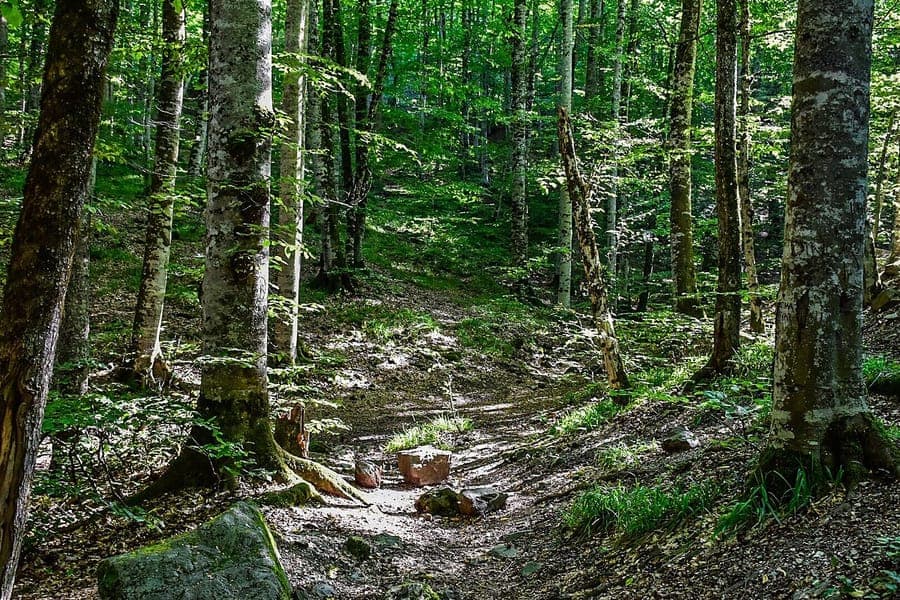
Snail26 / CC BY-SA 4.0, via Wikimedia Commons
Oriental beech: complete guide
Fagus orientalis
Want to see Oriental beech: complete guide in your garden?
1 minute, no credit card
Overview
Fagus orientalis, commonly known as the Oriental beech, is a majestic deciduous tree native to the mountainous forests of southeastern Europe and western Asia. In temperate climates like those found across the UK and Western Europe, it reaches heights of 25–30 metres with a spread of 15–20 metres over several decades. Though similar in appearance to the common beech (Fagus sylvatica), the Oriental beech is slightly more tolerant of wetter soils and tends to develop a straighter trunk and denser crown. It's an excellent choice for large gardens, woodland edges, or as a standalone specimen tree that commands attention.
On gardenworld.app, you can visualise how an Oriental beech will shape your garden's layout over time, especially in terms of shade patterns and seasonal impact.
Appearance & bloom cycle
The Oriental beech features smooth, silvery-grey bark and lanceolate leaves that are 6–10 cm long. New foliage emerges in mid-May with a fresh green to bronze tint, maturing to a deep glossy green by summer. Autumn brings a rich display of golden-yellow to warm copper-brown foliage, often persisting well into winter-especially on younger trees and lower branches.
Flowering occurs in April to May. The flowers are small, greenish, and inconspicuous, appearing alongside the new leaves. The fruit is a small, triangular nut enclosed in a spiky cupule, ripening in October. While not suitable for human consumption, these nuts are a valuable food source for squirrels, birds, and other wildlife.
Ideal location
Plant your Oriental beech in full sun to partial shade. It performs best in a sheltered spot, away from strong, drying winds-particularly during its first few years. Due to its eventual size, allow at least 8–10 metres between the tree and buildings, boundaries, or other large trees. Consider future shading effects on patios, windows, and planting beds when siting the tree.
Using gardenworld.app, you can simulate seasonal sun and shade changes to ensure your Oriental beech enhances, rather than hinders, your garden design.
Soil requirements
This tree thrives in deep, moisture-retentive but well-drained loam or clay-loam soils rich in organic matter. It prefers a slightly acidic to neutral pH (5.5–7.0). Light sandy soils can support it only if regularly irrigated and enriched with compost. Avoid shallow, drought-prone soils, as prolonged dry spells in the early years can significantly stunt growth.
Free design
Want to see Oriental beech: complete guide in your garden? Make a free design now.
Watering
During the first growing season, water deeply once a week-more frequently during dry spells. Use a tree soaker hose or drip irrigation to encourage root development. From year three onwards, established trees typically rely on natural rainfall, except during extended droughts (over 4 weeks without rain), when supplemental watering is recommended.
Pruning
Pruning is rarely necessary. The tree naturally develops a strong central leader and even crown. If structural adjustments are needed-such as removing crossing branches or raising the crown for clearance-do so in late autumn or winter (November–February) during dormancy. Avoid pruning in spring to prevent sap bleeding. Always use clean, sharp tools to minimise disease risk.
Maintenance calendar
- Jan: Inspect for storm or snow damage.
- Feb: Leave fallen leaves as natural mulch.
- Mar: Remove any dead or damaged wood.
- Apr: Apply a slow-release organic fertiliser or well-rotted compost around the base.
- May: Monitor for aphids or fungal issues like powdery mildew.
- Jun: Check soil moisture during dry periods.
- Jul: No routine maintenance; watch for drought stress.
- Aug: Minimal intervention.
- Sep: Look out for signs of fungal diseases such as Phytophthora.
- Oct: Collect nuts or leave them for wildlife.
- Nov: Conduct light structural pruning if needed.
- Dec: Protect young trunks from rodents with a 1m tree guard.
Winter hardiness
The Oriental beech is hardy to USDA zone 5b (down to -23°C). In the UK (zones 7–8) and much of Western Europe, it withstands winter conditions without issue. Young trees may show minor frost scorch on bark during severe winters, but this usually heals naturally. In exposed gardens, consider wrapping the trunk with hessian for the first three winters.
Companion plants
Under the dense canopy, light and root competition limit underplanting. Choose shade-tolerant, shallow-rooting species such as:
- Anemone nemorosa
- Hepatica nobilis
- Lamium galeobdolon
- Pachysandra terminalis
- Polystichum setiferum (soft shield fern)
Avoid turf grass and deep-rooted shrubs. Keep a 1.5m radius around the trunk clear to reduce competition and aid water absorption.
Closing
The Oriental beech is a long-term investment in your garden's structure and beauty. With minimal upkeep, it grows into a commanding presence, offering decades of shade, seasonal colour, and habitat value. Plant it in autumn or early spring, give it space, and support it through its youth. You'll find young specimens at most garden centres, often in 120–150 cm sizes. Prioritise sites with good soil and protection from wind. Over time, this tree will become a defining feature of your landscape. For planning, use gardenworld.app to model growth and placement accurately.
Want to see Oriental beech: complete guide in your garden? Make a free design now.
Upload a photo, pick a style, and get a photorealistic design with plant list in under a minute.
No credit card required


Similar plants
Lucombe oak: complete guide
Quercus crenata
Lucombe oak (Quercus crenata): a majestic semi-evergreen giant with corky bark, perfect for large gardens, parks, and country estates.
Blue oak: complete guide
Quercus douglasii
Discover the blue oak, a drought-tolerant Californian shade tree with striking blue-green foliage, ideal for large, climate-resilient gardens.
Quercus montana: complete guide
Quercus montana
Quercus montana, the chestnut oak, is a rugged American shade tree with deeply furrowed bark and large acorns, well suited to dry, rocky, spacious gardens.