
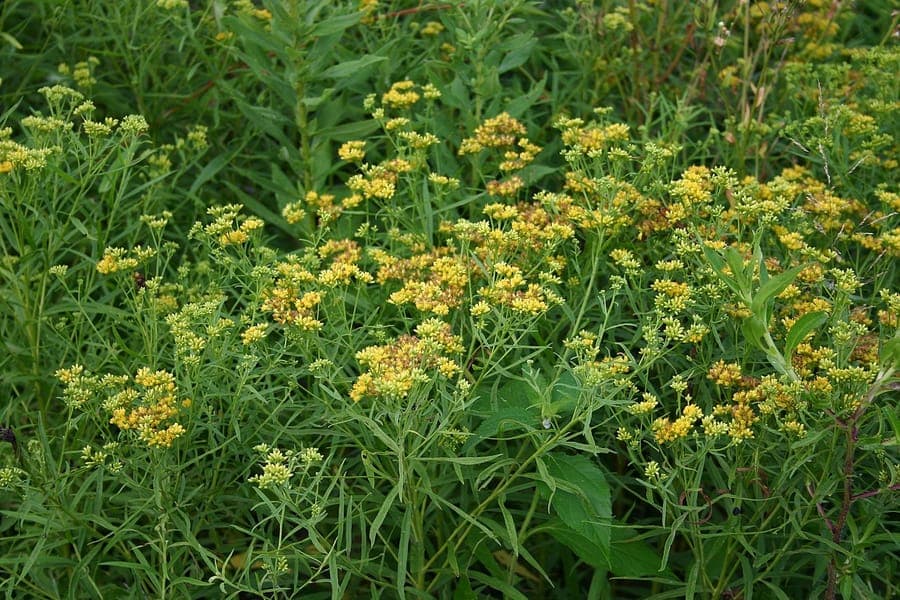
User:SB_Johnny / CC BY-SA 3.0, via Wikimedia Commons
Grass-leaved goldenrod: complete guide
Euthamia graminifolia
Want to see Grass-leaved goldenrod: complete guide in your garden?
1 minute, no credit card
Grass-leaved goldenrod, scientifically Euthamia graminifolia, is a versatile perennial from the Asteraceae family native to North America. This charming wildflower earns its common name from its fine, grass-like foliage that creates an airy, naturalistic appearance in any garden setting. The plant typically grows in loose clumps reaching 60 to 100 centimeters tall, making it ideal for mid-to-back border positions where its delicate structure can shine.
The golden-yellow flowers of grass-leaved goldenrod bloom in flat-topped clusters from August through October, providing essential late-season color when many gardens fade. Each tiny floret contributes to an intricate flower head structure typical of the daisy family. The subtle fragrance carries a pleasant, slightly spicy undertone that many gardeners cherish. Butterflies and bees frequent these flowers enthusiastically, making this plant valuable for pollinator-dependent gardens.
Appearance and bloom
This plant features narrow, linear leaves arranged in dense tufts, creating a fountain-like silhouette before flowering. The leaf blades are smooth and light green, creating visual lightness rarely seen in heavy perennials. Blooms begin as tight buds and gradually open to reveal numerous tiny yellow flowers clustered atop the stems. Individual flower heads measure about 3 to 5 millimeters across, but their sheer abundance creates stunning visual impact. Peak bloom occurs in September when hundreds of flower heads may open simultaneously.
Ideal location and light
Grass-leaved goldenrod thrives in full sun locations receiving at least 6 to 8 hours of direct sunlight daily. While the plant tolerates partial shade, flowering becomes noticeably reduced in shadier positions. Maximum light exposure encourages compact growth habit and abundant flowering. Western-facing positions work well, offering afternoon and evening sun that the plant appreciates. In containers, position them where they receive unobstructed morning sun.
Soil and nutrition
This North American native proves remarkably unfussy about soil composition. It prefers well-draining, moderately fertile soil with a pH between 6.5 and 7.5. Heavy clay soils can be amended with coarse sand or gravel to improve drainage. In its native prairie habitat, the plant encounters only moderate nutrient availability. Excess nitrogen promotes leafy growth at the expense of flowers. Sandy soils work perfectly fine with occasional supplemental feeding during the growing season.
Free design
Want to see Grass-leaved goldenrod: complete guide in your garden? Make a free design now.
Watering
Once established, grass-leaved goldenrod demonstrates excellent drought tolerance. Regular watering during the first growing season helps establish deep roots. After that, the plant manages well through moderate dry spells common in most climates. Water early in the morning to allow foliage to dry, reducing disease risk. Between waterings, let the soil dry somewhat. Excessive moisture invites root rot and fungal issues. In regions with regular summer rainfall, supplemental watering rarely becomes necessary.
Pruning and maintenance
Grass-leaved goldenrod demands minimal maintenance throughout the growing season. Deadheading faded flowers encourages continued bloom and extends the flowering period noticeably. This simple practice takes just minutes but rewards you with weeks of additional color. In late fall or early spring, cut plants back to approximately 15 centimeters above soil level to encourage compact growth and abundant flowering the following season. The plant rarely becomes invasive, though mature clumps can be divided if they outgrow their space.
Maintenance calendar
April-May: Plant or pot up divisions. Apply balanced fertilizer once growth begins. June-July: Water regularly during dry spells. Scout for spider mites or aphids. August-October: Enjoy prolific flowering. Deadhead as flowers fade. November-December: Cut back to 15 centimeters. Apply mulch in cold regions. January-March: Dormant period. Minimal watering unless extremely dry.
Winter hardiness
Grass-leaved goldenrod ranks as winter hardy in USDA zones 3 to 10, surviving temperatures to minus 40 degrees Celsius. In cold regions, a protective mulch layer (5 to 7 centimeters) applied in November protects roots. Keep mulch away from direct stem contact to prevent rot. In temperate zones, the plant regrows reliably without winter protection, emerging fresh each spring.
Companion plants
Grass-leaved goldenrod pairs beautifully with other late bloomers. Purple asters (Symphyotrichum species) provide striking color contrast. Deep blue delphiniums, yellow rudbeckia, and pink phlox work wonderfully as complementary partners. Ornamental grasses like miscanthus and panicum echo the foliage structure without competing for space. Low-growing sedums or delosperma can cascade beneath without overwhelming the golden rod. The plant's airy habit allows underplanting without crowding.
Conclusion
Grass-leaved goldenrod deserves greater recognition among gardeners seeking low-maintenance, water-wise plants. Its delicate foliage, extended bloom season, and generous flower production make it invaluable for contemporary gardens. Whether establishing a meadow border or simply seeking reliable, drought-tolerant perennials for difficult conditions, this plant will exceed expectations. Available at quality garden centres throughout the UK and Europe.
Want to see Grass-leaved goldenrod: complete guide in your garden? Make a free design now.
Upload a photo, pick a style, and get a photorealistic design with plant list in under a minute.
No credit card required


Similar plants
Calendula stellata: complete guide
Calendula stellata
Complete guide to Calendula stellata, the star-flowered marigold from Sicily: location, soil, watering and companion planting tips.
Korean chrysanthemum: complete guide
Chrysanthemum x rubellum
Chrysanthemum x rubellum is a hardy autumn perennial with single pink to copper flowers from August to November. Care and combinations.
Helianthus divaricatus: complete guide
Helianthus divaricatus
Helianthus divaricatus is a North American woodland sunflower with yellow summer blooms, ideal for naturalistic borders and shady edges.