
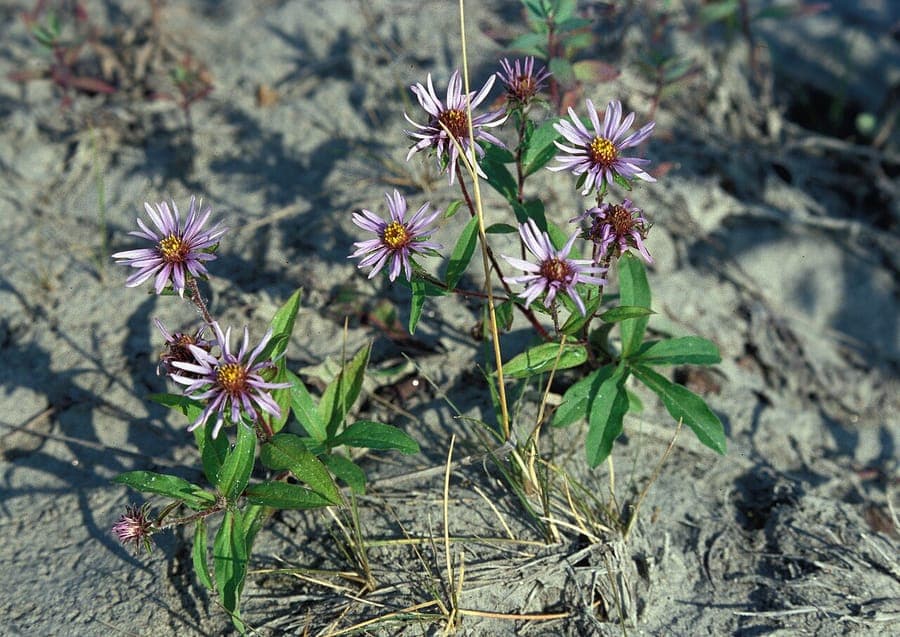
Andreas Trepte / CC BY-SA 2.5, via Wikimedia Commons
Arctic aster: complete guide
Eurybia sibirica
Want to see Arctic aster: complete guide in your garden?
1 minute, no credit card
Overview
Eurybia sibirica, known as Arctic aster, Siberian aster, or Bering wood aster, is an alpine and subarctic plant distributed across the Arctic and Siberian regions, Japan, and North America. This hardy herb belongs to the Asteraceae family and grows in extremely cold climates from Nunavut to Yakutia. The plant is valuable for alpine gardens, wildflower meadows, and arctic landscaping due to its extreme cold tolerance.
Appearance and Bloom
Eurybia sibirica grows as an upright herb up to 60 cm tall, with narrow green leaves and sturdy stems. Purple to lavender-colored flowers appear August through September and consist of flower heads with yellow centers. These flowers attract butterflies and bees. The blooming period is relatively long during short summer months. The plant presents a robust and weather-resistant appearance.
Ideal Location
This Arctic plant thrives in full sun to half-light. Ensure at least 5-6 hours of direct sunlight daily in temperate climates; in arctic regions it benefits from 24-hour summer sunshine. Plant it in well-ventilated locations with protection from cutting winds. In cold climates (zones 2-5) it grows outdoors; in warmer climates it may appreciate partial shade.
Soil
Eurybia sibirica prefers well-draining, moisture-retentive soils. Sandy-loam soils with organic matter are optimal. The plant tolerates acidic to neutral pH (5.5-7.0) well. In containers, a mix of garden soil and peat moss can be used. Avoid heavy clay soils that retain standing water.
Watering
During growing season (May-September) water regularly if soil feels dry 5 cm down. The plant tolerates marshy conditions better than dry soil. Reduce watering in autumn and winter. Ensure consistent but not waterlogged soil. In arctic regions, water availability is critical during short growing seasons.
Free design
Want to see Arctic aster: complete guide in your garden? Make a free design now.
Pruning
Pruning is usually unnecessary. Remove spent flowers after blooming to limit seed production and encourage reblooming. Dead material can be removed in early spring. Cutting back in late spring increases bushiness. The plant is robust and tolerates moderate pruning.
Maintenance Calendar
May: Growth begins, water regularly. June-July: Growth accelerates, monitor for pests. August-September: Blooming time, water as needed. October: Seed heads form, reduce watering. November-March: Dormant, minimal water. Check yearly for aphids and caterpillar damage.
Winter Hardiness
Eurybia sibirica is extremely winter-hardy in zones 2-9 (-40 to 0 C). It survives the harshest Arctic winters without protection. In warmer zones (8-9) it may experience summer stress and retain longer cold acclimation. No special frost protection required.
Companion Plants
Combine with other Arctic plants: Papaver radicatum, Armeria verna, Pulsatilla hirsuta, Lupinus arcticus, Saxifraga species, and grasses like Festuca ovina. Alpine junipers and dwarf rhododendrons are good woody partners. This combination creates authentic subarctic garden aesthetic.
Closing Thoughts
Eurybia sibirica represents the springtime and resilience of Arctic tundras. This native Siberian herb deserves recognition in alpine and cold-climate garden designs. Available through specialized nurseries for alpine plants. Discover the magical world of Arctic wildflowers through gardenworld.app design guides. An incomparable addition for zones 2-5 gardeners seeking authentic Nordic gardens.
Want to see Arctic aster: complete guide in your garden? Make a free design now.
Upload a photo, pick a style, and get a photorealistic design with plant list in under a minute.
No credit card required


Similar plants
Calendula stellata: complete guide
Calendula stellata
Complete guide to Calendula stellata, the star-flowered marigold from Sicily: location, soil, watering and companion planting tips.
Korean chrysanthemum: complete guide
Chrysanthemum x rubellum
Chrysanthemum x rubellum is a hardy autumn perennial with single pink to copper flowers from August to November. Care and combinations.
Helianthus divaricatus: complete guide
Helianthus divaricatus
Helianthus divaricatus is a North American woodland sunflower with yellow summer blooms, ideal for naturalistic borders and shady edges.