
さかおり / CC BY-SA 4.0, via Wikimedia Commons
Euryale ferox: complete guide
Euryale ferox
Want to see Euryale ferox: complete guide in your garden?
1 minute, no credit card
Overview
Euryale ferox, better known as Foxnut, Gorgon, or Prickly Water Lily, is a fascinating aquatic plant occurring from North India to southern Russia and Taiwan. This plant belongs to the Nymphaeaceae family, the same family as water lilies.
This annual aquatic plant creates a completely unique and exotic appearance through its large leaves covered with spines and gorgeous purple flowers. It is ideal for those seeking a truly distinctive pond experience with something you would not find in standard water gardens.
Appearance & bloom
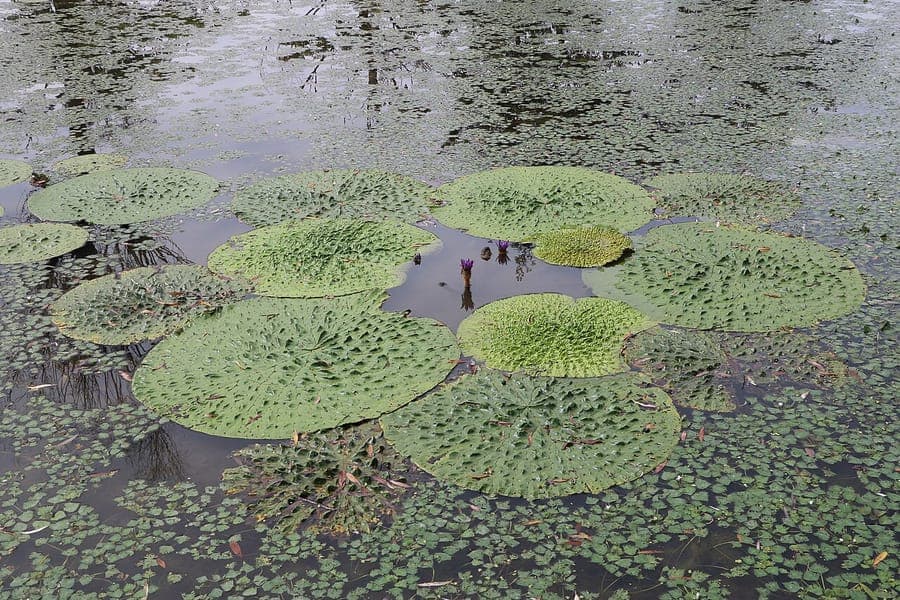
Euryale ferox distinguishes itself primarily through its very characteristic leaves. These reach 30-150 centimeters in diameter and are furnished underneath with numerous long spines. The top of the leaf is dark green to purple, while the underside is red-purple and covered with spines.
The flowers are small, approximately 3-4 centimeters in diameter, and are purple to violet-blue in color. They appear between the leaves and have a pleasant fragrance. Blooming continues throughout the summer.
After blooming, spherical seeds develop enclosed in a type of seed pod. These seeds are edible and are used as food in Asia, hence the name "Foxnut" - in Chinese "Qian shi".
Ideal location
Euryale ferox requires very much sunlight - minimum 6-8 hours direct sunlight daily. The plant grows best in full sun. The more sun, the better the blooming.
The plant is grown in still water, so not in flowing water or channels. A pond of minimum 60-80 centimeters deep is ideal. Shallower water can become too hot during warm periods.
Do not place the plant where there is much wind - this damages the delicate leaves. A sheltered location in the garden is preferred.
Soil
The pond bottom covering is very important. Use a thick layer of good garden soil or pond mud with some gravel on top to keep it in place. Minimum 15-20 centimeters deep works well.
Add nutrient-rich organic material to the bottom - composted leaves or cow manure works well. Euryale ferox thrives in nutrient-rich soils. Poor soil can lead to sparse growth.
Avoid sand or pure clay. Best is a mixture of garden soil with the addition of decomposed matter.
Watering
Euryale ferox grows entirely submerged in pond water, so "watering" means filling the pond. Maintain a water level of 60-100 centimeters above the bottom.
During very warm periods, evaporation can cause water levels to drop. Fill regularly so the water level remains constant. Use rainwater if possible - this is better than tap water.
The plant tolerates stagnant water well. In fact, too much water movement can damage the delicate underwater parts.
Note that the plant enjoys oxygen-rich water. Provide some aeration through fountains or waterfalls, if opportunities permit.
Free design
Want to see Euryale ferox: complete guide in your garden? Make a free design now.
Pruning
Euryale ferox requires practically no pruning. Remove only dead leaves when they turn yellow. This prevents water pollution.
Do not remove healthy leaves - these provide food production through photosynthesis.
If leaves grow against the pond edge and become bothersome, you can gently bend them without cutting.
Exercise caution - the spines can be sharp and may scratch your skin.
Maintenance calendar
Spring (March-May): Plant the seeds or bring them outside once water is warmer than 20 degrees Celsius. Monitor water quality. Clean the filter frequently. Begin weekly feeding with aquatic plant fertilizer.
Summer (June-August): Feed twice weekly as flower production is optimal. Check water levels daily in warm weather. Remove dead leaves. Monitor for water insects and other pests.
Autumn (September-October): Gradually reduce feeding as temperatures drop. Blooming period decreases. Collect seeds as they ripen. Begin preparation for end of season.
Winter (November-February): Euryale ferox is annual and does not survive in cold climates. Save seeds for next season. In very mild climates some greenery may persist in shallow ponds. Keep water slightly warmer with heating.
Winter hardiness
Euryale ferox is absolutely NOT winter hardy in colder climates. This is an annual plant that is killed by frost. In tropical and subtropical areas with winters above 15 degrees Celsius, this may overwinter.
In temperate climates (Europe, North America), this plant must be grown fresh from seeds each season. Seeds can be stored in the refrigerator and resown in spring.
In very warm areas, the plant may return year after year if water does not freeze.
Companion plants
Euryale ferox combines beautifully with other aquatic plants: water lilies (Nymphaea), lotus flowers (Nelumbo), water iris (Iris), papyrus (Cyperus). The spiky, dark purple leaves create nice contrasts with the softer forms of other aquatic plants.
In a larger pond ecosystem, Euryale ferox can be placed centrally as a specimen plant. In smaller ponds it also works as an accent.
Note: the spines can damage other aquatic plants if they grow too close together.
Closing
Euryale ferox is a truly exotic choice for those who want to give their pond something completely different. This plant evokes wonder through its unusual appearance and is relatively easy to maintain.
It feels like importing a piece of Asian pond life into your own garden. The prickly leaves and purple flowers create an almost magical effect on water features.
Available from specialized aquatic plant nurseries. Seeds are also readily available online. Plant seeds in shelter, warmth, and light for best germination.
Want to see Euryale ferox: complete guide in your garden? Make a free design now.
Upload a photo, pick a style, and get a photorealistic design with plant list in under a minute.
No credit card required


Similar plants
Rocky Mountain pond-lily: complete guide
Nuphar polysepala
Everything about Rocky Mountain pond-lily (Nuphar polysepala): pond placement, soil, water care, pruning and winter hardiness tips.
Dotleaf Waterlily: complete guide
Nymphaea ampla
Nymphaea ampla, known as Dotleaf Waterlily, is a tropical aquatic plant from the Americas. Learn how to cultivate and maintain this beautiful water lily in your pond.
Roundleaf Waterlily: complete guide
Nymphaea conardii
Nymphaea conardii is a unique tropical waterlily with distinctive round leaves from Central and South America. Discover care tips for this specialized aquatic plant.