
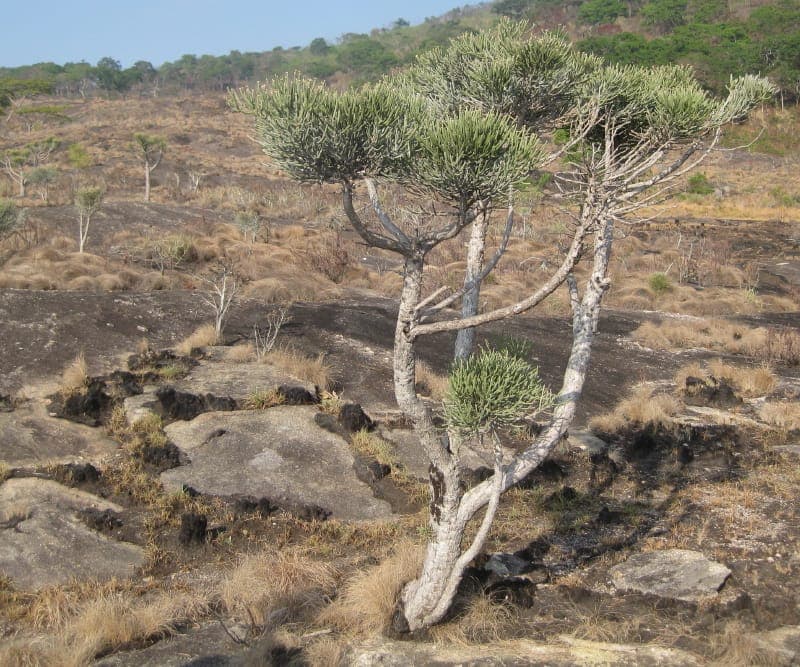
Ton Rulkens / CC BY-SA 2.0, via Wikimedia Commons
African milkbush: complete guide
Euphorbia tirucalli
Want to see African milkbush: complete guide in your garden?
1 minute, no credit card
Overview
Euphorbia tirucalli, commonly known as African milkbush, is a striking succulent with a tree-like growth habit. Native to arid regions of Africa and India, it thrives in hot, dry conditions and can reach up to 8 meters in the wild. In garden settings or containers, it usually stays under 2 meters, making it manageable for patios and modern landscapes. It's not frost-hardy, so in temperate climates like the UK or northern Europe, it's best grown in pots and brought indoors over winter.
This plant belongs to the Euphorbiaceae family and produces a milky white latex when cut or damaged. This sap is toxic and can irritate skin and eyes, so always wear gloves when handling. Despite this, African milkbush is a tough, low-maintenance plant that excels in sunny, dry spots where few others survive. It's a popular choice for xeriscaping – a style you can easily plan on gardenworld.app.
Appearance & bloom cycle
African milkbush has a sculptural, almost alien look. Its main feature is the dense network of thin, cylindrical, bright green stems that branch regularly from the base. Leaves are small, narrow, and fall off quickly, especially in drought, leaving behind a forest of jointed green rods. The branching pattern is uniform, giving it a neat, architectural form.
Flowering is rare, especially outside tropical climates. When it does bloom, small yellowish-green cyathia appear at stem tips, usually in late autumn (October–November). The blooms are short-lived and not particularly showy. The real appeal lies in the plant's form and texture, which remain attractive year-round.
Ideal location
Place your Euphorbia tirucalli in full sun. It needs at least 6 hours of direct sunlight daily to maintain compact growth. A south-facing window, conservatory, or sunny patio is ideal. Good air circulation is crucial – stagnant air increases the risk of fungal issues.
If you're designing a drought-tolerant garden, this plant makes a strong vertical accent. On gardenworld.app, you can experiment with layouts that pair it with low-growing succulents or gravel mulch for a clean, modern look. Avoid shady or humid corners – low light leads to leggy, weak stems.
Soil requirements
Use a fast-draining mix. A blend of cactus soil and perlite or coarse sand (2:1 ratio) works well. Always use a pot with drainage holes. In garden beds, opt for sandy, low-fertility soil. Avoid heavy clay or water-retentive composts, which cause root rot.
Standard garden centres stock cactus and succulent compost, but you can mix your own. The soil should feel dry to the touch within seconds of watering. Never use rich organic matter – this plant evolved in poor soils and doesn't need feeding.
Free design
Want to see African milkbush: complete guide in your garden? Make a free design now.
Watering
Water sparingly. During the growing season (April–September), let the top 3–5 cm of soil dry out between waterings. That's roughly every 10–14 days, depending on heat and humidity. In winter (October–March), reduce watering to once every 4–6 weeks.
Use room-temperature, low-lime water. Water at the base, not over the crown. Overwatering is the #1 cause of death. If in doubt, wait longer. A slightly wrinkled stem isn't a crisis – it'll plump up after a drink.
Pruning
Pruning isn't essential but helps control size and shape. Always use clean, sharp shears and wear gloves. Cut just above a branching node to encourage bushiness. Let cuttings dry for 24 hours to seal the sap before planting in gritty soil – they root easily.
Avoid pruning in winter. The best time is early spring (March–April), just before active growth resumes. This gives the plant time to heal and produce new shoots.
Maintenance calendar
- January: Dormant. Minimal water. Check for pests.
- February: Keep dry. Prepare tools for spring.
- March: Light feeding (quarter strength). Prune if needed.
- April: Repot if root-bound. Increase watering gradually.
- May–August: Active growth. Water when dry. No fertiliser.
- September: Start reducing water.
- October–December: Winter rest. Water once monthly. Keep above 7°C.
Winter hardiness
Euphorbia tirucalli is not hardy below USDA zone 10. It can't tolerate frost. In colder areas, bring it indoors by October. Keep it in a bright, cool room (10–15°C) with low humidity. Avoid hot radiators – dry air invites spider mites.
If you're unsure about winter care, gardenworld.app offers climate-specific planting guides to help you protect tender succulents through the colder months.
Companion plants
Pair African milkbush with other drought-tolerant plants like Agave, Aloe, or Yucca. Its upright form contrasts well with rosette succulents or ground-hugging sedums. Avoid soft, high-water plants like hostas or ferns – they clash in care and aesthetics.
In containers, use a single specimen for impact, or group with Echeveria 'Lola' and Sedum rubrotinctum. A terracotta pot enhances its natural look. For a bold display, add ornamental grasses like Nassella tenuissima.
Closing
Euphorbia tirucalli isn't for beginners – the toxic sap and precise watering needs demand respect. But for those who appreciate sculptural, resilient plants, it's a rewarding choice. It adds height, texture, and architectural interest to modern gardens.
Whether you're creating a small succulent bowl or a full xeriscape, gardenworld.app helps you design a layout that fits the plant's growth pattern and light needs. Plan smart, grow bold.
Want to see African milkbush: complete guide in your garden? Make a free design now.
Upload a photo, pick a style, and get a photorealistic design with plant list in under a minute.
No credit card required


Similar plants
Woolly mercury: complete guide
Mercurialis tomentosa
All about Mercurialis tomentosa, the woolly mercury from southwestern Europe: site, soil, watering, care and garden design tips.
Shurur: complete guide
Euphorbia fruticosa
Everything about Shurur: cultivation in dry climates, xeriscaping, care and tips for drought-resistant gardens in warm climates
Glary spurge: complete guide
Euphorbia glareosa
Everything about glary spurge: cultivation, maintenance, frost hardiness and use in Mediterranean and mountain-inspired gardens