
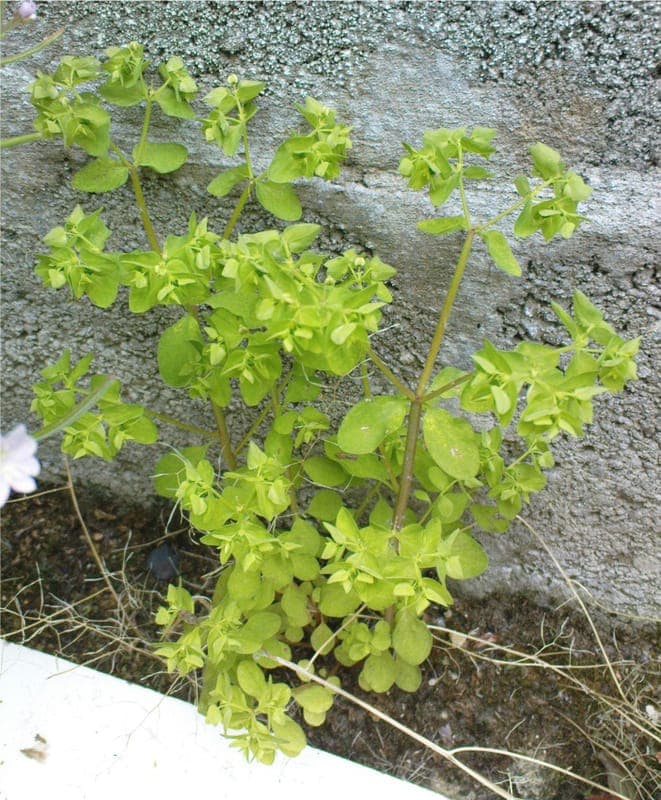
Steve1nova / Public domain, via Wikimedia Commons
Radium-plant: complete guide
Euphorbia peplus
Want to see Radium-plant: complete guide in your garden?
1 minute, no credit card
Overview
The Radium-plant, or Euphorbia peplus, is a resilient annual herb that often pops up uninvited in gardens across the UK and parts of Europe. While frequently dismissed as a weed, it actually offers surprising ornamental and ecological value. With its upright habit and near-constant flowering, it's a solid choice for low-effort gardeners or those building wildlife-friendly spaces. Found in borders, cracks in paving, or tucked between stones, this plant thrives where others struggle. On gardenworld.app, you can design a planting scheme where Radium-plant complements other drought-tolerant species in a balanced layout.
Native to regions like the Balkans and the Baltic States, it has naturalised well across temperate zones, including much of Western Europe. It's a member of the Euphorbiaceae family, known for its milky latex sap - handle with care. Though self-seeding readily, it's easy to manage if you understand its growth patterns and preferred conditions.
Appearance & bloom cycle
Radium-plant grows between 10 and 30 cm tall, with slender, branching stems that carry small, lance-shaped leaves. The foliage is bright green, sometimes with a hint of red on the stem, especially in full sun. The real standout is the bloom: tiny yellow cyathia (not true flowers) that cluster at stem tips. These aren't flashy, but they're persistent.
What makes Euphorbia peplus special is its year-round flowering. From January through December, you'll likely spot blooms - even in mild winter spells. In colder months, flowering slows but rarely stops completely in sheltered spots. Each bloom lasts several weeks, and new ones form continuously, making it one of the longest-flowering annuals you can grow in USDA hardiness zones 6–9.
Ideal location
This plant thrives in a light level of 8 - meaning full sun to partial shade. It grows best in open, sunny areas but tolerates light shade, especially in the afternoon. Ideal spots include the front of borders, between paving slabs, or in rock gardens. It's particularly useful in neglected corners or on poor soil where you need quick cover.
Avoid waterlogged sites. While drought-tolerant, it won't survive in soggy ground. A south- or west-facing aspect works best, offering warmth and drainage. If you're using containers, ensure they have holes and aren't sitting in trays of water. Shelter from strong winds helps, especially in early spring when seedlings are fragile.
Soil requirements
Radium-plant is not picky. It grows well in average to poor soil, as long as it drains well. The ideal pH range is neutral to slightly alkaline - 7.0 to 7.5. Sandy or gravelly soils are perfect; clay-heavy soils should be amended with grit or compost to improve drainage.
One advantage: it colonises disturbed ground quickly, making it great for new garden beds or areas cleared of weeds. You won't need to enrich the soil - in fact, too much fertility can lead to leggy growth. On gardenworld.app, use the soil analysis tool to check if your garden beds match these conditions before planting.
Free design
Want to see Radium-plant: complete guide in your garden? Make a free design now.
Watering
Once established, Radium-plant needs little watering. It's drought-tolerant and survives dry spells with ease. During germination and early growth (spring to early summer), light watering helps if the soil dries out completely. Use rainwater when possible - it's gentler on young roots.
Let the soil dry between waterings. Overwatering leads to root rot, especially in cool, humid periods. In most UK and northern European climates, rainfall is sufficient. Only irrigate during prolonged droughts, and even then, do so sparingly.
Pruning
Pruning isn't required, but you can deadhead spent blooms to reduce self-seeding. Cut back flowering stems in late summer (August–September) to prevent excessive spreading. Use gloves and clean shears - the milky sap can irritate skin and eyes.
If plants get too dense, thin them out by hand. This improves air circulation and reduces disease risk. Remove any dead or damaged growth for a neater look, but don't worry about shaping - the plant maintains a tidy form naturally.
Maintenance calendar
- January–March: Watch for early blooms. Clear old plant debris if desired.
- April–June: Germination peaks. Ensure good light and avoid overwatering.
- July–August: Peak bloom. Deadhead to limit seed spread.
- September–October: Plants begin to die back. Remove or leave for insects.
- November–December: Check for late germination. Protect young plants if frost is severe.
Winter hardiness
Radium-plant is rated for USDA zones 6–9. As an annual, it typically doesn't survive winter frost, but it self-seeds reliably. Seedlings can tolerate light frosts down to -5°C. In milder winters, you may see green growth and even blooming in December.
No winter protection is needed, but a thin layer of mulch can help insulate young plants during cold snaps. In colder zones, it behaves as a true annual; in warmer areas, it may act as a short-lived perennial.
Companion plants
Pair Radium-plant with other low-growing, drought-tolerant species. Try Thymus vulgaris, Sedum rupestre, or Bellis perennis for texture contrast. It works well in rock gardens or gravel beds, especially with silver-foliaged plants like Artemisia schmidtiana.
Avoid planting near aggressive spreaders or tall, shading perennials. In mixed borders, use it as a front-row filler - it looks great with early spring bulbs like Muscari or Chionodoxa.
Closing
Don't write off Radium-plant as just a weed. It's a tough, long-blooming annual that earns its place in low-maintenance and wildlife gardens. With minimal care and a long flowering season, it's ideal for beginners or busy gardeners.
Handle with gloves due to the irritant sap, and manage seeding if it gets too enthusiastic. You can find Euphorbia peplus at garden centres across the UK, or let it self-establish if it already grows nearby. On gardenworld.app, visualise how to integrate this plant into a cohesive, low-effort garden design that suits your space.
Want to see Radium-plant: complete guide in your garden? Make a free design now.
Upload a photo, pick a style, and get a photorealistic design with plant list in under a minute.
No credit card required


Similar plants
Woolly mercury: complete guide
Mercurialis tomentosa
All about Mercurialis tomentosa, the woolly mercury from southwestern Europe: site, soil, watering, care and garden design tips.
Shurur: complete guide
Euphorbia fruticosa
Everything about Shurur: cultivation in dry climates, xeriscaping, care and tips for drought-resistant gardens in warm climates
Glary spurge: complete guide
Euphorbia glareosa
Everything about glary spurge: cultivation, maintenance, frost hardiness and use in Mediterranean and mountain-inspired gardens