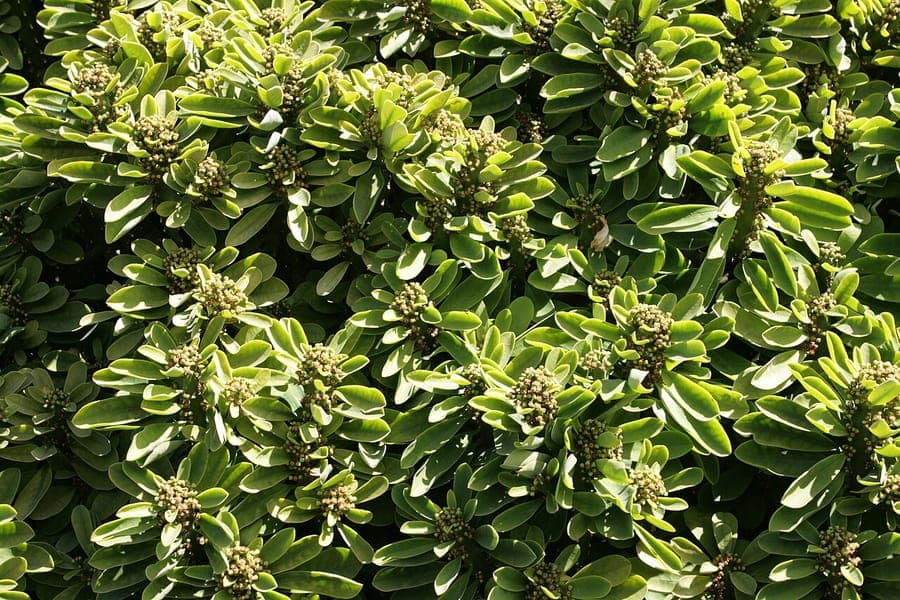
Frank Vincentz / CC BY-SA 3.0, via Wikimedia Commons
Euphorbia neriifolia: complete guide
Euphorbia neriifolia
Want to see Euphorbia neriifolia: complete guide in your garden?
Full design in HD: €7.99
Look after your Euphorbia neriifolia with the GardenWorld app
Identify plants with your camera and get a care calendar with reminders for this plant.


Overview
Euphorbia neriifolia, hedge euphorbia, is a robust woody shrub native from Iran through Myanmar. This plant works well as a hedging plant in warm climates and also serves as an ornamental specimen. With its characteristic form and red-yellow flowers, it brings exotic flair to gardens.
Appearance and bloom
Euphorbia neriifolia grows as an upright, compact shrub reaching 1.5-2 meters tall. The foliage is linear and narrow, giving it a very elegant appearance. Red to yellow flowers (cyathia) appear in clusters and provide color. Blooming occurs during warm months - spring through summer in warm regions.
Ideal location
Full sun is essential. At least 6-8 hours of direct sunlight daily. In warm climates, protection from extreme midday sun helps. Good air circulation prevents fungal issues.
Soil
Well-draining, moderately fertile soil. Add sand and gravel for drainage. pH between 6-7.5. This plant tolerates poor soil better than rich soil. In pots use cactus mix with some garden soil.
Watering
Water moderately during growing season. Soil can be lightly moist. In dormancy water sparingly. Excessive moisture is not tolerated. Better dry than wet.
Free preview
Want to see Euphorbia neriifolia: complete guide in your garden? Make a free preview of your design.
Pruning
Regular pruning helps maintain compact form. Pruning increases branching and bushiness. Remove dead or damaged branches. Pruning after frost helps rejuvenate.
Maintenance calendar
January-March: Winter dormancy; minimal water. April-May: Resume growth; apply watering. June-August: Bloom time; regular watering. September-October: Reduction; less water. November-December: Winter prep; spare water.
Winter hardiness
Not hardy in temperate climates. Minimum temperature 10 degrees Celsius. In cold areas overwinter indoors. In warm regions can stay outdoors year-round.
Companion plants
Pair with other warm-climate shrubs. Euphorbia pulcherrima (Poinsettia) harmonizes. Upright native shrubs. Green walls of clematis. Colorful bloomers like Lantana provide contrast.
Closing thoughts
Euphorbia neriifolia is a versatile shrub for warm-climate gardens. As a hedge it provides privacy; as a specimen it creates decorative accent. Red flowers attract attention.
Find this plant at specialized plant shops and tree nurseries. UK garden centers offer tropical collections. German OBI and Hornbach carry exotic plants. French Truffaut and Jardiland offer warm-climate collections.
Want more on warm-climate plants? Visit gardenworld.app/en. Or check gardenworld.app/en for plant profiles.
Frequently asked questions about Euphorbia neriifolia
Is Euphorbia neriifolia winter hardy?
Not hardy in temperate climates. Minimum temperature 10 degrees Celsius.
When and how do you prune Euphorbia neriifolia?
Regular pruning helps maintain compact form. Pruning increases branching and bushiness.
How much water does Euphorbia neriifolia need?
Water moderately during growing season. Soil can be lightly moist.
Where does Euphorbia neriifolia grow best?
Full sun is essential. At least 6-8 hours of direct sunlight daily.
What soil does Euphorbia neriifolia need?
Well-draining, moderately fertile soil. Add sand and gravel for drainage. pH between 6-7.5.

See it in your garden
See Euphorbia neriifolia in your garden
One photo of your garden and a few questions. You see the result in about a minute.
Try it with a photoIdentify this plant in your own garden. Identify a plant
Similar plants
Woolly mercury: complete guide
Mercurialis tomentosa
All about Mercurialis tomentosa, the woolly mercury from southwestern Europe: site, soil, watering, care and garden design tips.
Shurur: complete guide
Euphorbia fruticosa
Everything about Shurur: cultivation in dry climates, xeriscaping, care and tips for drought-resistant gardens in warm climates
Glary spurge: complete guide
Euphorbia glareosa
Everything about glary spurge: cultivation, maintenance, frost hardiness and use in Mediterranean and mountain-inspired gardens
