
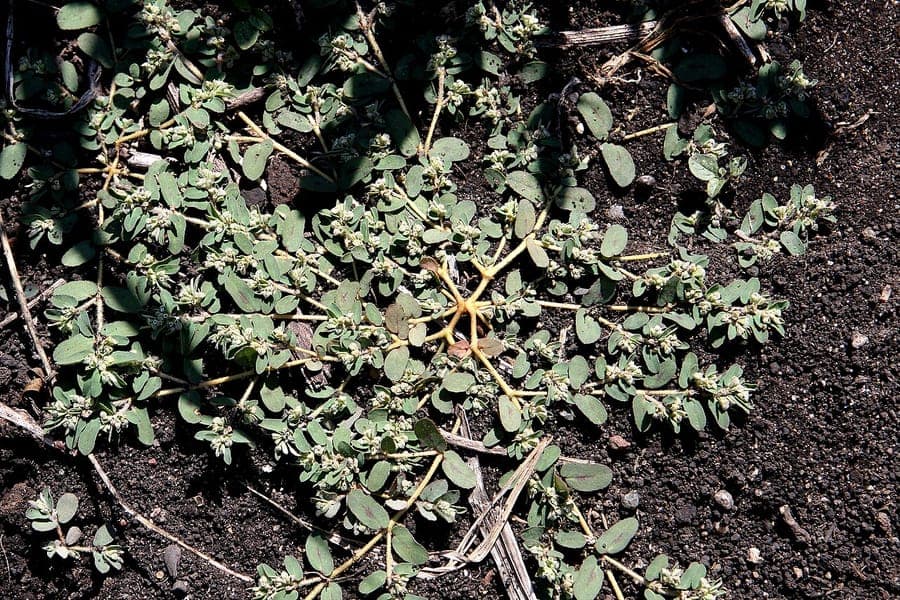
Hardyplants at English Wikipedia / Public domain, via Wikimedia Commons
Spotted sandmat: complete guide
Euphorbia maculata
Want to see Spotted sandmat: complete guide in your garden?
1 minute, no credit card
Overview
Euphorbia maculata, commonly known as spotted sandmat, is a tough little annual that thrives where most plants struggle - hot, dry, and neglected corners of the garden. Native to the southeastern U.S. and parts of the Caribbean, it's built for heat and drought. In temperate climates, it behaves as a self-seeding annual, returning each year from seed if conditions allow. It's not flashy, but it's dependable, making it a solid choice for xeriscaping, rock gardens, or filling gaps in gravel paths.
This is the kind of plant you don't have to worry about. It asks for almost nothing and gives back a long bloom season and tidy ground cover. On gardenworld.app, you can design a drought-friendly layout where spotted sandmat plays a supporting role, linking other succulents and sun-lovers with its creeping habit.
Appearance & bloom cycle
Spotted sandmat grows low - rarely over 4 inches (10 cm) tall - with spreading stems that can reach up to 12 inches (30 cm) wide. The leaves are small, oval, and deep green, each marked with a distinctive white spot in the center. That's where the name maculata (spotted) comes from. The foliage forms a dense mat, suppressing weeds and adding texture.
What look like flowers are actually bracts - modified leaves in pale yellow to yellow-green - surrounding tiny true flowers. Bloom time runs from June through October, especially in full sun. The plant exudes a milky, latex-like sap when cut or broken, typical of the spurge family. This sap can irritate skin and eyes, so wear gloves when handling, especially during cleanup.
Ideal location
Full sun is non-negotiable. Aim for at least 6–8 hours of direct sunlight daily. In partial shade, the plant stretches, becomes leggy, and blooms poorly. It's perfect for south-facing slopes, hot patios, gravel gardens, or between pavers where heat builds up.
It does especially well in USDA hardiness zones 7–10, though in cooler zones it still performs as an annual. If you're working with a tight space or container, use a shallow pot - this plant doesn't need depth. On gardenworld.app, you can visualize how to incorporate it into a sunny courtyard or rooftop garden where water is limited and every inch counts.
Soil requirements
Well-draining soil is essential. Sandy or gravelly mixes work best. Avoid heavy clay or water-retentive soils - they'll cause root rot. If your garden has poor drainage, raise the bed or use a cactus/succulent potting mix (two parts sand, one part perlite, one part regular potting soil).
Soil pH isn't critical - it tolerates a range from slightly acidic to slightly alkaline (5.8–7.5). Don't enrich the soil with compost or manure; this plant thrives in lean conditions. Too much fertility leads to lush foliage but fewer blooms.
Free design
Want to see Spotted sandmat: complete guide in your garden? Make a free design now.
Watering
Water deeply but infrequently. Let the top 2–3 inches (5–8 cm) of soil dry out between waterings. In average summer conditions, that's about once every 7–10 days. In containers, it may need water more often due to faster drying.
Once established, it's extremely drought-tolerant. Overwatering is the biggest mistake. No supplemental water is needed in rainy periods. In late fall, let the plant die back naturally. Seeds will drop and overwinter in the soil, germinating when temperatures rise above 65°F (18°C) in spring.
Pruning
No pruning required. As an annual, it completes its life cycle within one season. You can deadhead spent stems to tidy up the appearance, but it won't extend bloom time. If you want to encourage bushier growth, pinch back the tips in early summer (June). This promotes branching and a denser mat.
Always wear gloves when handling. The milky sap can cause dermatitis in sensitive individuals. Use clean, sharp snips if cutting - never torn stems.
Maintenance calendar
- January–February: Dormant. No action needed.
- March: Check for early seedlings. Thin if overcrowded.
- April–May: Active growth begins. Keep area weed-free during establishment.
- June–October: Peak bloom. Minimal care. No fertilizer.
- November–December: Plant dies back. Leave seed heads for natural reseeding, or remove for a neater look.
Winter hardiness
Euphorbia maculata is not winter-hardy as a plant outside USDA zone 9. It dies with the first frost. However, it reliably self-seeds in zones 7–10. Seeds germinate in late spring when soil warms. To get a head start, sow indoors in March in a warm location (70°F/21°C), then transplant after last frost.
In colder zones, treat it as an annual. Collect seeds in fall if you want to ensure next year's crop. Store in a cool, dry place until spring.
Companion plants
Pair with other drought-tolerant species: creeping thyme (Thymus serpyllum), sedum (Sedum spurium), or dwarf lavender (Lavandula angustifolia 'Munstead'). It also works well with ornamental grasses like blue fescue (Festuca glauca) or yarrow (Achillea millefolium).
Avoid moisture-loving plants like hostas or astilbes - their needs clash. Spotted sandmat also doesn't do well under dense shade or near plants that crowd it out.
Closing
Spotted sandmat is a quiet achiever. It won't dominate your garden, but it holds the ground, suppresses weeds, and blooms for months with zero fuss. It's a smart pick for low-water gardens, green roofs, or pathways where nothing else sticks.
You can find seeds or plants at garden centres, especially those specialising in native or drought-tolerant species. Look for the botanical name to avoid confusion with similar spurges like Euphorbia supina.
Once it settles in, it'll come back year after year - sometimes in unexpected spots. That's part of its charm. For a balanced design that embraces reseeding without chaos, try gardenworld.app to map out zones where self-sown plants are welcome and others where they're not.
Want to see Spotted sandmat: complete guide in your garden? Make a free design now.
Upload a photo, pick a style, and get a photorealistic design with plant list in under a minute.
No credit card required


Similar plants
Woolly mercury: complete guide
Mercurialis tomentosa
All about Mercurialis tomentosa, the woolly mercury from southwestern Europe: site, soil, watering, care and garden design tips.
Shurur: complete guide
Euphorbia fruticosa
Everything about Shurur: cultivation in dry climates, xeriscaping, care and tips for drought-resistant gardens in warm climates
Glary spurge: complete guide
Euphorbia glareosa
Everything about glary spurge: cultivation, maintenance, frost hardiness and use in Mediterranean and mountain-inspired gardens