
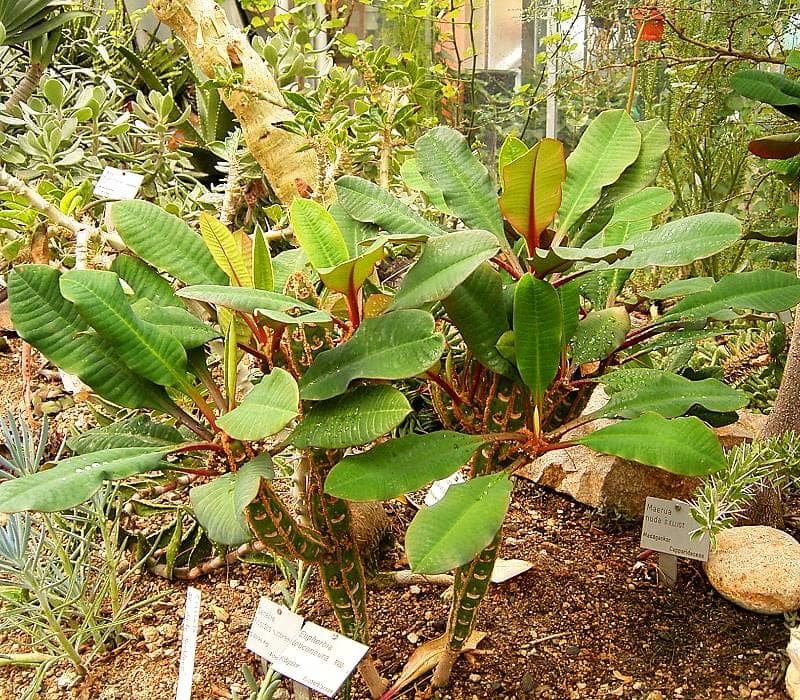
Frank Vincentz / CC BY-SA 3.0, via Wikimedia Commons
Euphorbia leuconeura: complete guide
Euphorbia leuconeura
Want to see Euphorbia leuconeura: complete guide in your garden?
1 minute, no credit card
Overview
Euphorbia leuconeura, better known as the Madagascar jewel or white-veined euphorbia, is an attractive, medium-sized houseplant from the Euphorbiaceae family. This plant is native to northern Madagascar, where it grows as a small shrub in moist, shaded forest areas. The plant typically reaches heights of 30 to 60 centimeters and is known for its characteristic green leaves with striking red veins and sometimes red spots.
Euphorbia leuconeura is popular with plant lovers because it is relatively easy to grow as a houseplant. With the right conditions, this plant will bloom and grow for many years. This article covers everything you need to know about successfully growing this beautiful plant.
Appearance and Bloom
Euphorbia leuconeura is immediately recognizable by its characteristic leaves. The leaves are elongated-lanceolate, glossy green in color, with striking red to dark red veins running throughout the leaf. Some leaves also have red spots or markings. This characteristic pattern makes the plant very decorative.
The plant grows as a small, upright shrub with multiple stems. In natural conditions, the plant can reach 1 to 1.5 meters, but in room cultivation it remains smaller, usually 30 to 60 centimeters.
The flowers are small and inconspicuous, yellow in color, appearing in clusters at the stem tops. They bloom throughout the growing season. The flowers are followed by small, round fruit capsules.
Ideal Location
Euphorbia leuconeura grows best in locations with bright, indirect sunlight. In its natural habitat, it grows in shady, forest-like areas with filtered sunlight. A spot near a north-facing window or a window that receives morning sun is ideal.
Direct midday sun can cause leaf scorch. If you notice the leaves burning, move the plant further from the window.
The plant can also grow under artificial light, which is useful for interiors without much natural light. Use incandescent or LED grow lights for optimal results.
Soil
Euphorbia leuconeura prefers rich, well-draining soil. Use a mixture of potting soil, sphagnum moss, and some perlite for better drainage. This helps retain moisture while allowing excess water to drain.
The plant grows well in standard houseplant soil if you supplement it with extra moss and drainage. pH may be neutral to slightly acidic.
Repot every year in spring if the plant outgrows its pot.
Free design
Want to see Euphorbia leuconeura: complete guide in your garden? Make a free design now.
Watering
Euphorbia leuconeura needs regular watering, especially during the growing season. The soil should be moister than for typical succulents, but never waterlogged. Check the soil daily - the top part may dry out, but the lower part should remain moist.
During the growing season (spring-summer) water when the top centimeter of soil feels dry. In winter water less, but never allow it to dry completely.
High air humidity is essential. Spray the plant regularly with water or place it on a saucer with water and pebbles.
Pruning
Euphorbia leuconeura responds well to pruning. Prune in early spring before growth begins. Remove dead stems and pinch back growth to encourage bushier growth.
The plant grows quickly and can become quite tall, so regular pruning helps maintain a compact form.
Maintenance Calendar
In spring (March-May), the plant begins to grow actively. This is the best time to prune and repot. Water regularly and add fertilizer every two weeks.
In summer (June-August), the plant grows rapidly. Water daily or every other day, depending on humidity. Increase air humidity by spraying. Ensure the plant is not in direct sun.
In fall (September-October), growth slows. Gradually reduce watering and stop fertilizing at the end of the period.
In winter (November-February), the plant partially rests. Reduce water but ensure soil does not dry out. Minimal feeding.
Winter Hardiness
Euphorbia leuconeura is not winter-hardy in temperate climates. This is a tropical plant that cannot tolerate temperatures below 12 degrees Celsius. Temperatures below 10 degrees Celsius cause plant death.
Keep the plant indoors in a warm location. Ensure it is not exposed to drafts from windows or doors.
Companion Plants
Euphorbia leuconeura combines beautifully with other tropical foliage plants:
Other Madagascar plants such as Aloe polyphylla grow well beside it. Fittonia, Calathea, and other foliage plants with interesting patterns form nice combinations. Houseplants with similar watering requirements are compatible.
Closing
Euphorbia leuconeura is an attractive, low-maintenance houseplant with beautiful leaf patterns. With regular watering, indirect sunlight, and high air humidity, this plant will bloom and beautify your home for many years.
The characteristic red veins on green leaves make this an eye-catcher in any room. Try this plant if you are looking for something unique.
For more inspiration, visit gardenworld.app. For purchasing this plant, contact local garden centers that regularly offer tropical foliage plants.
Want to see Euphorbia leuconeura: complete guide in your garden? Make a free design now.
Upload a photo, pick a style, and get a photorealistic design with plant list in under a minute.
No credit card required


Similar plants
Woolly mercury: complete guide
Mercurialis tomentosa
All about Mercurialis tomentosa, the woolly mercury from southwestern Europe: site, soil, watering, care and garden design tips.
Shurur: complete guide
Euphorbia fruticosa
Everything about Shurur: cultivation in dry climates, xeriscaping, care and tips for drought-resistant gardens in warm climates
Glary spurge: complete guide
Euphorbia glareosa
Everything about glary spurge: cultivation, maintenance, frost hardiness and use in Mediterranean and mountain-inspired gardens