
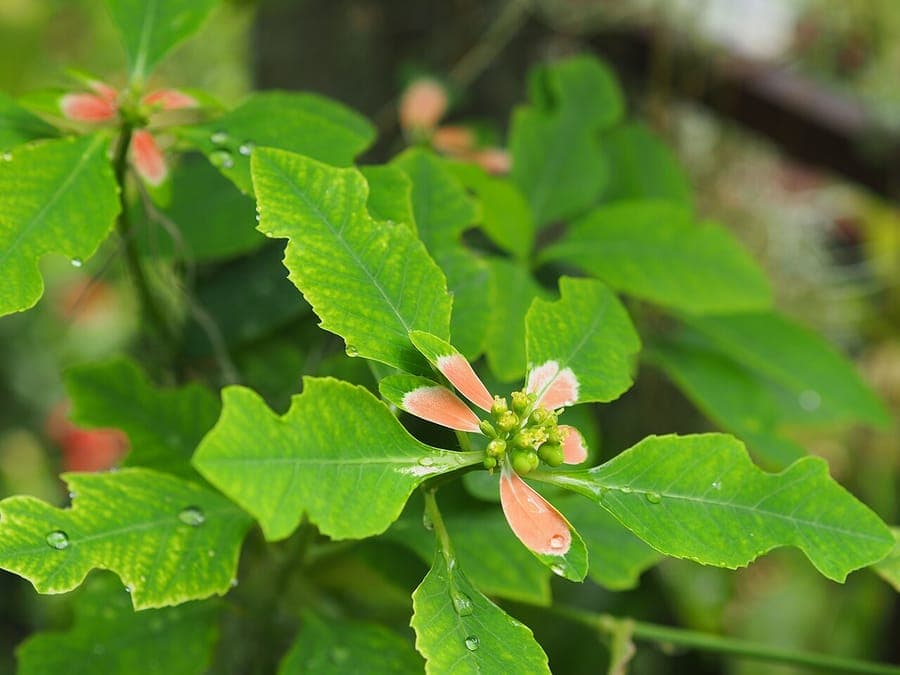
Psumuseum / CC BY-SA 4.0, via Wikimedia Commons
Japanese poinsettia: complete guide
Euphorbia heterophylla
Want to see Japanese poinsettia: complete guide in your garden?
1 minute, no credit card
Overview
Euphorbia heterophylla, commonly known as Japanese poinsettia, is a striking annual that thrives in hot, sunny gardens. Despite the name, it's not a true poinsettia - that title belongs to Euphorbia pulcherrima - but it does share the same family: Euphorbiaceae. You'll find this plant increasingly available at garden centres across the UK and US, especially from May onwards. It grows fast, blooms for months, and handles dry spells like a champ, making it perfect for sunny borders or patio containers.
Native to regions like Alabama, Arizona, and parts of South America including Argentina and Bolivia, this species naturally colonises open, sandy areas along roadsides and disturbed soils. In the garden, it performs best when planted in the middle or back of a sunny border, reaching heights of 30 to 60 cm with a bushy, spreading habit. Its standout feature? Those vivid red to orange bracts that resemble flowers but are actually modified leaves.
On gardenworld.app, you can design a garden layout that highlights Japanese poinsettia as a drought-tolerant centerpiece for your south-facing bed.
Appearance & bloom cycle
The real flowers of Euphorbia heterophylla are tiny, yellow, and almost invisible. What catches the eye are the brightly coloured bracts - usually red, but some cultivars show orange, pink, or even yellow tones. The foliage is narrow, linear, and slightly hairy, with a grey-green hue that contrasts beautifully with the bracts.
Bloom time runs from June to October in temperate climates, provided plants are established by early May. As an annual, it won't survive winter, so replant each year. Deadheading encourages continuous flowering - skip it, and the plant will set seed and fade earlier. Self-seeding can occur in warmer zones (9–11), but in cooler areas, it's usually minimal.
Ideal location
Full sun is non-negotiable. This plant needs at least 6 hours of direct sunlight daily, preferably 8 or more. In shade, it becomes leggy and produces fewer bracts. Choose a south- or west-facing spot in your garden, or grow it in a terracotta pot on a sunny patio. It loves heat and good air circulation, but hates wet foliage.
Be warned: all parts are toxic. The milky sap can irritate skin and eyes, and is harmful if ingested. Wear gloves when handling, and keep pets away from young plants.
Soil requirements
Japanese poinsettia isn't fussy about soil as long as it drains well. Use a light, sandy mix or amend garden soil with coarse sand or perlite (2:1 ratio). Avoid heavy clay soils - they retain too much moisture and lead to root rot. A pH between 6.0 and 7.0 is ideal, but the plant tolerates slightly acidic to slightly alkaline conditions.
In containers, use a high-quality potting mix for flowering plants. Add a 2–3 cm layer of drainage material - like gravel or broken pottery - at the base.
Free design
Want to see Japanese poinsettia: complete guide in your garden? Make a free design now.
Watering
Water moderately. Once a week is sufficient in average conditions. During heatwaves above 28°C, increase to twice weekly, watering at the base in the morning or evening. Let the top 2–3 cm of soil dry between sessions. Wilting leaves usually signal underwatering, not overwatering - this plant is far more forgiving of dry soil than soggy roots.
Pruning
Deadhead regularly from July onward to extend blooming. Use clean, sharp snips and cut just above a leaf node. This encourages bushier growth and more bract production. No need for formal shaping - the plant naturally fills out with consistent deadheading. Avoid cutting stems for cuttings; propagation is best done from seed.
Maintenance calendar
- January: No action
- February: No action
- March: Sow indoors at 22°C under grow lights
- April: Harden off seedlings, ensure good airflow
- May: Transplant outdoors after last frost (mid to late May)
- June: First blooms appear, begin regular watering
- July: Start deadheading, monitor for aphids
- August: Peak bloom, increase water during dry spells
- September: Continue deadheading, enjoy full colour
- October: Plants die back after first frost
- November: Clear debris, compost healthy material
- December: Rest period
With gardenworld.app, you can create a custom maintenance calendar that syncs with your local frost dates and weather patterns.
Winter hardiness
Euphorbia heterophylla is not frost-hardy. It's perennial only in USDA zones 9–11. In cooler zones, treat it as an annual. It won't survive winter outdoors, and bringing it inside rarely works - the plant declines quickly in low light and dry indoor air.
Companion plants
Pair Japanese poinsettia with other sun-loving, drought-tolerant plants like Lavandula, Salvia officinalis, or Zinnia elegans. The red bracts pop against silvery foliage or blue blooms from Nepeta or Echinacea. Avoid moisture-loving plants like ferns or astilbes - their needs clash entirely.
In pots, combine with portulaca or marigolds for a high-impact, low-water display.
Closing
Euphorbia heterophylla is a bold, easy-care annual that brings months of vibrant colour to hot, sunny spots. It's not edible, not shade-tolerant, and definitely not for curious pets - but if you respect its needs, it rewards you with relentless blooms and minimal fuss. Start seeds early, plant in full sun, and deadhead often. With the right setup, this plant earns its place in any summer garden.
Want to see Japanese poinsettia: complete guide in your garden? Make a free design now.
Upload a photo, pick a style, and get a photorealistic design with plant list in under a minute.
No credit card required


Similar plants
Woolly mercury: complete guide
Mercurialis tomentosa
All about Mercurialis tomentosa, the woolly mercury from southwestern Europe: site, soil, watering, care and garden design tips.
Shurur: complete guide
Euphorbia fruticosa
Everything about Shurur: cultivation in dry climates, xeriscaping, care and tips for drought-resistant gardens in warm climates
Glary spurge: complete guide
Euphorbia glareosa
Everything about glary spurge: cultivation, maintenance, frost hardiness and use in Mediterranean and mountain-inspired gardens