
Miguel Andrade / Public domain, via Wikimedia Commons
Cushion spurge: complete guide
Euphorbia epithymoides
Want to see Cushion spurge: complete guide in your garden?
1 minute, no credit card
Overview
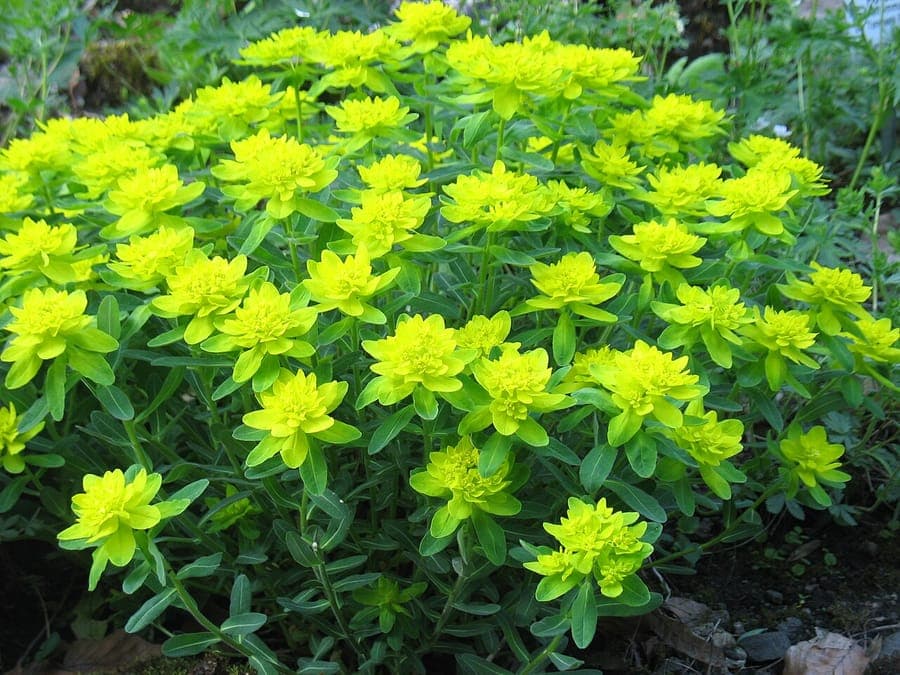
Cushion spurge (Euphorbia epithymoides) is a compact, herbaceous perennial that brings early-season drama with its vibrant yellow bracts. Native to southern Europe-including Greece, Italy, and Bulgaria-it thrives in sunny, dry spots where many other plants struggle. Growing 25–35 cm tall and spreading 30–40 cm wide, it forms dense, cushion-like mounds that make it an excellent ground cover or border frontliner.
This Euphorbia is wintergreen in milder climates but may die back in harsh winters, returning reliably from the roots each spring. It's a resilient plant, tolerant of drought, poor soil, and neglect-making it ideal for beginner gardeners and low-maintenance landscapes. It also attracts early pollinators like bees and hoverflies, adding ecological value.
On gardenworld.app, you can create a custom garden plan that integrates cushion spurge with complementary plants and microclimates.
Appearance & bloom cycle
From late March to early May, cushion spurge erupts in golden-yellow bracts that resemble flowers but are actually modified leaves. The true flowers are tiny and nestled inside, almost invisible. What makes the display striking is the contrast between the bright bracts and dark green, lance-shaped foliage. New growth often has reddish or bronze tones, adding depth to the overall look.
The bracts hold their color for 6–8 weeks, often persisting into early June. After blooming, the plant retains its dense, evergreen-like form through summer, forming a tidy green mound. Seed capsules form but rarely lead to aggressive self-seeding.
Ideal location
Full sun is essential-aim for at least 6 hours of direct sunlight daily. In partial shade, the plant becomes leggy and produces fewer bracts. It performs best in hot, dry areas such as rock gardens, gravel beds, or south-facing slopes. It's also excellent for planting near walls or under deciduous shrubs where competition for water is high.
Avoid damp, shaded corners. This plant thrives where heat and light are abundant. It pairs beautifully with ornamental grasses, lavender, or creeping thyme in Mediterranean-style gardens.
Soil requirements
Well-drained soil is non-negotiable. Cushion spurge tolerates sandy, loamy, or gravelly soils but fails in heavy clay or waterlogged conditions. Ideal pH ranges from 6.0 to 7.5. If your soil is clay-heavy, amend it with sharp sand or fine gravel at planting time to improve drainage.
Fertility should be low. Rich soils promote weak, floppy growth and reduce flowering. Do not add compost or manure-this plant prefers lean conditions.
Free design
Want to see Cushion spurge: complete guide in your garden? Make a free design now.
Watering
Water regularly during the first 4–6 weeks after planting to help roots establish. Once settled, it's highly drought-tolerant. In average UK or US rainfall conditions, supplemental watering is rarely needed, even in summer.
During prolonged dry spells, a deep soak every 2–3 weeks is sufficient. Avoid frequent shallow watering, which encourages weak root development. Use rainwater when possible, as the plant is sensitive to high lime content in tap water over time.
Pruning
Pruning is minimal. After flowering, cut back spent stems to just above the leaf rosette to maintain a tidy appearance. Some gardeners prefer to cut the entire plant down to 10 cm in June, which encourages fresh, compact growth for late summer.
Always wear gloves when handling-Euphorbias exude a milky sap that can irritate skin and eyes. Wash tools and hands thoroughly after pruning.
Maintenance calendar
- February: Remove any damaged or old foliage. Check for slug damage on emerging shoots.
- March: Bloom begins. Ensure plant is in full sun.
- April: Peak bloom month. Monitor for aphids, though rarely a serious issue.
- May: Flowers fade. Begin pruning dead stems.
- June: Optional full cutback for renewed foliage.
- July–August: Dormant phase. No care needed.
- September: Inspect for fungal spots-rare but possible in wet summers.
- October: Leave as-is; no action required.
- November–January: Winter-hardy in zones 5–8. Mulch lightly in zone 5 if severe winter expected.
Winter hardiness
Cushion spurge is hardy in USDA zones 5 to 8 (-20°C to -10°C). In zone 5, a light mulch of dry leaves or bracken can protect the crown during extreme cold. In zones 6–8, it typically remains evergreen or semi-evergreen, with foliage browning slightly but recovering in spring.
Avoid winter wetness-this is more damaging than cold. Plant on a slope or raised bed if drainage is a concern.
Companion plants
Pair cushion spurge with other drought-tolerant perennials. Excellent choices include Lavandula angustifolia, Nepeta racemosa, Sedum spectabile, and Allium hollandicum. The yellow bracts contrast beautifully with blue, purple, and silver foliage.
Bulbs like Narcissus 'Tête-à-tête' or Muscari armeniacum emerge at the same time, creating a vibrant spring display. For structure, plant behind or alongside low shrubs like Cistus or dwarf conifers.
On gardenworld.app, you can design a planting scheme where cushion spurge complements these companions in sun-drenched borders.
Closing
Cushion spurge is an underrated gem-tough, attractive, and ecologically beneficial. It asks for little but delivers bold color in spring and reliable structure all season. Perfect for gravel gardens, slopes, or low-water landscapes. Available in spring at most garden centres in 1L pots, including major retailers like B&Q, Wyevale, and local independents.
Plant it in a hot, dry spot, step back, and let it shine year after year.
Want to see Cushion spurge: complete guide in your garden? Make a free design now.
Upload a photo, pick a style, and get a photorealistic design with plant list in under a minute.
No credit card required


Similar plants
Woolly mercury: complete guide
Mercurialis tomentosa
All about Mercurialis tomentosa, the woolly mercury from southwestern Europe: site, soil, watering, care and garden design tips.
Shurur: complete guide
Euphorbia fruticosa
Everything about Shurur: cultivation in dry climates, xeriscaping, care and tips for drought-resistant gardens in warm climates
Glary spurge: complete guide
Euphorbia glareosa
Everything about glary spurge: cultivation, maintenance, frost hardiness and use in Mediterranean and mountain-inspired gardens