
Didier Descouens / CC BY-SA 4.0, via Wikimedia Commons
Cypress spurge: complete guide
Euphorbia cyparissias
Want to see Cypress spurge: complete guide in your garden?
1 minute, no credit card
Overview
Euphorbia cyparissias, commonly known as Cypress spurge, is a herbaceous perennial native to central and eastern Europe. It thrives in sunny, dry conditions and forms dense mounds of fine, needle-like foliage that resemble tiny cypress trees - hence the name. While it brings texture and spring interest to the garden, it can become invasive if not managed. On gardenworld.app, you can design a garden layout that keeps its spreading habit in check, ensuring it complements rather than overtakes your space.
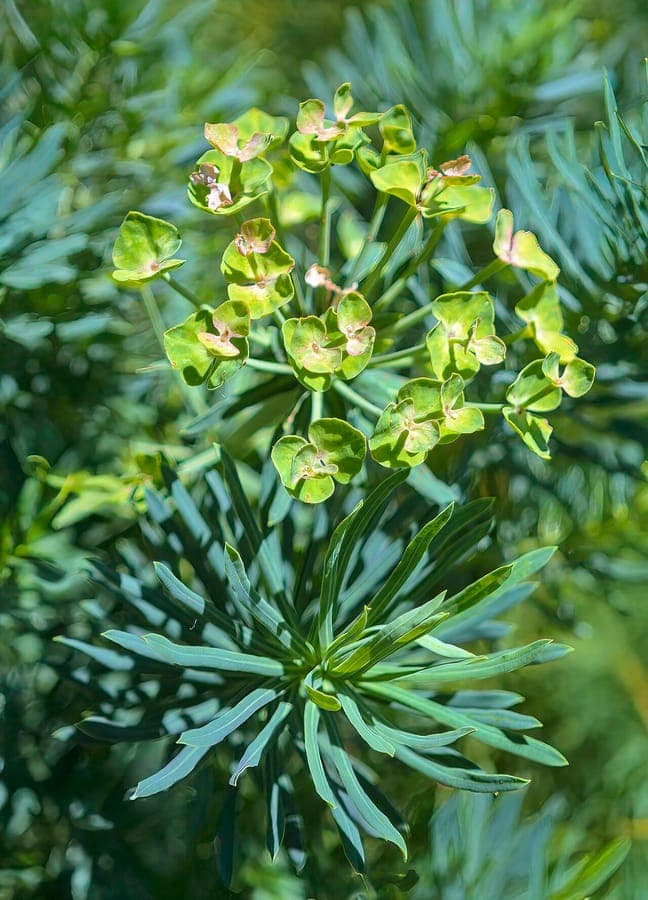
This plant blooms in late spring, typically May to June, with clusters of small, yellow-green cyathia (flower-like bracts). The real flowers are tiny and tucked in the center. A word of caution: the milky sap is irritating to skin and eyes, so always wear gloves when handling or pruning.
Appearance & bloom cycle
Cypress spurge grows 20–30 cm tall and spreads 30–40 cm wide. Its upright to slightly arching stems are covered in narrow, bright green leaves that give it a soft, feathery look. The bloom period, from mid-May to early June, features lemon-yellow bracts that rise above the foliage. These aren't true flowers but specialized structures that attract pollinators like hoverflies and bees.
After blooming, the bracts and upper leaves often turn reddish or bronze in summer, adding seasonal interest. If left unpruned, the plant sets seed and can self-sow aggressively. It also spreads via underground rhizomes, so keep an eye on its perimeter, especially near lawns or delicate perennials.
Ideal location
Cypress spurge needs full sun - aim for 8 hours daily (light level 8). It performs best in open, well-drained areas like rock gardens, dry slopes, or sunny borders. It becomes leggy and floppy in partial shade, losing its compact form.
Avoid planting under dense tree canopies or in constantly damp soil. It thrives in poor to average soil, making it ideal for low-fertility zones where other plants struggle. Use it along pathways or in gravel gardens where its fine texture contrasts nicely with coarser plants.
Soil requirements
Well-drained, light to sandy soil is ideal. It tolerates neutral to slightly alkaline conditions (pH 7.0–7.5) and grows well on chalky or limestone soils. Heavy clay or waterlogged ground is a no-go - it leads to root rot. Before planting, improve drainage by mixing in grit or coarse sand, especially in compacted areas.
Don't enrich the soil with compost or manure - this plant prefers lean conditions. Too many nutrients encourage weak, floppy growth. On gardenworld.app, you can simulate soil types and see how Cypress spurge fits into your specific garden conditions.
Free design
Want to see Cypress spurge: complete guide in your garden? Make a free design now.
Watering
Once established, Cypress spurge is highly drought-tolerant. Young plants in their first season need watering once a week during dry spells. Focus water at the base to avoid wetting foliage, which can promote fungal issues.
Mature plants rarely need supplemental watering. In extreme drought (3+ weeks without rain), give a deep soak every 10–14 days. Overwatering is more dangerous than underwatering - soggy roots quickly lead to rot, especially in cooler months.
Pruning
Pruning is essential. Right after flowering in late June, cut the plant back by half to two-thirds. This prevents seed formation and encourages fresh, green regrowth. Use clean, sharp shears and wear gloves to avoid sap contact.
If you leave the plant standing for winter interest, cut it back hard in late winter (February–March), just before new shoots emerge. Avoid pruning in fall, as this can trigger tender growth that won't survive frost.
Maintenance calendar
- February–March: Cut back old growth
- April: Watch for new shoots
- May–June: Bloom period, monitor for self-seeding
- July: Shear back after bloom
- August–September: Check for rhizome spread
- October–January: Dormant; minimal care needed
Inspect regularly for creeping runners. Pull out any unwanted shoots with roots intact - even small root fragments can regenerate.
Winter hardiness
Cypress spurge is hardy in USDA zones 4–8 (down to -34°C). The top growth dies back in winter, but the roots survive. In zone 4, a light mulch of dry leaves or straw helps protect the crown during harsh freezes.
In wet winters, ensure good drainage to prevent crown rot. The plant re-emerges in spring, usually in late April or early May, depending on local conditions.
Companion plants
Pair Cypress spurge with drought-tolerant, sun-loving perennials:
- Sedum 'Autumn Joy' – similar water needs, late-season bloom
- Salvia nemorosa – purple spikes contrast with yellow bracts
- Nepeta 'Walker's Low' – soft blue flowers, same growing conditions
- Allium schoenoprasum – structural interest, deters pests
Avoid moisture-loving plants like astilbe or ligularia. They won't thrive in the dry, well-drained soil this spurge requires.
Closing
Cypress spurge brings fine texture and spring color to sunny, dry areas. With regular pruning and smart placement, it's a reliable ground cover. Just stay vigilant - its spreading nature can surprise you.
Buy Cypress spurge at garden centres like those in the UK or online nurseries. Look for 10–12 cm pots for quick establishment. For a tailored planting plan, use gardenworld.app to map out where this spurge fits best in your garden design.
Want to see Cypress spurge: complete guide in your garden? Make a free design now.
Upload a photo, pick a style, and get a photorealistic design with plant list in under a minute.
No credit card required


Similar plants
Woolly mercury: complete guide
Mercurialis tomentosa
All about Mercurialis tomentosa, the woolly mercury from southwestern Europe: site, soil, watering, care and garden design tips.
Shurur: complete guide
Euphorbia fruticosa
Everything about Shurur: cultivation in dry climates, xeriscaping, care and tips for drought-resistant gardens in warm climates
Glary spurge: complete guide
Euphorbia glareosa
Everything about glary spurge: cultivation, maintenance, frost hardiness and use in Mediterranean and mountain-inspired gardens