
A. Barra / CC BY 3.0, via Wikimedia Commons
Mediterranean spurge: complete guide
Euphorbia characias
Want to see Mediterranean spurge: complete guide in your garden?
1 minute, no credit card
Overview
Mediterranean spurge (Euphorbia characias) is a structural evergreen subshrub that brings architectural interest to gardens from late winter through early summer. Native to rocky slopes and dry hillsides across southern Europe and North Africa, it thrives in well-drained soils and full sun, making it a natural fit for drought-tolerant and Mediterranean-style gardens. In cultivation, it typically reaches 75–90 cm in height and spread, forming a dense, upright mound of blue-green foliage crowned with vivid yellow bracts.
One of the earliest Euphorbias to bloom, it's a reliable performer in USDA zones 8–10, though it can survive brief dips to -10°C with protection. Be cautious: like all spurges, it exudes a milky sap when cut or broken, which can irritate skin and eyes. Always wear gloves when handling or pruning. On gardenworld.app, you can explore 3D garden designs that showcase how Mediterranean spurge adds vertical rhythm and early-season colour to mixed borders.
Appearance & bloom cycle
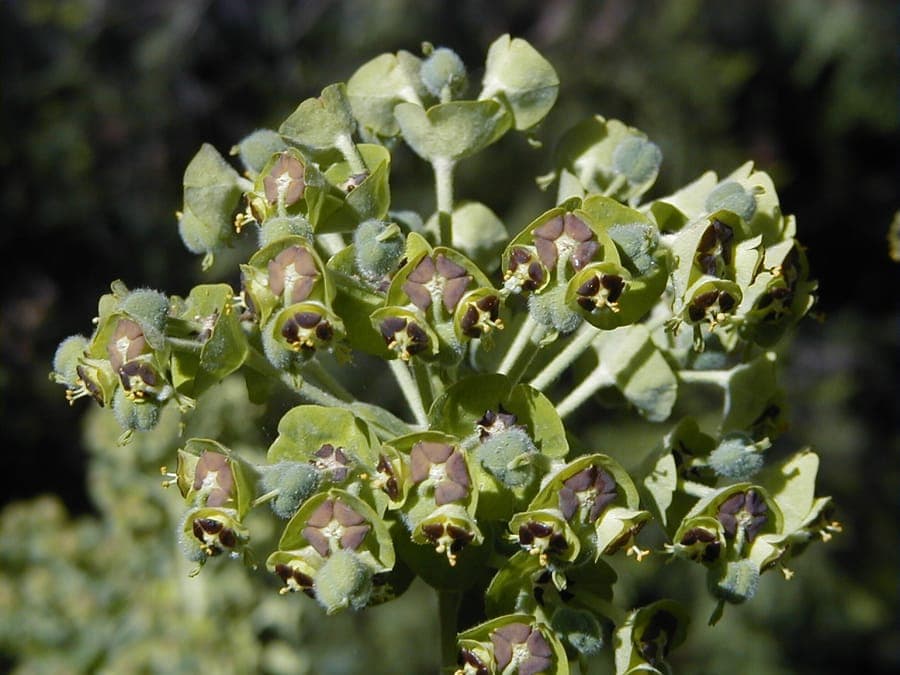
The plant features stiff, erect stems with narrow, lance-shaped leaves arranged in spirals. The foliage is a distinctive blue-green, 8–15 cm long, with a waxy texture that reduces water loss. From late February to June, depending on climate, dense clusters of chartreuse-yellow cyathia emerge at stem tips. These are not true flowers but specialized inflorescences unique to Euphorbiaceae, surrounded by petal-like bracts that remain showy for weeks.
After flowering, stems often arch downward under seed pod weight, creating a graceful, cascading effect. Seeds are ejected forcefully, so volunteer seedlings may appear nearby – either welcome or easily removed.
Ideal location
Full sun is essential – aim for at least 7 hours of direct light daily. A south- or southwest-facing spot works best. Mediterranean spurge tolerates light shade but will become leggy and bloom less. It excels in rock gardens, gravel beds, dry borders, or terraced slopes. Good airflow is crucial to prevent fungal issues, especially in humid climates.
Avoid low-lying, damp areas. If planting in heavy clay, raise the bed or add generous drainage. On gardenworld.app, use the microclimate mapper to identify the sunniest, driest zones in your garden for optimal placement.
Soil requirements
This plant prefers lean, alkaline soils with excellent drainage. Ideal pH is 7.0–7.5. Avoid rich, organic-heavy mixes – too much fertility leads to floppy growth and fewer blooms. Amend heavy soils with coarse sand, grit, or crushed stone (30–40% by volume). A raised bed or bermed planting area helps prevent winter root rot.
Never add compost or manure. Mediterranean spurge evolved in nutrient-poor conditions and thrives where other plants struggle.
Free design
Want to see Mediterranean spurge: complete guide in your garden? Make a free design now.
Watering
Once established (after 6–8 weeks), it's highly drought-tolerant. In most climates, rainfall suffices. During prolonged summer droughts, water deeply every 10–14 days. Shallow watering encourages weak root systems. Newly planted specimens need consistent moisture for the first season, especially if planted in spring.
Overwatering is the most common cause of failure. Let soil dry completely between waterings. No irrigation system needed – this is a true low-maintenance choice.
Pruning
Cut back spent flower stems to ground level in late June or July, after blooming ends. This keeps the plant tidy and encourages fresh basal growth for next year. Use sharp, clean secateurs and wear gloves. Some gardeners leave old stems through winter for structure, but this increases rot risk in wet climates.
Watch for new shoots emerging at the base before pruning – don't cut these off.
Maintenance calendar
- Jan: Check for winter damage, especially on young plants
- Feb: Look for emerging flower buds, remove any damaged foliage
- Mar: Peak bloom begins, no feeding required
- Apr: Monitor for aphids on new growth
- May: Blooms fading, prepare for pruning
- Jun: Cut back finished flower stems
- Jul: Clear debris, avoid watering unless extreme drought
- Aug: Dormant period, minimal activity
- Sep: Ideal time for planting or dividing
- Oct: Final planting window, water if dry
- Nov: Protect container plants from frost
- Dec: Ensure soil isn't waterlogged
Winter hardiness
Hardy to USDA zone 8 (–12°C with cover). In colder zones, mulch young plants with gravel or straw. Container-grown specimens are more vulnerable – move to a sheltered spot or wrap pots in horticultural fleece. Good drainage is critical in winter; wet roots lead to rot.
Companion plants
Pair with lavender, rosemary, santolina, or Cistus for a cohesive Mediterranean look. Ornamental grasses like Stipa tenuissima add movement. Succulents such as Sedum or Echeveria work well in gravel gardens. Avoid moisture-loving plants like ferns or astilbe.
Closing
Mediterranean spurge is a bold, resilient plant that delivers long-lasting visual impact with minimal care. Its early bloom time fills a crucial gap in the garden calendar, and its architectural form adds year-round structure. Buy established plants from garden centres in late winter to see the flower bracts in person. And remember: on gardenworld.app, you can simulate how this spurge matures over time and fits into your overall planting scheme.
Want to see Mediterranean spurge: complete guide in your garden? Make a free design now.
Upload a photo, pick a style, and get a photorealistic design with plant list in under a minute.
No credit card required


Similar plants
Woolly mercury: complete guide
Mercurialis tomentosa
All about Mercurialis tomentosa, the woolly mercury from southwestern Europe: site, soil, watering, care and garden design tips.
Shurur: complete guide
Euphorbia fruticosa
Everything about Shurur: cultivation in dry climates, xeriscaping, care and tips for drought-resistant gardens in warm climates
Glary spurge: complete guide
Euphorbia glareosa
Everything about glary spurge: cultivation, maintenance, frost hardiness and use in Mediterranean and mountain-inspired gardens