
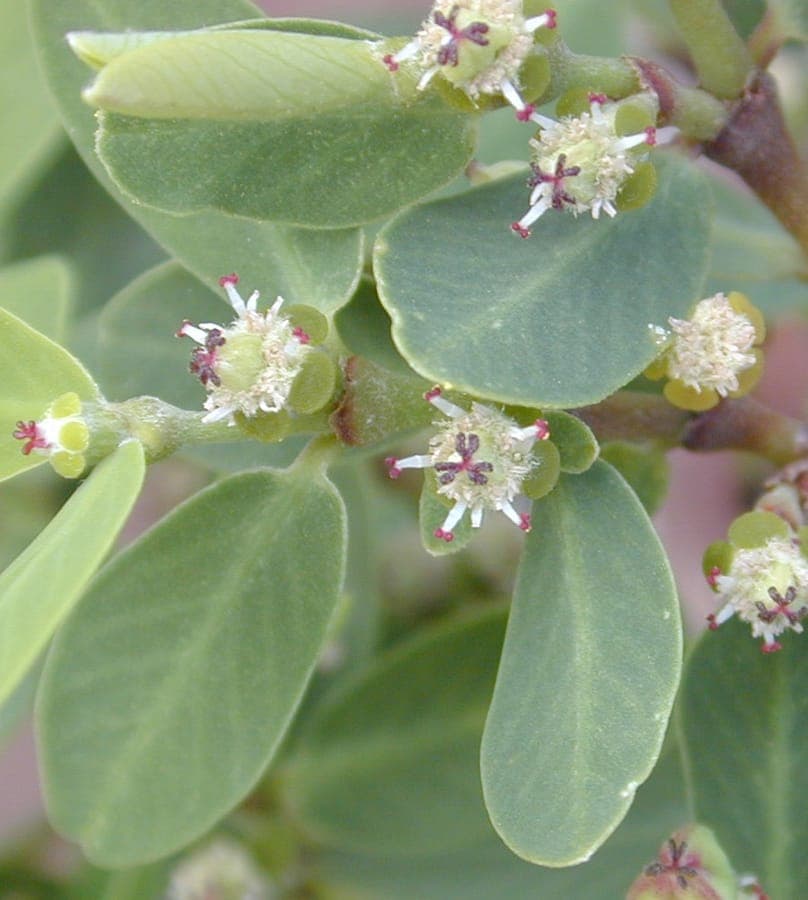
Wikimedia Commons / CC BY-SA 3.0, via Wikimedia Commons
Ekoko: complete guide
Euphorbia celastroides
Want to see Ekoko: complete guide in your garden?
1 minute, no credit card
Overview
Euphorbia celastroides, commonly called Ekoko, is a native Hawaiian plant belonging to the diverse Euphorbia family. This distinctive species is endemic to the Hawaiian Islands and is prized for its elegant growth pattern and characteristic leaf morphology. The plant is particularly valued for its unique appearance in Mediterranean and semi-arid gardens.
Appearance and Bloom
Ekoko grows into a compact to mid-sized shrub with elongated, linear leaves arranged in whorls or alternate patterns. The plant displays a naturally upright structure with slender, graceful branches. The flowers are small and discrete, typical of Euphorbia species, but are followed by distinctive three-lobed fruits. The overall impression is one of refined, airy architecture with minimal ornamental flowering.
Ideal Location
Euphorbia celastroides thrives in warm, sunny locations with direct sunlight for at least 6-8 hours daily. Originating from tropical and subtropical Hawaiian regions, full sun is ideal. Position it in spots with good air circulation to prevent disease. In cooler climates, it makes an excellent container plant that can be brought indoors during winter.
Soil
Well-draining soil is essential for Euphorbia celastroides. Use a mix of two parts garden soil, two parts coconut coir or peat, and one part perlite or pumice. The plant tolerates dry, poor soils but grows better in moderately fertile soil. Ensure soil does not retain standing water, as this causes root rot. Slightly acidic to neutral pH (6.0-7.0) is ideal.
Watering
This Hawaiian euphorbia is drought-tolerant once established. Water thoroughly during the growing season (spring-summer) but allow soil to dry between waterings. Significantly reduce watering in autumn and winter as growth slows. During very hot periods, daily misting can benefit the plant, especially in dry climates. Maintain low humidity around leaves to prevent fungal diseases.
Free design
Want to see Ekoko: complete guide in your garden? Make a free design now.
Pruning
Pruning is not strictly necessary but helps achieve a more compact form. Remove dead or damaged branches during the growing season. Early spring pruning encourages bushier growth. Thin the plant if it becomes too dense to allow proper air circulation. Caution: Euphorbia sap can be irritating, so always wear gloves when working.
Maintenance Calendar
Spring: Resume monthly fertilizing and check for pests. Summer: Regular watering, especially in heat. Autumn: Gradually reduce watering. Winter: Minimal watering, no feeding needed. Continuously monitor for spider mites and mealybugs.
Winter Hardiness
Euphorbia celastroides is sensitive to cold and frost. In areas with temperatures below 5 degrees Celsius, indoor overwintering is necessary. In milder climates (zones 9b-11) it can stay outdoors if protected from frost. The plant will drop leaves when exposed to prolonged cold.
Companion Plants
Pair Ekoko with other drought-tolerant plants like Sedum, Delosperma, other Euphorbia species, fine ornamental grasses, and Mediterranean herbs. These combinations create attractive, water-smart borders. In containers it combines well with other succulents.
Closing Thoughts
Euphorbia celastroides brings tropical elegance and frost resilience to your garden. With minimal care and water requirements, this Hawaiian rarity becomes a striking feature. Available at specialized nurseries and online plant retailers. Explore the beauty of Hawaiian flora in your own garden, and visit gardenworld.app for more tropical design inspiration. This endemic island treasure deserves a place in every sunny front garden.
Want to see Ekoko: complete guide in your garden? Make a free design now.
Upload a photo, pick a style, and get a photorealistic design with plant list in under a minute.
No credit card required


Similar plants
Woolly mercury: complete guide
Mercurialis tomentosa
All about Mercurialis tomentosa, the woolly mercury from southwestern Europe: site, soil, watering, care and garden design tips.
Shurur: complete guide
Euphorbia fruticosa
Everything about Shurur: cultivation in dry climates, xeriscaping, care and tips for drought-resistant gardens in warm climates
Glary spurge: complete guide
Euphorbia glareosa
Everything about glary spurge: cultivation, maintenance, frost hardiness and use in Mediterranean and mountain-inspired gardens