
Frank Vincentz / CC BY-SA 3.0, via Wikimedia Commons
Balsam spurge (Euphorbia balsamifera): complete guide
Euphorbia balsamifera
Want to see Balsam spurge (Euphorbia balsamifera): complete guide in your garden?
1 minute, no credit card
Overview
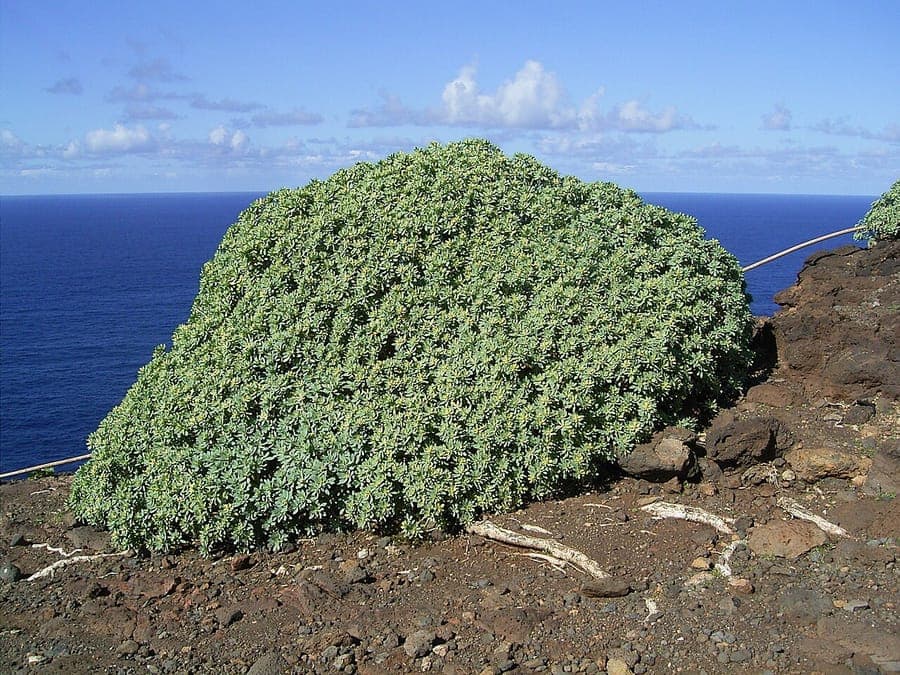
Balsam spurge (Euphorbia balsamifera), also known as balsam euphoria, is a fascinating succulent belonging to the Euphorbiaceae family. Native to the Canary Islands, Morocco, and Western Sahara where it grows on dry, rocky mountain slopes, this distinctive plant develops a low, spreading shrub habit. Mature specimens reach 150-200 centimeters in height and equal width, creating substantial focal points in warm gardens.
Appearance and bloom
Balsam spurge develops a naturally hemispherical growth habit with multiple thick, fleshy green stems. The foliage consists of small, fine, hair-like, grey-green leaves arranged along elongated branches. From January through April, tiny yellow-green cyathia (characteristic spurge flowers) appear at branch tips. Though not showy as traditional flowers, these bear important ecological significance. The plant's sap is toxic and may cause skin irritation upon contact, requiring careful handling.
Ideal location
Balsam spurge thrives best in intensely sunny, hot locations. Full sun is absolutely essential - minimum 8-10 hours of direct daily sunlight. The plant also succeeds against warm, south-facing walls in sheltered positions. Protect young specimens from strong winds. No shade is tolerated. In temperate climates, cultivate this plant in greenhouses or protected environments.
Soil
Excellent drainage with sandy or stony substrate is absolutely critical. The plant grows in poor, dry soils and actively prefers infertile substrates. Rich, moist soils guarantee root rot. Incorporate abundant sand and gravel throughout the planting medium. A soil pH between 6.5 and 7.5 is ideal. The plant tolerates alkaline soils.
Free design
Want to see Balsam spurge (Euphorbia balsamifera): complete guide in your garden? Make a free design now.
Watering
Balsam spurge requires minimal watering. Water only when soil feels genuinely dry. During winter, drastically reduce water. Ensure water drains completely. Overwatering inevitably causes root rot and death. This is truly a zero-irrigation plant in favorable climates.
Pruning
Minimal pruning is required. Remove only dead or damaged wood. Light shaping may be performed in spring if desired. Avoid heavy pruning. The plant naturally maintains attractive form.
Maintenance calendar
January through April: Flowering period. May through October: Growth period; minimal watering. November through December: Dormancy; reduce water dramatically.
Winter hardiness
Balsam spurge is hardy to approximately 5-8 degrees Celsius. In most European gardens, plants require greenhouse overwintering. In very hot, dry regions (southern Spain and Portugal), plants may overwinter outdoors with protection.
Companion plants
Combine with fellow succulents and Mediterranean plants. Agaves, aloe species, and other xeric plants create beautiful combinations. Also excellent in container groupings with complementary succulents and drought-tolerant specimens.
Closing
Balsam spurge is a spectacular succulent for hot, dry gardens. This exotic plant brings subtropical flair to your landscape. Perfect for container cultivation or as a focal point specimen in warm regions. Visit gardenworld.app for additional tips on succulent and Mediterranean garden design.
Want to see Balsam spurge (Euphorbia balsamifera): complete guide in your garden? Make a free design now.
Upload a photo, pick a style, and get a photorealistic design with plant list in under a minute.
No credit card required


Similar plants
Woolly mercury: complete guide
Mercurialis tomentosa
All about Mercurialis tomentosa, the woolly mercury from southwestern Europe: site, soil, watering, care and garden design tips.
Shurur: complete guide
Euphorbia fruticosa
Everything about Shurur: cultivation in dry climates, xeriscaping, care and tips for drought-resistant gardens in warm climates
Glary spurge: complete guide
Euphorbia glareosa
Everything about glary spurge: cultivation, maintenance, frost hardiness and use in Mediterranean and mountain-inspired gardens