
Wikimedia Commons / CC BY-SA 3.0, via Wikimedia Commons
Rattlesnake Weed: complete guide
Euphorbia albomarginata
Want to see Rattlesnake Weed: complete guide in your garden?
1 minute, no credit card
Overview
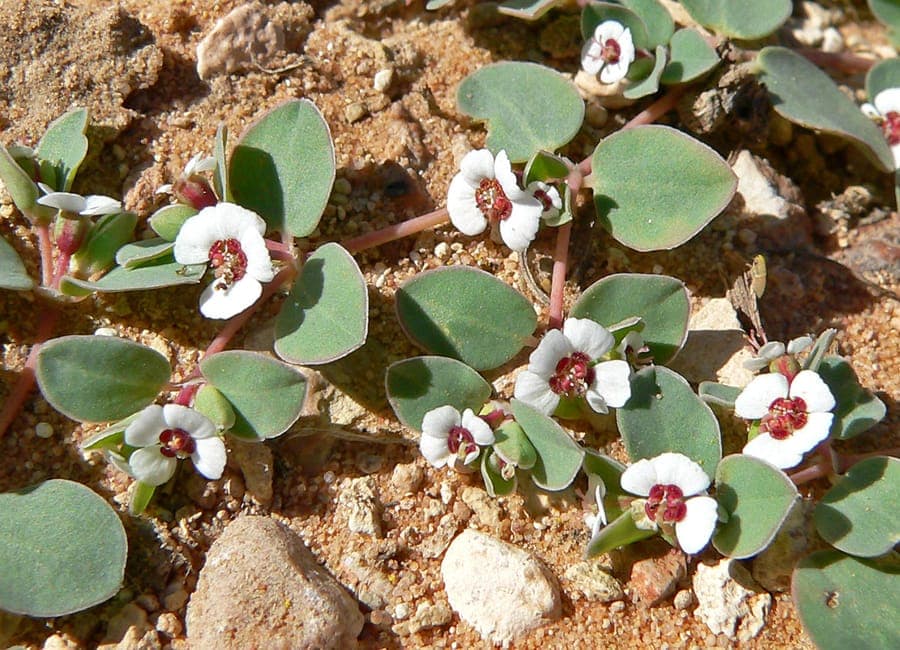
Euphorbia albomarginata, commonly called Rattlesnake Weed or White-margin Broomspurge, is a low-growing, matting perennial succulent native to the southwestern deserts from California to Oklahoma. Named for its distinctive white leaf margins, this plant is an ecological fixture of arid landscapes and a superb choice for water-conscious gardeners seeking authentic desert character.
Appearance and Bloom
Rattlesnake Weed forms dense, spreading mats rarely exceeding 15-30 cm (6-12 inches) in height with spreads of 30-45 cm. Leaves are small, linear, and display the plant's signature white edges against olive-green backgrounds. Flowers are minimal and inconspicuous, but insects swarm these blooms during growth seasons when temperatures permit.
Ideal Location
Full sun is mandatory for optimal form and leaf coloring. Minimum 6-8 hours direct sunlight daily. In moderate climates, morning sun with afternoon shade is acceptable. In true desert conditions, light afternoon shade may prevent heat stress during extreme temperatures.
Soil
Rattlesnake Weed thrives on impoverished, extremely well-drained soil. Sandy, gravelly substrates are ideal. Do not amend with organic matter; this plant actually performs worse in fertile soils. pH 6.0-8.0 is acceptable. Drainage must be exceptional; waterlogging kills this plant within days.
Watering
Once established, this plant is exceptionally drought-tolerant and requires virtually no supplemental water. During active growth (spring-summer), provide occasional water, but allow soil to dry completely between waterings. During establishment (first growing season), provide light watering until roots penetrate deeply. Mature plants thrive on rainfall alone in natural habitats.
Free design
Want to see Rattlesnake Weed: complete guide in your garden? Make a free design now.
Pruning
Pruning is generally unnecessary. Remove dead or damaged tissue to maintain health. Overgrown specimens can be cut back to half-height in early spring if desired, though this plant naturally maintains a neat, compact habit.
Maintenance Calendar
- Spring (March-May): Minimal water during early establishment only
- Summer (June-August): Virtually no care; only water established plants during extreme drought
- Autumn (September-October): No water required
- Winter (November-February): Complete dormancy; no water
Winter Hardiness
Euphorbia albomarginata is hardier than many desert euphorbias but marginal in zones below 8. In moderate climates (zone 8+), plants may survive winters but will be damaged. In colder regions, treat as annual or grow in containers moved indoors during winter. Self-seeds readily where established.
Companion Plants
Pair effectively with:
- Opuntia species (prickly pears): matching drought tolerance
- Gaillardia species (blanket flowers): color contrast
- Penstemon species (beardtongues): compatible requirements
- Echinocereus species (hedgehog cacti): similar desert ecology
- Agave species (century plants): structural drama
Closing Remarks
Rattlesnake Weed is indispensable for water-conscious desert and xeriscape gardeners. With zero care after establishment, this plant provides year-round foliage interest and genuine ecological authenticity. Available at specialized desert plant nurseries.
Add Euphorbia albomarginata to your xeriscape design on gardenworld.app for water-efficient sustainability and authentic desert character.
Want to see Rattlesnake Weed: complete guide in your garden? Make a free design now.
Upload a photo, pick a style, and get a photorealistic design with plant list in under a minute.
No credit card required


Similar plants
Woolly mercury: complete guide
Mercurialis tomentosa
All about Mercurialis tomentosa, the woolly mercury from southwestern Europe: site, soil, watering, care and garden design tips.
Shurur: complete guide
Euphorbia fruticosa
Everything about Shurur: cultivation in dry climates, xeriscaping, care and tips for drought-resistant gardens in warm climates
Glary spurge: complete guide
Euphorbia glareosa
Everything about glary spurge: cultivation, maintenance, frost hardiness and use in Mediterranean and mountain-inspired gardens