
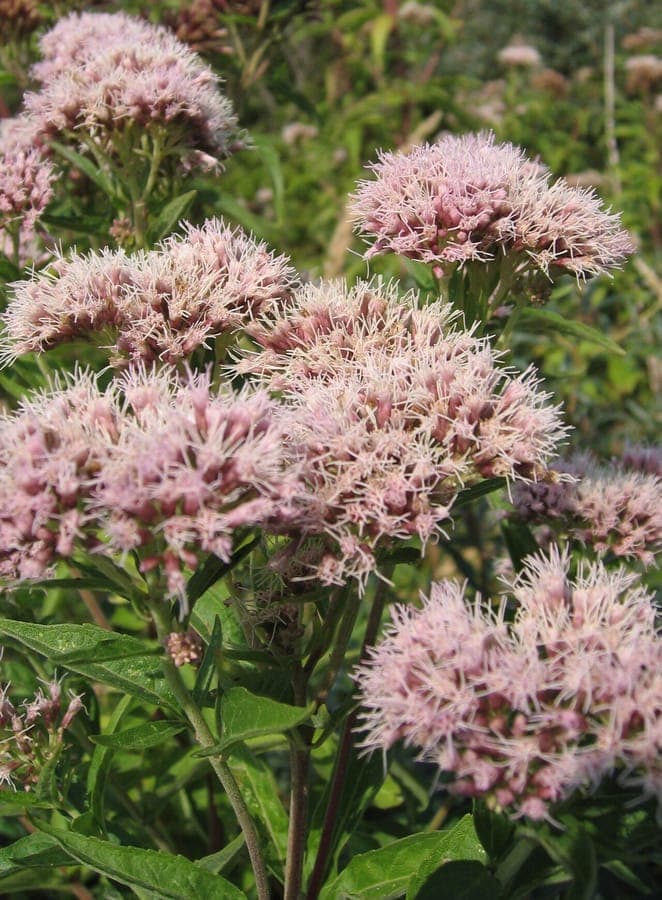
Photo by Svdmolen / CC BY-SA 3.0, via Wikimedia Commons
Hemp-agrimony: complete guide
Eupatorium cannabinum
Want to see Hemp-agrimony: complete guide in your garden?
1 minute, no credit card
Overview
Hemp-agrimony, or Eupatorium cannabinum, is a resilient herbaceous perennial that brings late-summer drama to the garden. Native to damp woodlands, riverbanks, and wet meadows across central and eastern Europe, it's well adapted to moist, nutrient-rich soils. Standing between 100 and 150 cm tall, it's a bold presence in borders, wildlife gardens, and damp corners where few other perennials thrive.
This plant isn't just ornamental-it's a powerhouse for biodiversity. From July through August, its fluffy purple flower heads draw in clouds of hoverflies, bees, and butterflies, including the red admiral and small tortoiseshell. If you're designing a pollinator-friendly garden, hemp-agrimony is a must. On gardenworld.app, you can create a planting scheme that integrates this species seamlessly with other moisture-loving plants.
Appearance & bloom cycle
Hemp-agrimony has deeply divided, hemp-like leaves that are rough to the touch and arranged in opposite pairs. The foliage is a rich green and emits a faint herbal scent when brushed. The upright stems are hollow, often with purple streaks, and support clusters of tiny, tubular purple-pink flowers.
Flowering begins in July and peaks in August. Each flower head is made up of dozens of small florets, densely packed into dome-shaped clusters. Unlike some Eupatorium species, this one doesn't spread aggressively-its growth is clump-forming, making it manageable in most garden settings. The blooms last for 4–6 weeks, providing a critical nectar source when many early flowers have faded.
Ideal location
Hemp-agrimony prefers partial shade, scoring around 5 out of 10 on the light scale. It does best in dappled shade under open-canopy trees, along pond edges, or in the cooler, moist corners of a north-facing border. While it can tolerate full sun, only do so if the soil stays reliably moist.
Avoid hot, dry, south-facing spots-these will stress the plant and cause leaf scorch. The ideal microclimate is one with morning sun and afternoon shade, especially in regions with hot summers. If you're unsure about light conditions in your garden, gardenworld.app offers sun-mapping tools to help pinpoint the best location.
Soil requirements
This plant thrives in moist, humus-rich loam or clay soils with a pH between 7.0 and 7.5. It tolerates temporary waterlogging, making it perfect for rain gardens or low-lying areas. Sandy soils are unsuitable unless heavily amended with compost or well-rotted manure to improve water retention.
Avoid liming the soil unless a test shows acidity-hemp-agrimony prefers neutral to slightly alkaline conditions. A top dressing of compost in early spring is usually sufficient for nutrition. No chemical fertilisers needed; this plant grows naturally in wild, undisturbed areas.
Free design
Want to see Hemp-agrimony: complete guide in your garden? Make a free design now.
Watering
Consistent moisture is key. During dry spells, especially in June and July, water deeply once or twice a week. Use rainwater when possible-tap water with high calcium content can degrade soil structure over time.
Mulch with leaf mould or composted bark to keep roots cool and reduce evaporation. In prolonged droughts, the lower leaves may yellow or drop, a clear sign the plant needs more water. Never let the soil dry out completely during active growth.
Pruning
Pruning is minimal. In early spring (March), cut back last year's stems to about 10–15 cm above ground. This encourages bushier growth and prevents floppiness. Don't cut back in autumn-leaving the stems standing provides shelter for overwintering insects.
If the plant starts leaning in summer due to heavy rain, use discreet peasticks or a metal ring for support. Avoid cutting flower heads for deadheading; the seeds provide food for finches and other small birds.
Maintenance calendar
- January: No action needed.
- February: Prepare compost for spring application.
- March: Cut back old growth. Apply mulch.
- April: New shoots emerge. Watch for slugs.
- May: Water regularly. Monitor for aphids on new growth.
- June: Ensure consistent soil moisture.
- July: Bloom begins. Peak pollinator activity.
- August: Full bloom. No pruning.
- September: Flowers fade. Leave seed heads.
- October–December: Leave standing. Cut back in March.
Winter hardiness
Hemp-agrimony is fully hardy in USDA zones 4–8 (-30°C to -12°C). The top growth dies back in winter, but the crown survives underground. Snow cover acts as insulation. No winter protection is needed, even in harsh climates.
Companion plants
Pair with other late-summer bloomers: Joe-Pye weed (Eutrochium maculatum), ironweed (Vernonia noveboracensis), meadow sage (Salvia pratensis), and sneezeweed (Helenium). For foliage contrast, plant alongside hostas or carex.
Avoid drought-tolerant species like lavender or sedum. Instead, focus on moisture-loving companions. Garden centres across the UK often stock Eupatorium cannabinum, especially those specialising in native or wildlife-friendly plants.
Closing
Hemp-agrimony is a low-maintenance, high-reward perennial for moist, shady gardens. It's not flashy, but it's dependable-delivering nectar, structure, and ecological value when you need it most. Plant it in a damp border, let it grow, and watch the insects move in. You can find it at garden centres like B&Q, Wyevale, or specialist nurseries. With the right conditions, it will return stronger each year-proof that sometimes, the quiet plants make the biggest impact.
Want to see Hemp-agrimony: complete guide in your garden? Make a free design now.
Upload a photo, pick a style, and get a photorealistic design with plant list in under a minute.
No credit card required


Similar plants
Calendula stellata: complete guide
Calendula stellata
Complete guide to Calendula stellata, the star-flowered marigold from Sicily: location, soil, watering and companion planting tips.
Korean chrysanthemum: complete guide
Chrysanthemum x rubellum
Chrysanthemum x rubellum is a hardy autumn perennial with single pink to copper flowers from August to November. Care and combinations.
Helianthus divaricatus: complete guide
Helianthus divaricatus
Helianthus divaricatus is a North American woodland sunflower with yellow summer blooms, ideal for naturalistic borders and shady edges.