
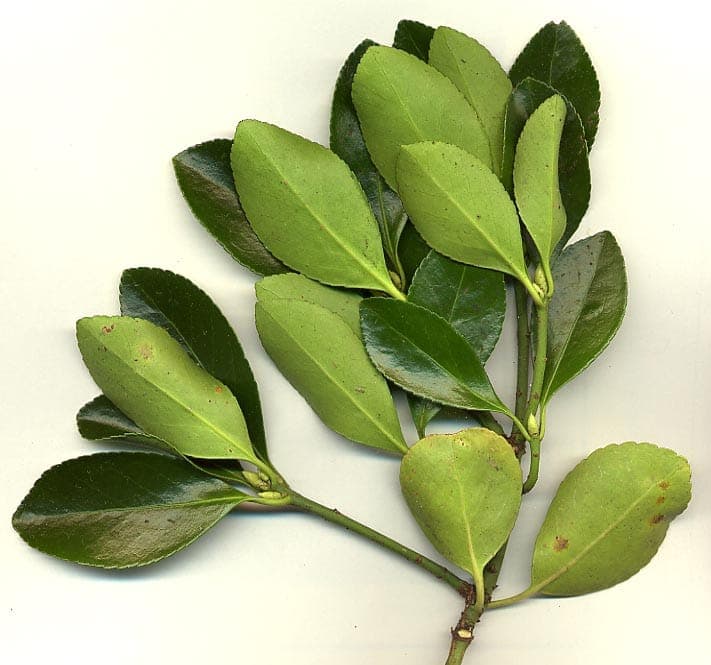
MPF (talk) (Uploads) / CC BY-SA 3.0, via Wikimedia Commons
Japanese spindletree: complete guide
Euonymus japonicus
Want to see Japanese spindletree: complete guide in your garden?
1 minute, no credit card
Overview
Euonymus japonicus, commonly known as Japanese spindletree, is a tough, evergreen shrub that earns its place in UK, US and European gardens alike. Native to Japan, Korea and the Nansei-shoto islands, it thrives in urban and coastal conditions, making it a go-to for hedges, screens or standalone features. It typically reaches 1.5 to 3 meters tall, spreading 1.2 to 2 meters wide, with a growth rate of 20–30 cm per year. In optimal conditions, it can even develop a small tree form up to 5 meters.
On gardenworld.app you can visualise how Japanese spindletree fits into a formal garden design, especially when you're planning a clipped hedge or structural border. It's not the flashiest plant in bloom, but its year-round presence and resilience set it apart.
Appearance & bloom cycle
The leaves are leathery, glossy, dark green, and lance-shaped, measuring 4–8 cm long. They stay on the plant all winter, offering reliable coverage. Some cultivars, like 'Aureomarginatus', have bright yellow edges, adding contrast in mixed borders. The flowers in late spring (June) are small, greenish-white, and inconspicuous, but they're followed by striking orange seed capsules in autumn that split open to reveal bright red seeds - a rare ornamental bonus, though toxic if ingested.
Popular cultivars include 'Microphyllus' for tight, compact hedges, and 'Ovatus Aureus' for golden variegation. While not a flowering showstopper, its foliage and form make it a backbone plant in garden design.
Ideal location
Japanese spindletree grows best in full sun to partial shade. In full sun, it develops denser foliage; in deep shade, growth becomes leggy. A sheltered spot is ideal, especially in colder regions where winter winds can cause desiccation. It handles coastal exposure well and tolerates urban pollution, making it perfect for city gardens.
Plant it as a privacy hedge, windbreak, or foundation shrub. On gardenworld.app, you can experiment with different layouts to see how a row of Euonymus japonicus can define space and add year-round structure to your garden.
Soil requirements
It's adaptable to most soil types as long as drainage is good. The ideal pH range is 5.0 to 7.5 - from slightly acidic to slightly alkaline. It prefers moist, well-drained, humus-rich soil but tolerates clay, sand, and even compacted urban soils. Avoid waterlogged conditions to prevent root rot.
When planting, mix in compost or well-rotted manure to improve soil structure. In containers, use a loam-based compost like John Innes No. 2 with added grit for drainage.
Free design
Want to see Japanese spindletree: complete guide in your garden? Make a free design now.
Watering
Young plants need consistent watering during their first growing season - about 10 litres per plant, once a week during dry spells. After that, it's fairly drought-tolerant but benefits from occasional deep watering during prolonged dry periods, especially in sunny or exposed spots.
Water at the base to avoid wetting the foliage, which can encourage fungal diseases. Mulch with bark chips to retain moisture and suppress weeds.
Pruning
This is where Euonymus japonicus shines. It responds extremely well to pruning and can be shaped into tight hedges or topiary forms. The best time to prune is in June, after the main spring flush. A second light trim in August helps maintain sharp edges. Avoid pruning after September to prevent stimulating tender new growth before winter.
Use sharp, clean secateurs or hedge trimmers. For older, overgrown plants, hard pruning back to 30 cm above ground is possible - it usually regrows vigorously. Sanitise tools between cuts if you suspect disease.
Maintenance calendar
- Jan: Check for frost damage, remove dead wood
- Feb: Plant if soil isn't frozen
- Mar: Monitor for scale insects, plant bare-root stock
- Apr: Begin regular watering if dry
- May: Prepare for first pruning
- Jun: Main pruning after growth surge
- Jul: Light shaping, watch for aphids
- Aug: Optional second trim
- Sep: Stop pruning, reduce watering
- Oct: Clear fallen leaves, apply mulch
- Nov: Protect container plants, wrap young shrubs
- Dec: Inspect for winter scorch
Winter hardiness
Hardy in USDA zones 6b to 9. In zone 6b (down to -20°C), young plants may suffer winter burn - brown, dried leaves from cold wind. Protect with horticultural fleece or burlap, especially on the north and east sides. Mature plants in sheltered spots usually survive without issue.
Potted plants are more vulnerable. Move containers against a wall, elevate on pot feet, and wrap with bubble wrap to insulate roots.
Companion plants
Pair Japanese spindletree with other evergreens like boxwood, yew, or holly for layered structure. Underplant with hellebores, epimedium, or ferns for texture and seasonal interest. Avoid invasive ground covers that compete for root space.
For formal gardens, combine with clipped buxus in geometric patterns - easily planned using the design tools on gardenworld.app.
Closing
Japanese spindletree is a workhorse in the garden: tough, adaptable, and easy to maintain. With proper pruning and a little care in youth, it delivers decades of reliable greenery. Available at garden centres across the UK and North America, it's widely stocked in various sizes. Plant it right, give it a good start, and you'll have a living fence or statement shrub that ages gracefully.
Want to see Japanese spindletree: complete guide in your garden? Make a free design now.
Upload a photo, pick a style, and get a photorealistic design with plant list in under a minute.
No credit card required


Similar plants
Fringed grass of Parnassus: complete guide
Parnassia fimbriata
Everything about Fringed grass of Parnassus (Parnassia fimbriata): growing, soil, watering and care. A delicate mountain perennial with white fringed flowers.
Euonymus cornutus: complete guide
Euonymus cornutus
Horned spindle is an intriguing shrub from central China with distinctive winged seed capsules. Learn how to grow this unique plant.
Large-Winged Spindle: complete guide to this Far Eastern shrub
Euonymus macropterus Rupr.
Discover Large-Winged Spindle (Euonymus macropterus), an elegant Japanese shrub prized for spectacular winged fruits. Perfect for Asian gardens and woodland plantings.