
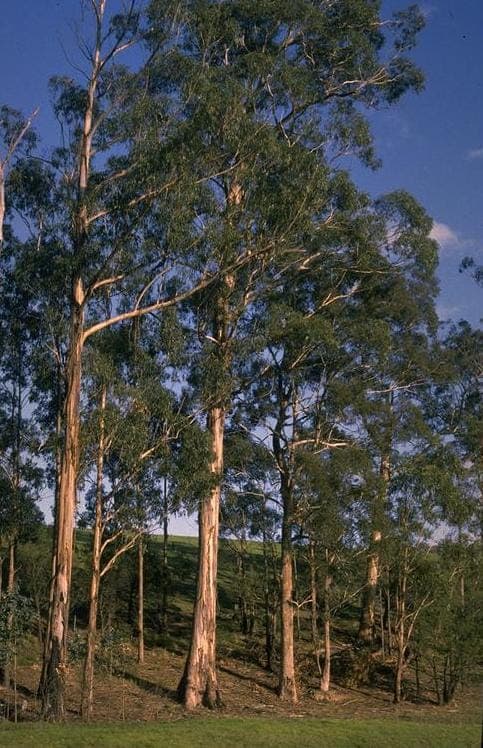
Ian Brooker and David Kleinig / CC BY 3.0 au, via Wikimedia Commons
Blue gum: complete guide
Eucalyptus globulus
Want to see Blue gum: complete guide in your garden?
1 minute, no credit card
Overview
Eucalyptus globulus, commonly known as Blue gum, is a fast-growing evergreen tree native to southeastern Australia, including New South Wales, Tasmania, and Victoria. While it can reach up to 70 meters in its natural habitat, in temperate gardens across the UK and northern Europe, it typically grows between 5 and 12 meters when grown in the ground, and even smaller in containers. It's prized for its striking blue-green foliage, aromatic scent, and smooth, peeling bark.
Though not fully hardy in colder climates, Blue gum can survive in USDA hardiness zones 8b to 10. In cooler zones (7-8a), it's best grown in large containers so it can be moved to sheltered spots during winter. Garden centres across the UK often stock young specimens in spring, perfect for patio planting or seasonal garden features.
On gardenworld.app, you can design a layout that accommodates the tree's mature size and light needs, ensuring it thrives without overcrowding other plants.
Appearance & bloom cycle
Young Blue gum trees have rounded, silvery-blue leaves that give the plant its common name. As the tree matures, the leaves become lance-shaped and greener, reaching up to 30 cm in length. The bark is pale grey and sheds in strips, revealing a smoother, lighter layer underneath - a distinctive feature that adds visual interest year-round.
Flowering occurs from late summer to early autumn, typically August through October. The flowers are creamy-white, globe-shaped, and appear in clusters. Though not overly large, they attract bees and other pollinators. Each bloom lasts about 4 to 6 weeks, depending on local weather conditions.
Ideal location
Blue gum thrives in full sun - aim for at least 8 hours of direct sunlight daily. A south- or southwest-facing spot is ideal. In cooler regions, plant it against a warm wall or fence to provide shelter from cold winds and frost. This microclimate can make a big difference in winter survival.
If you're growing it in a container, use a large pot (at least 40–50 cm in diameter) with excellent drainage. Terra cotta or wooden planters work well, as they allow air circulation. Move the pot indoors or into a greenhouse when temperatures drop below -5 °C.
Soil requirements
This tree prefers well-drained, slightly acidic to neutral soil with a pH between 5.0 and 6.8. Avoid heavy clay soils, which retain too much moisture and can lead to root rot. When planting in the ground, amend the soil with sharp sand and compost to improve drainage.
For container plants, use a mix of loam-based compost (like John Innes No. 3) with added perlite or grit (30%) to prevent waterlogging. Repot every 2–3 years in early spring to refresh the soil and prevent root binding.
Watering
Water young trees regularly during the first two growing seasons. In summer, water deeply once a week - about 10 to 15 litres per application. Established trees are drought-tolerant and usually survive on rainfall alone, except in prolonged dry spells.
Container-grown specimens need more frequent watering. Check the top 5 cm of soil; if dry, water thoroughly until it drains from the bottom. Reduce watering in winter, as the tree enters a semi-dormant phase.
Free design
Want to see Blue gum: complete guide in your garden? Make a free design now.
Pruning
Pruning isn't essential for health, but it helps manage size and encourage bushy growth. The best time to prune is in late winter or early spring (March to April), before new growth emerges. Cut back stems to just above a leaf node or side shoot.
For a more compact, shrub-like form, cut the main stem back to 1.2–1.5 meters. This promotes multiple stems and denser foliage. Avoid heavy pruning in late summer or autumn, as new growth may not harden before winter.
Maintenance calendar
- January: Inspect for frost damage. Wrap young stems with horticultural fleece if needed.
- February: Check container plants for root congestion. Top-dress with fresh compost.
- March: Begin light pruning. Apply a balanced slow-release fertiliser.
- April: Monitor for aphids or scale. Treat with organic insecticidal soap if necessary.
- May: Water young trees during dry spells. Apply mulch to retain moisture.
- June: No major tasks. Ensure good air circulation to prevent fungal issues.
- July: Keep base free of weeds. Avoid overwatering.
- August: Flowers appear. Avoid disturbing pollinators.
- September: Flowers fade. Remove dead leaves to reduce disease risk.
- October: Prepare container plants for winter. Move to sheltered spots.
- November: Plant bare-root or container-grown trees if soil isn't frozen.
- December: Protect pots from freezing with bubble wrap or insulation.
Winter hardiness
Blue gum tolerates brief dips to -7 °C (USDA zone 8b). In zone 8a and below, winter protection is crucial. Young trees are especially vulnerable. In exposed areas, use a windbreak or wrap the trunk with burlap.
For long-term success in colder zones, grow in containers and overwinter indoors or in a cold frame. Avoid placing near radiators - cool, bright conditions (5–10 °C) are best.
Companion plants
Choose drought-tolerant, sun-loving plants that won't compete for moisture. Lavender, rosemary, Santolina, and ornamental grasses like Festuca glauca work well. Avoid moisture-loving plants such as hostas or astilbes, which struggle under Eucalyptus's canopy.
Mulch around the base with gravel or pine bark to reduce water loss and suppress weeds. Be aware that Eucalyptus leaves contain eucalyptol, which can inhibit the growth of some nearby plants.
Closing
Eucalyptus globulus brings architectural form, fragrance, and year-round interest to gardens. With the right care, it can thrive even in cooler climates. Prioritise sun, drainage, and winter protection, especially in its early years. Garden centres like those listed on gardenworld.app often carry young Blue gum trees in spring - a perfect time to start.
Whether in a pot or the ground, this tree rewards attention with rapid growth and bold presence. Plan your planting with gardenworld.app to visualise spacing, sunlight, and seasonal changes in your garden layout.
Want to see Blue gum: complete guide in your garden? Make a free design now.
Upload a photo, pick a style, and get a photorealistic design with plant list in under a minute.
No credit card required


Similar plants
Flooded gum (Eucalyptus grandis): complete guide
Eucalyptus grandis
Everything about the flooded gum: fast growth, impressive stature and silvery bark. How to plant and care for this eucalyptus in your garden.
Yellow gum (Eucalyptus leucoxylon): complete guide
Eucalyptus leucoxylon
Everything about the yellow gum: showy flowers in winter, compact form and drought tolerance. How to grow and care for this eucalyptus in your garden.
Sydney blue gum (Eucalyptus saligna): complete guide
Eucalyptus saligna
Everything about the Sydney blue gum: extraordinary growth rate, beautiful grey-blue bark and impressive stature. How to plant and care for this eucalyptus.