
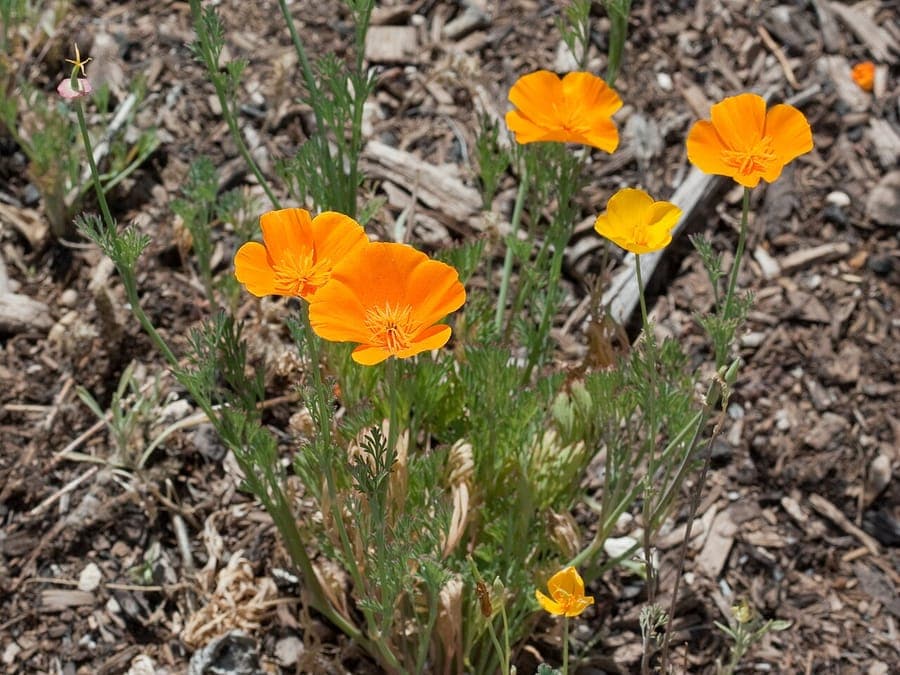
Kaldari / CC0, via Wikimedia Commons
California-poppy: complete guide
Eschscholzia californica
Want to see California-poppy: complete guide in your garden?
1 minute, no credit card
Overview
Eschscholzia californica, better known as California-poppy, is a bright, cheerful annual or short-lived perennial native to the western United States and northern Mexico. Standing 15 to 30 cm tall, it forms a delicate mound of finely divided, blue-green foliage topped with silky, cup-shaped flowers in golden orange, soft yellow, and even pale apricot or cream. It's a member of the Papaveraceae family but doesn't produce any narcotic compounds, making it safe for children and pets.
One of the most enchanting traits of California-poppy is its phototropic behavior: blooms open only in full sun and close at dusk or on cloudy days. This makes it a dynamic presence in the garden, changing with the light. It thrives in poor, well-drained soils and is one of the easiest wildflowers to grow from seed. Once established, it often self-seeds reliably, returning year after year with minimal effort. On gardenworld.app, you can design a drought-tolerant garden layout that features California-poppy as a star performer.
Appearance & bloom cycle
Flowers appear from May through September, depending on sowing time. Each bloom is 5–7 cm wide, with four crinkled petals that shimmer in the sunlight. Cultivars like 'Thai Silk' offer warm tones of red-orange, while 'Apricot Chiffon' brings soft pastel hues. The foliage is feathery, silvery-green, and forms a low, airy backdrop for the vibrant blossoms.
From seed, germination takes 10–14 days at soil temperatures of 15–20°C. Sow in early spring directly in the ground after the last frost, or start indoors in March. By late May, you'll see the first buds. Deadheading prolongs blooming, but leave some seed heads in late summer to encourage natural reseeding.
Ideal location
Plant in full sun-minimum 6 hours of direct sunlight daily. California-poppy performs best in open, unsheltered spots with little competition. It's perfect for gravel gardens, rockeries, borders, or containers on sunny patios. Avoid shaded or damp areas; even partial shade reduces flowering significantly.
South- or southwest-facing slopes are ideal. If you're unsure how much sun your garden gets, use gardenworld.app to analyze sun exposure and choose the best planting spots for maximum impact.
Soil requirements
California-poppy thrives in lean, sandy, or rocky soils with excellent drainage. pH range from 5.8 to 7.5 is acceptable-typical of most garden soils. Heavy clay or water-retentive loams are problematic. Improve drainage by mixing in 30% sand, grit, or pumice.
Do not fertilize. Rich soil encourages leafy growth at the expense of flowers. This plant excels in poor conditions-a rare quality in modern gardening.
Free design
Want to see California-poppy: complete guide in your garden? Make a free design now.
Watering
Water only during establishment or prolonged droughts. Once rooted, it's highly drought tolerant and rarely needs supplemental irrigation. Avoid overhead watering to prevent fungal issues. Water at the base, preferably in the morning.
In containers, use a fast-draining potting mix and ensure drainage holes. Check moisture weekly-pots dry faster. In hot summers, water once a week during extended dry spells (14+ days without rain).
Pruning
Pruning isn't necessary, but light deadheading keeps the display fresh and extends bloom time. Cut spent flower stems just above a leaf node. In late summer, allow some seed pods to mature if you want self-seeding. The elongated capsules dry and burst open, scattering tiny seeds across the garden.
Collect seeds when capsules turn brown but haven't split. Store in a paper envelope in a cool, dry place for next spring's sowing.
Maintenance calendar
- January: No care needed
- February: Start seeds indoors at 18°C
- March: Sow under cover or direct sow in mild areas
- April: Direct sow after frost danger passes
- May: Seedlings appear, thin if dense, first blooms
- June–September: Peak bloom, occasional deadheading
- October: Leave seed heads for reseeding
- November–December: Plants die back; collect seeds or let nature take its course
Winter hardiness
California-poppy is not reliably perennial in colder zones (USDA 8–10 native), but it often survives as seed in the soil. The plant dies in autumn, but seeds overwinter and germinate in spring, even after harsh winters. No mulching or protection required. It's a true survivor in the right conditions.
Companion plants
Pair with other drought-tolerant species like lavender, yarrow, sedum, or gaura. Its low height and airy texture make it ideal for the front of borders. Avoid aggressive ground covers like vinca or ajuga that could outcompete seedlings.
For a vibrant summer display, combine with zinnias, coreopsis, or rudbeckia. Try warm orange-yellow schemes or contrast with purple salvias like Salvia farinacea. It also works well in wildflower meadows or native plantings.
Closing
California-poppy is one of the easiest and most rewarding annuals for sunny, dry gardens. It asks for little, gives back a lot, and brings a touch of wild beauty to any space. Buy fresh seed from garden centres or online retailers-check expiration dates. In the UK and US, look for it at independent nurseries or chain stores. On gardenworld.app, you can map out your entire garden, including California-poppy zones, and share designs with friends or professionals.
Want to see California-poppy: complete guide in your garden? Make a free design now.
Upload a photo, pick a style, and get a photorealistic design with plant list in under a minute.
No credit card required


Similar plants
Papaver gorodkovii: complete guide
Papaver gorodkovii
Papaver gorodkovii, the arctic poppy, thrives from Alaska to Russia's Far East. Discover how to grow this rare, extremely cold-hardy rock garden treasure.
Papaver setiferum: complete guide
Papaver setiferum
Papaver setiferum is a hardy giant Caucasian poppy with fiery red blooms. Discover siting, soil, deadheading and winter hardiness.
Pale Poppy: complete guide
Papaver alboroseum
Discover pale poppy (Papaver alboroseum) - rare alpine poppy with white-pink flowers. Precious beauty from Kamchatka. Cultivation in alpine and rock gardens.