
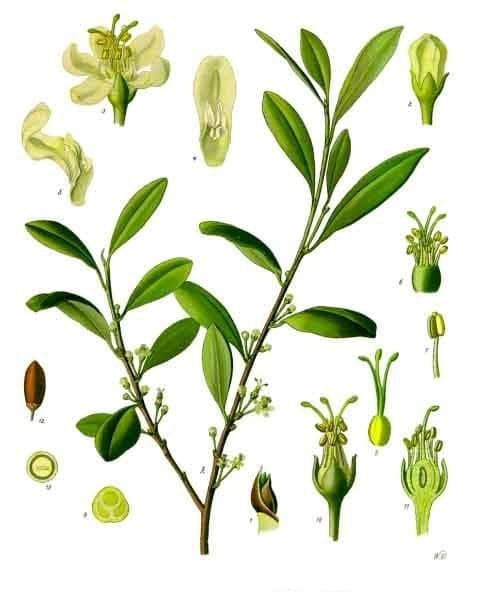
Franz Eugen Köhler, Köhler's Medizinal-Pflanzen / Public domain, via Wikimedia Commons
Erythroxylum coca: complete guide
Erythroxylum coca
Want to see Erythroxylum coca: complete guide in your garden?
1 minute, no credit card
Overview
Erythroxylum coca, commonly known as the coca plant, is a fascinating shrub with significant cultural and historical importance. This plant originates from the Andes Mountains of South America, where it has been cultivated for thousands of years as part of indigenous cultures. The coca plant typically reaches heights of 2 to 3 meters and is recognizable by its characteristic small, elliptical leaves.
Belonging to the Erythroxylaceae family, the coca plant originally grew in mountainous regions of Bolivia, Ecuador, Colombia, Peru, and Brazil. Today, it is cultivated worldwide by researchers and botanists interested in its unique properties. While not a typical garden plant, for enthusiastic plant lovers with suitable growing conditions, cultivating the coca plant can be a rewarding endeavor.
The plant is known for its small yellow flowers that can appear year-round, depending on growing conditions. These flowers are followed by small red fruits that gradually ripen.
Appearance and Bloom
The coca plant is an evergreen shrub with compact growth. Its leaves are small, approximately 1 to 3 centimeters long, smooth, and deep green in color. They are elliptical in shape and grow alternately along the branches, giving the plant a delicate, almost ornamental appearance.
The flowers of Erythroxylum coca are small and unobtrusive, typically yellowish-green in color. They grow in small clusters and bloom throughout the growing season. The flowers are followed by fruits that turn bright red when mature. These fruits are small, approximately bean-sized, and contain a single seed.
The plant grows slowly to moderately, making it well-suited for small gardens or greenhouse cultivation. With proper care, the coca plant can live and thrive for decades.
Ideal Location
The coca plant thrives in warm, sunny locations. In its natural habitat, it grows in mountainous areas of South America, receiving full sun and mild temperatures. For optimal growth, choose a location that receives at least 6 to 8 hours of direct sunlight daily.
This is a plant that prefers greenhouse conditions, especially in temperate climates. It may grow outdoors in very warm regions, but in cooler climates, greenhouse cultivation is essential. The plant is frost-sensitive, and temperatures below 10 degrees Celsius can cause damage.
If you live in a cool climate, the coca plant will thrive best in a warm greenhouse or sunroom with plenty of light. A south or southwest-facing window is ideal.
Soil
The coca plant prefers well-draining soil with a neutral to slightly acidic pH. Using universal potting soil mixed with extra perlite or sand for improved drainage produces optimal results. In its natural habitat, the plant grows in mountainous areas with mineral-rich soils.
Ensure the soil is not constantly wet, as this can cause root rot. The plant can tolerate dry periods but grows best with regular moisture. Use potting soil specifically formulated for houseplants or exotic plants when growing this plant in containers.
If cultivating the coca plant outdoors in warm regions, prepare the soil well with organic material and ensure good drainage.
Watering
The coca plant requires regular watering, especially during the growing season (spring and summer). Allow the soil to dry slightly between waterings, but do not let it dry completely. Overwatering is more harmful than underwatering, so err on the side of caution.
During the growing season (April to October), water when the top centimeter of soil feels dry. In fall and winter, reduce watering frequency. Monitor the plant regularly and adjust water frequency based on weather conditions and soil moisture.
When the plant grows in a greenhouse environment, higher air humidity may reduce water usage. Ensure the pot has adequate drainage holes to prevent waterlogging.
Free design
Want to see Erythroxylum coca: complete guide in your garden? Make a free design now.
Pruning
The coca plant responds well to pruning and can be shaped effectively. Prune the plant in early spring before the active growing period begins. Remove dead, diseased, or damaged branches. This stimulates bushy growth and keeps the plant compact.
You can regularly pinch the plant to encourage more branching. Remove the top 1 to 2 centimeters of new growth, which will help the plant become fuller. This can be done throughout the growing season.
Use sterile tools when pruning to prevent disease transmission. Clean your pruning shears or saw thoroughly with alcohol or disinfectant.
Maintenance Calendar
Coca plant maintenance varies by season. In spring (March-May), growth resumes after winter dormancy. This is the best time to prune, repot, and fertilize. Increase watering frequency as temperatures rise.
In summer (June-August), the plant needs full attention. Provide daily watering, increase air humidity, and fertilize regularly. Ensure temperatures do not exceed 30 degrees Celsius, as this can cause stress.
In fall (September-October), growth slows. Gradually reduce watering frequency and stop fertilizing. This helps the plant prepare for winter dormancy.
In winter (November-February), the plant rests. Drastically reduce water and maintain temperatures above 10 degrees Celsius. No fertilization is needed.
Winter Hardiness
The coca plant is not winter-hardy in temperate climates. It is frost-sensitive and cannot overwinter outdoors in regions where temperatures drop below freezing. The plant requires a minimum temperature of approximately 10 to 12 degrees Celsius to remain healthy.
In warm climates (USDA zones 11-13), the plant may possibly remain outdoors, but prefers protected, warm locations. In cooler climates, it is essential to keep the plant indoors or in a heated greenhouse during winter.
Protect the plant from drafts and cold air. Do not place the plant near windows or doors where cold air can enter.
Companion Plants
The coca plant can be beautifully combined with other exotic plants requiring the same growing conditions. Consider these combinations for attractive plant groupings:
Other Erythroxylum species can grow alongside each other. Coffee arabica, another interesting species, enjoys the same warm, moist conditions. Eucalyptus species also make compatible companion plants. Passiflora plants can grow with coca in greenhouse environments.
Indoors with houseplants, you can combine the coca plant with ficus, monstera, or Anthurium for a tropical atmosphere. These plants all appreciate warmth and humidity.
Closing
The coca plant, Erythroxylum coca, is a special choice for the enthusiastic plant lover who enjoys cultivating exotic or historical plants. While not suitable for everyone due to its specific growing requirements, cultivating this plant is a rewarding experience when the right conditions are available.
The plant requires warmth, full sun, regular watering, and good drainage, but with this basic care, this South American plant will grow and bloom abundantly. If you are interested in plant cultivation and have access to a warm greenhouse or a warm home, the coca plant is certainly worth trying.
For more information about exotic plant care and cultivation, visit gardenworld.app where you can find inspiration and advice for creating your dream garden. They also offer regular workshops and guides on plant cultivation. You can also contact local garden centers that often provide advice on growing unusual plants.
Want to see Erythroxylum coca: complete guide in your garden? Make a free design now.
Upload a photo, pick a style, and get a photorealistic design with plant list in under a minute.
No credit card required


Similar plants
Acer pycnanthum: complete guide
Acer pycnanthum
Acer pycnanthum, the Japanese swamp maple, is a fast-growing tree with early red flowers and brilliant autumn color, ideal for damp garden settings.
Freeman maple: complete guide
Acer × freemanii
Everything about the Freeman maple (Acer x freemanii): a fast-growing shade tree with spectacular autumn colour for large gardens.
Silver vine: complete guide
Actinidia polygama
Discover silver vine (Actinidia polygama): a hardy climbing plant with silvery foliage, loved by gardeners and cats alike.