
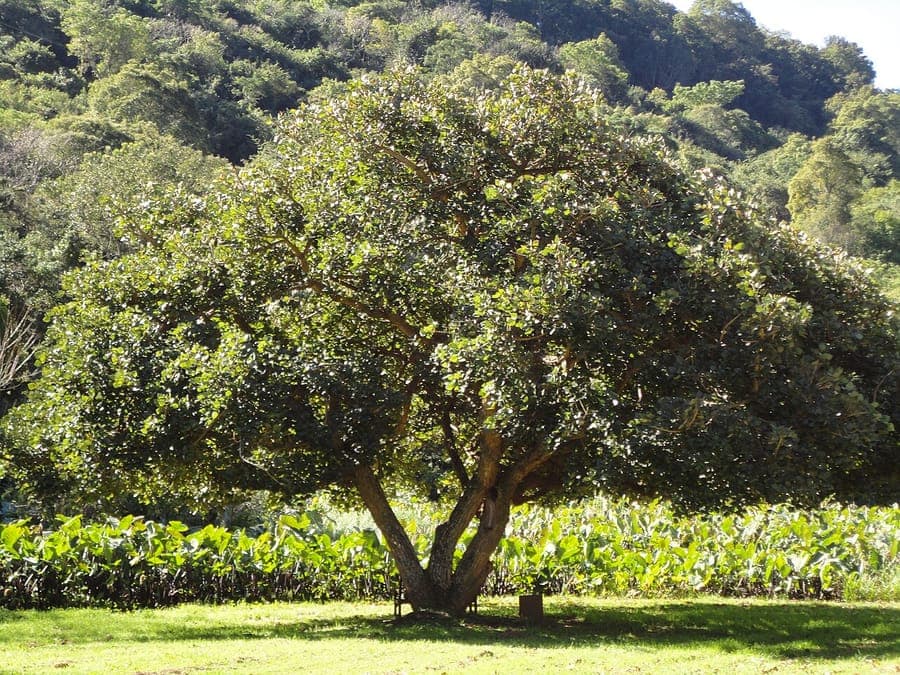
I created this image. JMK (talk) 12:03, 27 June 2011 (UTC) / CC BY-SA 3.0, via Wikimedia Commons
Erythrina caffra: complete guide
Erythrina caffra
Want to see Erythrina caffra: complete guide in your garden?
1 minute, no credit card
Overview
Erythrina caffra, commonly known as the kaffirboom or coastal coral tree, is one of the most striking trees from South Africa. This tree belongs to the Fabaceae family (legumes) and is renowned for its fiery red flowers that appear in spring. The tree naturally grows in coastal areas from Mozambique to South Africa's Cape Provinces. In subtropical and temperate gardens, it creates an unmistakable focal point.
Appearance and Bloom
The kaffirboom can reach 10 to 12 meters in favorable conditions, though it remains more compact in cooler climates. The tree has an open, spreading crown with thick branches. The leaves are trifoliate (three leaflets per leaf) and remain green well into autumn. The highlight comes during the April-May bloom. Flowers grow in dense clusters directly on the branches, with intense orange-red to scarlet coloring. These flowers attract birds and insects while providing stunning visual impact. After blooming, dark elongated seed pods develop.
Ideal Location
Choose a full sun location for the kaffirboom. The tree needs at least 6 to 8 hours of direct sunlight daily to bloom well. A south-facing position is ideal. Ensure adequate space as the tree grows wide. Avoid planting near other large trees to prevent competition for sunlight. In cooler regions, sheltered spots against a south-facing wall provide extra warmth.
Soil
The kaffirboom is undemanding regarding soil composition. It grows well on well-draining soils with pH between 6.0 and 8.0. Heavy, waterlogged clay soils are unsuitable. Add potting soil or compost when planting to improve water retention. Later, a layer of mulch around the trunk helps keep the soil moist. Avoid water stagnation; roots can rot in wet conditions.
Watering
Ensure regular watering during the first year after planting. The tree needs more moisture during the growing season (spring and summer). Water deeply during dry periods, reaching at least 30 centimeters deep. Once established, the kaffirboom is fairly drought-tolerant. In autumn and winter, reduce watering significantly.
Free design
Want to see Erythrina caffra: complete guide in your garden? Make a free design now.
Pruning
The kaffirboom typically needs minimal pruning. Remove dead branches and damaged wood in spring. If the tree grows too dense, prune lightly after flowering. Avoid heavy pruning that disturbs the natural form. The tree creates its finest silhouette when growing freely.
Maintenance Calendar
Spring (March-April): Plant new specimens or feed established trees with slow-release fertilizer. Remove dead branches. Begin regular watering.
Summer (June-August): Keep soil moist, especially during dry spells. Enjoy the fantastic blooming in April-May as trees reach their finest moment.
Autumn (September-October): Reduce watering as the season progresses. Monitor for pests.
Winter (November-February): Much less water. This is the tree's resting period.
Winter Hardiness
The kaffirboom is not fully hardy in Northern Europe. In the Benelux, it survives outdoors only in very protected, warm gardens (USDA zone 10a-10b). In most regions, it cannot survive freezing temperatures below 0 degrees. For northern areas, container cultivation is recommended so you can move the tree to a cool greenhouse or conservatory during winter. In containers, it survives temperatures around -5 degrees.
Companion Plants
The kaffirboom grows well with other sun-loving plants. Combine it with agaves, yuccas, and Mediterranean herbs. The red flowers harmonize beautifully with silver-leaved plants like artemisia or senecio. Plant lower evergreens beneath it, such as boxwood or cherry laurel, for attractive layering.
Conclusion
The Erythrina caffra is an investment in spectacle. This kaffirboom adds a tropical atmosphere to your garden with its fiery red flowers and southern character. With proper care and a warm location, it rewards you each spring with an unforgettable floral display. At gardenworld.app, you'll find everything needed to bring this South African treasure to your garden. Gardenworld.app also offers inspiration for creating a supportive landscape pattern around this exceptional tree.
Want to see Erythrina caffra: complete guide in your garden? Make a free design now.
Upload a photo, pick a style, and get a photorealistic design with plant list in under a minute.
10,000+ gardens designed already
No credit card required


Similar plants
Tall Silky Lupine: complete guide
Lupinus elatus
Tall silky lupine is a fast-growing Californian perennial with silvery foliage and blue-purple flower spikes, ideal for a prairie-style garden.
Garfield Lupine: complete guide
Lupinus garfieldensis
The Garfield lupine is a rare, fast-growing American perennial for alkaline, dry grassland gardens, with striking blue flower spikes.
Lupinus elegans: complete guide
Lupinus elegans
Lupinus elegans, the elegant lupine, is a spectacular blooming plant from Mexico with blue flower spikes. Care, cultivation and garden use.