
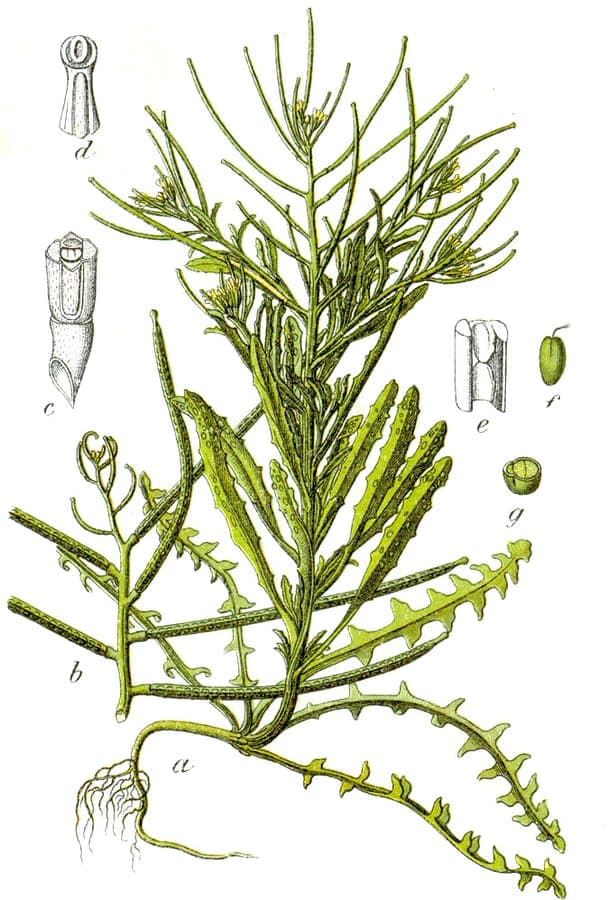
Johann Georg Sturm (Painter: Jacob Sturm) / Public domain, via Wikimedia Commons
Spreading treacle mustard: complete guide
Erysimum repandum
Want to see Spreading treacle mustard: complete guide in your garden?
1 minute, no credit card
Overview
Spreading treacle mustard (Erysimum repandum) is an annual or short-lived perennial forb in the Brassicaceae family, native to rocky slopes and disturbed soils across southeastern Europe and western Asia. It's not a showstopper in formal gardens, but for those who love rugged, naturalistic plantings, it's a gem. With a spreading, low-growing habit and cheerful yellow flowers, it thrives where other plants struggle. Whether you're filling gaps in a gravel garden or adding seasonal color to a dry bank, this plant earns its keep. On gardenworld.app, you can design a garden layout that showcases its sprawling form alongside complementary textures and heights.
Appearance & bloom cycle
This plant forms a loose mat of grey-green, lance-shaped leaves, reaching 20–40 cm in height and spreading up to 60 cm wide. Stems trail outward, rooting slightly at the nodes in ideal conditions. From April to July, it bursts into bloom with clusters of bright yellow flowers, each with four petals in the classic cross shape. The flowering period is long, especially if deadheaded. After blooming, slender seed pods develop and split open when dry, scattering seeds nearby. This self-seeding habit means you'll often see new plants pop up the following year, particularly in sunny, undisturbed spots.
Ideal location
Full sun is non-negotiable. Spreading treacle mustard needs at least 6–8 hours of direct sunlight daily to flower well and maintain compact growth. It's perfect for south-facing slopes, rock gardens, dry borders, or even between paving stones. It tolerates reflected heat and poor soil, making it ideal for urban gardens or roadside plantings. Avoid shady or damp areas - it'll stretch, flop, and likely rot. If your garden gets afternoon sun and has good airflow, it's likely suitable. Use gardenworld.app to simulate light patterns and confirm your site meets its needs.
Soil requirements
It thrives in lean, well-drained soils - sandy, gravelly, or shallow loam. Clay soils are risky unless heavily amended with grit or perlite to improve drainage. The ideal pH range is 6.0 to 7.5. Avoid rich, fertile soils or compost-heavy mixes; they promote leggy growth and reduce flowering. No fertilizer needed - in fact, feeding can do more harm than good. A little added grit at planting time is all it asks for.
Watering
Once established, it's highly drought-tolerant. Water sparingly, only during prolonged dry spells in the first few weeks after planting. Mature plants rely on natural rainfall. Overhead watering should be avoided - wet foliage increases fungal risk. Instead, water at the base if needed. Mulching with gravel helps reduce moisture retention and keeps the crown dry.
Free design
Want to see Spreading treacle mustard: complete guide in your garden? Make a free design now.
Pruning
Pruning isn't essential, but cutting back by one-third after peak bloom in early summer can encourage a second, lighter flush of flowers in late summer. Deadheading spent blooms extends the flowering season and limits aggressive self-seeding if you want to control spread. Pruning also improves air circulation, reducing the chance of mildew in humid climates.
Maintenance calendar
- Jan: Dormant; check for overwintering rosettes
- Feb: Inspect for early seedlings; remove competing weeds
- Mar: Plant out seedlings after last frost (tolerant to -10°C)
- Apr: Bloom begins; monitor for aphids
- May: Peak flowering; avoid feeding
- Jun: Cut back after main bloom to promote rebloom
- Jul: Seed pods mature; collect or allow natural dispersal
- Aug: Soil disturbance may trigger new germination
- Sep: Sow fresh seed in situ or in pots
- Oct: Self-sown seedlings emerge; protect from slugs
- Nov: No action needed; plant may persist as rosette
- Dec: Dormant; no care required
Winter hardiness
Hardy in USDA zones 6–9. In zone 6, it may behave as a biennial, germinating in autumn and blooming the next spring. In colder zones, it's typically grown as an annual. Established rosettes can survive temperatures down to -15°C if the soil is well-drained. Wet winter soils are the biggest threat - root rot is common in poorly drained sites.
Companion plants
Pair with drought-tolerant perennials like Sedum 'Autumn Joy', Nepeta racemosa, or Salvia officinalis. The yellow flowers contrast beautifully with silver-foliage plants like Artemisia schmidtiana or Stachys byzantina. It also works well with ornamental grasses such as Festuca ovina glauca. Avoid aggressive spreaders or heavy feeders that could outcompete it. In containers, mix with dwarf thyme or trailing veronica for a cottage-style effect.
Closing
Spreading treacle mustard is a no-fuss, resilient plant that brings reliable color to challenging spots. It's not flashy, but it's dependable - perfect for gardeners who value function and form. Let it sprawl over edges or tuck it into crevices where not much else grows. Buy seeds or young plants at local garden centres, OBI, or Hornbach. On gardenworld.app, you can create a seasonal planting plan that includes this mustard alongside other sun-loving, low-water species for a cohesive, sustainable garden.
Want to see Spreading treacle mustard: complete guide in your garden? Make a free design now.
Upload a photo, pick a style, and get a photorealistic design with plant list in under a minute.
No credit card required


Similar plants
Brassica cretica: complete guide
Brassica cretica
Brassica cretica, the Cretan cabbage, grows wild on Aegean cliffs. Discover how to grow this drought-tolerant, yellow-flowered Mediterranean perennial.
Corsican cabbage: complete guide
Brassica insularis
Corsican cabbage is a rare Mediterranean rock cabbage with white flowers and blue-green leaves. Location, soil and winter protection.
Prostrate cabbage: complete guide
Brassica procumbens
Prostrate cabbage is a creeping North African cliff plant with yellow flowers. Discover location, soil type and winter protection.