
Wikimedia Commons / CC BY-SA 3.0, via Wikimedia Commons
Treacle mustard: complete guide
Erysimum cheiranthoides
Want to see Treacle mustard: complete guide in your garden?
1 minute, no credit card
Overview
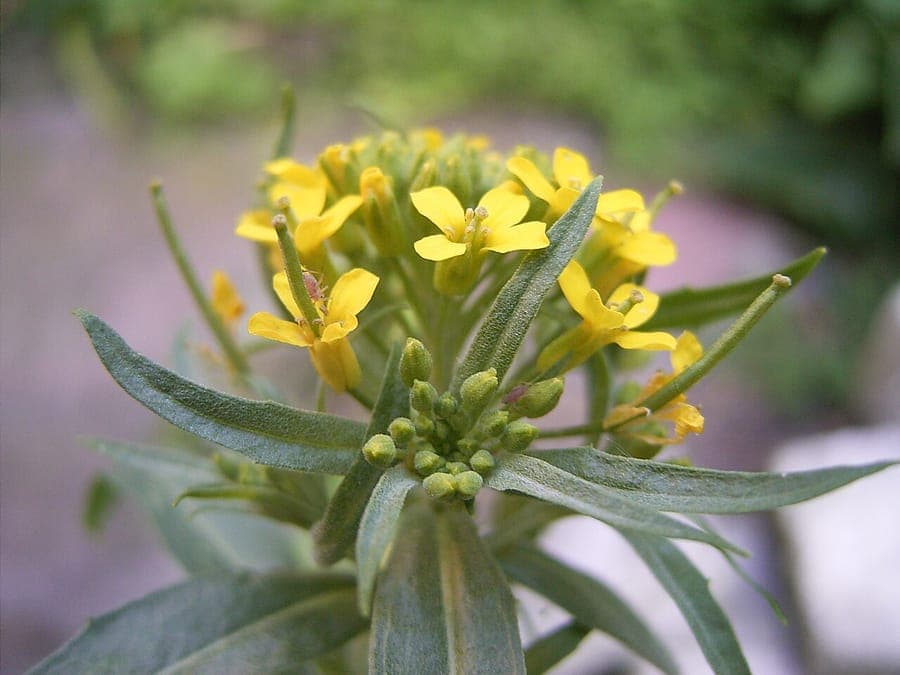
Erysimum cheiranthoides, commonly known as Treacle mustard, is a slender, annual herbaceous plant that brings structure and subtle color to sunny gardens. Native to parts of Central Europe, Russia, and northern China, it thrives in well-drained, moderately poor soils and full sun. This member of the Brassicaceae family is often found in fields, road verges, and dry meadows, but has become increasingly popular in naturalistic garden designs.
The plant typically reaches 30 to 60 cm in height, with upright, branching stems and small yellow flowers that bloom in dense clusters. As an annual, it completes its life cycle in one growing season and must be re-sown each spring. Its adaptability and low water needs make it a smart choice for xeriscaping and low-effort gardening.
Treacle mustard grows best in USDA hardiness zones 4 through 8. It's not particularly picky about soil fertility, but does poorly in waterlogged or highly acidic conditions. On gardenworld.app, you can explore design templates that integrate annuals like Treacle mustard into seasonal garden rotations.
Appearance & bloom cycle
Treacle mustard blooms from early June through late August, producing small, bright yellow flowers about 6–8 mm in diameter. The blooms appear in elongated racemes at the top of the stems, creating a vertical accent in the border. While individual flowers are modest, their abundance gives the plant a lively, airy presence.
Leaves are narrow, slightly hairy, and arranged alternately along the stem. They're a pale green to grey-green hue and reduce in size toward the flowering tips. After flowering, the plant develops slender seed pods up to 4 cm long, which split open when dry to scatter seeds. This self-seeding habit can be managed by deadheading or allowed for natural regeneration in wilder garden styles.
For gardeners looking to create a relaxed, cottage-style planting scheme, Treacle mustard is a reliable performer. You can use gardenworld.app to visualize how it pairs with other mid-height annuals and perennials in your specific garden layout.
Ideal location
Full sun is essential-aim for 8 hours of direct sunlight daily. This plant thrives in hot, dry spots where other species might struggle. Ideal locations include sunny borders, gravel gardens, raised beds, or containers with a depth of at least 20 cm.
It performs well in urban settings and tolerates wind and heat. Avoid shaded or damp areas, which encourage leggy growth and fungal issues. If planting in containers, use a fast-draining mix with added grit or perlite.
Free design
Want to see Treacle mustard: complete guide in your garden? Make a free design now.
Soil requirements
Treacle mustard prefers neutral to slightly alkaline soil with a pH between 7.0 and 7.5. It does best in sandy or loamy soils that drain quickly. Avoid heavy clay or overly rich compost, which can lead to lush foliage but fewer blooms.
If your soil is dense, amend the top 15 cm with coarse sand or fine gravel to improve drainage. The plant actually performs better in lean soils, making it ideal for low-fertility sites.
Watering
Once established, this plant is highly drought-tolerant. Water young plants regularly during their first few weeks, especially if planted in May or June during dry spells. Water at the base to keep foliage dry and prevent powdery mildew.
Mature plants rarely need supplemental irrigation, except during prolonged droughts (over three weeks without rain). In containers, check the top 2–3 cm of soil; water only when dry.
Pruning
Pruning is minimal. Deadheading spent flowers can extend blooming slightly and reduce self-seeding if desired. For a tidier look, cut back flower stalks after peak bloom.
Alternatively, leave seed heads intact to feed finches and other small birds in autumn. In colder regions (above 300 m elevation), start seeds indoors in March or direct-sow in April for a reliable summer display.
Maintenance calendar
- March–April: Start seeds indoors or sow directly when soil reaches 7°C. Use well-draining seed compost.
- May: Transplant seedlings or direct-sow in garden beds. Keep soil lightly moist.
- June–August: Peak bloom period. Monitor for aphids or fungal issues in humid weather.
- September: Observe seed development. Cut back if self-seeding is unwanted.
- October–December: Plant dies back. Remove debris or leave for winter interest and wildlife.
Winter hardiness
As an annual, Treacle mustard does not survive winter. It completes its lifecycle by late autumn. However, in milder climates (zones 7–8), self-sown seedlings may appear early the following spring.
Companion plants
Pair Treacle mustard with drought-tolerant species like Coreopsis, Lavender, or Allium. It contrasts well with fine-textured grasses or silver-foliaged plants like Artemisia or Cineraria. Avoid moisture-loving or heavy-feeding plants.
In the UK and US, look for seeds or young plants at garden centres like those in the UK or online specialty retailers. Check labels carefully-sometimes mislabeled as 'wall rocket' or 'false gillyflower'.
Closing
Treacle mustard is a no-fuss annual that rewards with cheerful blooms and reliable performance. It's perfect for beginners, cottage gardens, or anyone seeking low-maintenance color. With the right spot and minimal care, it'll thrive. And by using gardenworld.app, you can design a planting scheme that highlights its airy structure and seasonal charm.
Want to see Treacle mustard: complete guide in your garden? Make a free design now.
Upload a photo, pick a style, and get a photorealistic design with plant list in under a minute.
No credit card required


Similar plants
Brassica cretica: complete guide
Brassica cretica
Brassica cretica, the Cretan cabbage, grows wild on Aegean cliffs. Discover how to grow this drought-tolerant, yellow-flowered Mediterranean perennial.
Corsican cabbage: complete guide
Brassica insularis
Corsican cabbage is a rare Mediterranean rock cabbage with white flowers and blue-green leaves. Location, soil and winter protection.
Prostrate cabbage: complete guide
Brassica procumbens
Prostrate cabbage is a creeping North African cliff plant with yellow flowers. Discover location, soil type and winter protection.