
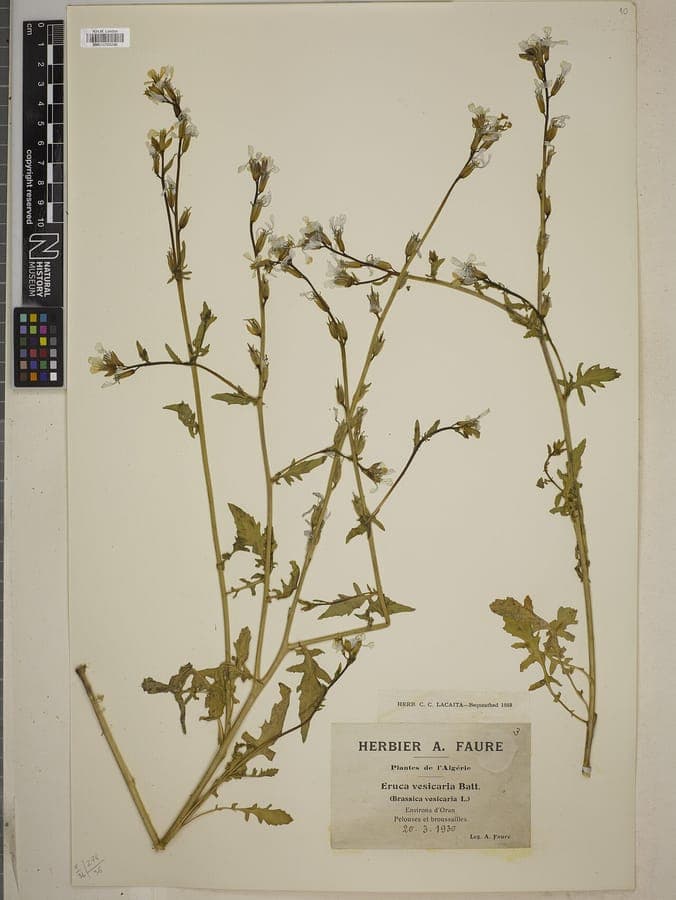
Unknown authorUnknown author / CC0, via Wikimedia Commons
Rocketsalad: complete guide
Eruca vesicaria
Want to see Rocketsalad: complete guide in your garden?
1 minute, no credit card
Overview
Rocketsalad, or Eruca vesicaria, is a fast-growing, edible herb that brings a peppery kick to any garden. Native to regions like the Mediterranean and Central Asia, it thrives in temperate climates and adapts well to UK and North American growing zones. This hardy annual grows best in USDA zones 6 to 9 and can be sown directly in the ground from early spring through autumn. Reaching 30–60 cm in height, it forms a rosette of deeply lobed, dark green foliage that's ready for harvest in just 30–40 days. Whether you're planting in a raised bed or a container, rocketsalad delivers fresh, zesty leaves perfect for salads, sandwiches, and pestos. On gardenworld.app, you can design a kitchen garden layout that integrates rocketsalad with companion plants for peak yield.
Appearance & bloom cycle
The plant features a forb-like growth habit with pinnately divided leaves that have a slightly hairy texture. The foliage is rich green, deeply serrated, and ranges from 10 to 25 cm in length. From February to June, rocketsalad produces small, delicate flowers - white with yellow stamens and purple veining - measuring about 2–3 cm across. These blooms attract bees and hoverflies, making it a pollinator-friendly addition. After flowering, slender seed pods form, each holding several small brown seeds that readily self-sow if left unchecked. The plant tends to bolt in hot weather, so succession planting every 2–3 weeks helps maintain a steady supply.
Ideal location
Rocketsalad thrives in full sun, scoring a 9 out of 10 on the light scale. Aim for a spot that receives at least 8 hours of direct sunlight daily - south-facing areas are ideal. While it can tolerate partial shade, reduced light leads to leggy growth and milder flavor. Avoid low-lying, damp areas where cold air settles, as young seedlings are sensitive to frost. In urban gardens or patios, use containers placed on sunny balconies or near reflective walls to maximise exposure. Garden centres often carry starter plants in early spring, but sowing seeds directly gives better root development.
Soil requirements
This plant prefers neutral to slightly alkaline soil with a pH of 7.0–7.5. It grows best in well-drained, loamy or sandy soils rich in organic matter. Heavy clay soils should be amended with compost and grit to improve drainage. Before planting, mix in 2–3 cm of mature compost to boost fertility. Avoid waterlogged ground, as it increases the risk of root rot and damping off. A soil test kit can help confirm pH levels - adjust with lime if too acidic.
Free design
Want to see Rocketsalad: complete guide in your garden? Make a free design now.
Watering
Keep the soil consistently moist but not soggy. Water once or twice a week, increasing frequency during dry spells. Early morning is the best time to irrigate, reducing evaporation and fungal risks. Use a soaker hose or watering can with a fine rose to avoid disturbing young seedlings. Mulching with straw or shredded bark (2–3 cm layer) helps retain moisture and suppress weeds.
Pruning
Rocketsalad doesn't require traditional pruning, but regular harvesting promotes bushier growth. Use the 'cut-and-come-again' method: snip outer leaves 5–8 cm above the crown, leaving the central bud intact. This encourages side shoots and extends harvest into summer. Once flowering begins, leaves turn bitter. You can pinch off flower buds to prolong leaf production or let them bloom for seed saving and pollinators.
Maintenance calendar
- Jan: Start indoor sowings under cover if using cold frames
- Feb: Direct sow in mild areas; protect with cloches
- Mar: Thin seedlings to 15 cm apart; watch for flea beetles
- Apr: Begin harvesting outer leaves; inspect for aphids
- May: Apply liquid seaweed feed monthly; succession sow
- Jun: Allow some plants to flower; collect seeds later
- Jul: Pause sowing in hot weather; restart in late July
- Aug: Sow for autumn harvest; protect from slugs
- Sep: Harvest late crops; plant for overwintering
- Oct: Sow final batch; cover with fleece if frost threatens
- Nov: Protect outdoor plants with horticultural fleece
- Dec: Harvest overwintered leaves in mild spells
Winter hardiness
Rocketsalad is semi-hardy (USDA zones 6–9). In milder regions, it survives winter with minimal protection. In colder zones, mulch with straw or use fleece to shield plants from hard frosts below -5°C. Overwintered plants often resume growth in February, offering early spring greens.
Companion plants
Grow alongside carrots, onions, tomatoes, and cucumbers. Its strong scent deters aphids and carrot flies. Avoid planting near legumes like peas and beans, which are prone to similar diseases. Pairing with dill, coriander, or chives enhances biodiversity and flavour.
Closing
Rocketsalad is a low-effort, high-reward plant for any edible garden. With proper spacing and succession planting, you can enjoy fresh leaves nearly year-round. Buy seeds from reputable garden centres or online suppliers, and consider organic varieties for superior taste. Use gardenworld.app to track planting dates, companion layouts, and harvest reminders - it's the smart way to stay organised and maximise your garden's potential.
Want to see Rocketsalad: complete guide in your garden? Make a free design now.
Upload a photo, pick a style, and get a photorealistic design with plant list in under a minute.
No credit card required


Similar plants
Brassica cretica: complete guide
Brassica cretica
Brassica cretica, the Cretan cabbage, grows wild on Aegean cliffs. Discover how to grow this drought-tolerant, yellow-flowered Mediterranean perennial.
Corsican cabbage: complete guide
Brassica insularis
Corsican cabbage is a rare Mediterranean rock cabbage with white flowers and blue-green leaves. Location, soil and winter protection.
Prostrate cabbage: complete guide
Brassica procumbens
Prostrate cabbage is a creeping North African cliff plant with yellow flowers. Discover location, soil type and winter protection.