
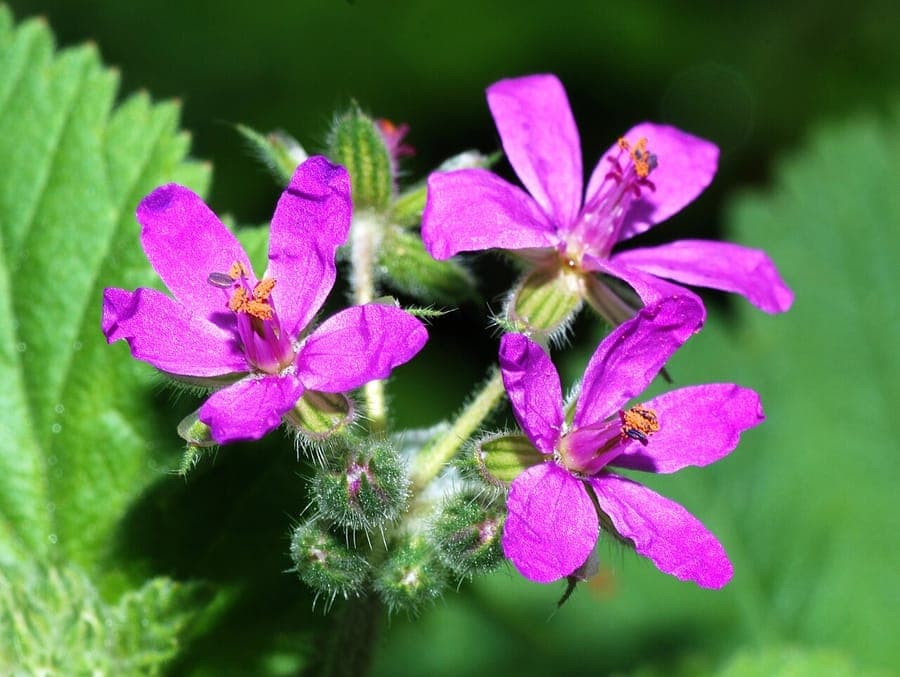
Alvesgaspar / CC BY-SA 3.0, via Wikimedia Commons
Erodium malacoides: complete guide
Erodium malacoides
Want to see Erodium malacoides: complete guide in your garden?
1 minute, no credit card
Overview
Erodium malacoides, also known as soft stork's bill or mallow-leafed geranium, is an elegant, low-growing herbaceous plant native to the Mediterranean region and North Africa. This plant is renowned for its fine, silvery foliage and delicate purple flowers. The plant naturally grows on rocky places and dry slopes and is popular for rock gardens and alpine troughs.
The plant reaches only 10 to 20 centimeters in height and forms a compact, neat growth habit. Erodium malacoides is a perfect choice for small gardens, balconies, and especially for lovers of alpine plants. The plant is drought-tolerant and low-maintenance.
Appearance and Bloom
Erodium malacoides grows in a compact rosette with finely-cut, softly silvery foliage. The leaves can be tri-lobed and give the plant a very delicate appearance. The foliage has fine hairy coating that makes it gleam silvery.
Flowers appear from March to June in loose clusters above the foliage. They are small, approximately 0.5 to 1 centimeter in diameter, with five purple to pink petals. The flowers are delicate and elegant. After flowering, the characteristic long, spiral seedpods form, which are clearly visible and have decorative effect.
Ideal Location
Erodium malacoides grows best in a very sunny location. Plant it where it receives at least 6 hours of direct sunlight daily. In very warm climates, some afternoon shade can be useful. The plant thrives in full sun.
Ensure good air circulation around the plant to prevent fungal diseases. The plant is excellent for south-facing walls, raised beds, and gravel gardens.
Soil
Erodium malacoides requires well-draining, poor soil. A mixture of garden soil, coarse sand, and gravel is ideal. The pH can range from 5.5 to 7.5. The plant actually grows better in poor soil than in nutrient-rich soil.
Excellent drainage is essential. If you have heavy soil, add lots of sand and gravel. Avoid clay and heavy loam.
Free design
Want to see Erodium malacoides: complete guide in your garden? Make a free design now.
Watering
Erodium malacoides is a very drought-tolerant plant. Once established, it needs virtually no supplemental water. Allow the soil to dry completely between waterings. The plant tolerates drought much better than moisture excess.
Young plants require slightly more moisture until well-established, but even then avoid standing water. In winter, don't water unless the plant is in very dry conditions.
Pruning
Erodium malacoides requires virtually no pruning. The plant maintains its compact form naturally. Only remove spent flowers and dead leaves. After several years, the plant may grow somewhat untidily; you can then gently prune or replace the plant.
Maintenance Calendar
March/April: Plant in well-draining soil. Minimal watering.
March to June: Flowering period. Remove spent flowers.
July to October: Plant becomes quieter. Virtually no water.
November to February: Winter dormancy. No care.
Winter Hardiness
Erodium malacoides is moderately winter hardy to approximately -5 degrees Celsius. In many parts of Northern Europe, the plant can overwinter outdoors, especially if the soil is well-drained. In wet winters, the risk of root rot is greater than frost damage.
In very cold climates, the plant may die. Protection with gravel or grit can help in wet winters.
Companion Plants
Erodium malacoides combines well with other alpine and Mediterranean plants. In rock gardens: Sedum, Saxifraga, Sempervivum. In dry borders: Helichrysum, Armeria, Alyssum. The fine flowers and silvery foliage create beautiful contrasts.
Conclusion
Erodium malacoides is a charming, low-maintenance plant for small gardens and rock gardens. The delicate purple flowers and silvery foliage make it a valuable addition. Visit local garden centers for this plant, or explore gardenworld.app for alpine garden designs.
Want to see Erodium malacoides: complete guide in your garden? Make a free design now.
Upload a photo, pick a style, and get a photorealistic design with plant list in under a minute.
No credit card required


Similar plants
Pelargonium acetosum: complete guide
Pelargonium acetosum
Discover the Sorrel-leaf Geranium: a South African plant with aromatic foliage. Perfect for containers and warm locations. Learn cultivation and care.
Erodium foetidum: complete guide
Erodium foetidum
Rock stork's-bill is a delicate alpine plant with purple flowers and fine foliage. Learn how to grow this Mediterranean charmer in your front garden.
Pelargonium crithmifolium: complete guide
Pelargonium crithmifolium
Discover Samphire-leaf pelargonium: an exotic South African geranium with distinctive foliage. Growing tips, care advice and garden inspiration.