
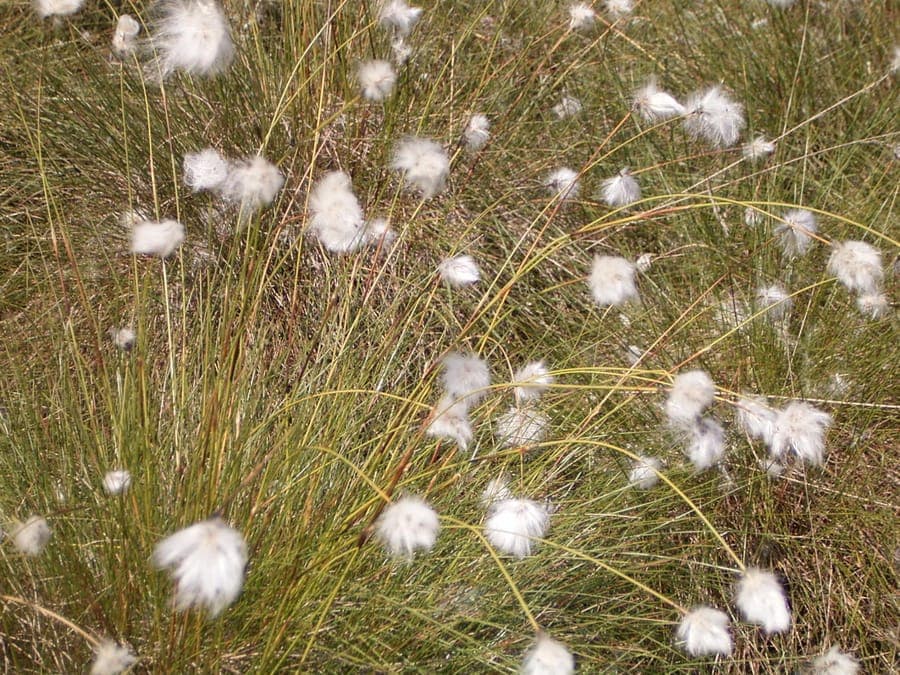
Elke Freese / CC BY-SA 3.0, via Wikimedia Commons
Tussock cotton-grass: complete guide
Eriophorum vaginatum
Want to see Tussock cotton-grass: complete guide in your garden?
1 minute, no credit card
Overview
Tussock cotton-grass (Eriophorum vaginatum) isn't your average garden plant - it's a specialist of acidic, boggy conditions that brings quiet drama to wetland-style gardens. A member of the Cyperaceae family, it's native across northern Europe, parts of Canada, and high-altitude zones in central Europe. In the wild, you'll find it forming dense tussocks in peat bogs, but it's increasingly popular in designed gardens that embrace naturalistic planting schemes.
This plant thrives where others struggle: in cold, wet, low-nutrient soils. It's not flashy, but its subtle beauty - especially in spring when the cottony white seed heads appear - adds texture and movement. If your garden has a soggy corner or a rain garden, this is a top contender. And if you're planning moisture-loving planting schemes, gardenworld.app lets you design a layout that matches the exact needs of plants like Tussock cotton-grass.
Appearance & bloom cycle
Tussock cotton-grass grows in tight, dome-shaped clumps 20–40 cm tall and about 30 cm wide. The narrow, dark green leaves are rigid and upright, forming a neat base. In April and May, single-stemmed flower spikes rise up to 45 cm, unfurling into soft, white, cotton-like tufts. These aren't flowers in the traditional sense - they're feathery bristles attached to developing seeds, and they persist well into summer, sometimes even through winter.
The bloom period lasts from late April to mid-June, depending on local climate. In full sun and cool conditions, flowering is more abundant. While it doesn't produce scent, its visual impact is strong - especially when backlit by morning sun. The contrast between the dark foliage and pale plumes creates depth and softness in planting beds.
Ideal location
This plant scores a 7 on the light scale (1–10), meaning it needs 5–6 hours of direct sunlight daily, preferably morning sun. It tolerates light afternoon shade, especially in warmer zones, but deep shade leads to leggy growth and fewer plumes. Full sun is fine as long as the soil stays consistently moist.
Best locations include the margins of ponds, bog gardens, or damp hollows in the landscape. It's also ideal for rain gardens where water collects after storms. Avoid hot, dry slopes. Use gardenworld.app to map your garden's sun exposure and pinpoint the best spot for tussock-forming plants like this one.
Soil requirements
The soil must be acidic - pH 4.0 to 4.5 - and low in nutrients. Standard potting mix or compost-rich garden soil will harm it. Instead, use a blend of peat, sand, and leaf mould. Never add lime or chalk. If your native soil is alkaline, grow it in a raised bed or container filled with ericaceous compost.
Good drainage is important, but not dryness. The roots need constant moisture, so avoid free-draining sandy soils unless you can irrigate daily. Clay soils can work if they stay wet but not waterlogged.
Free design
Want to see Tussock cotton-grass: complete guide in your garden? Make a free design now.
Watering
Consistent moisture is non-negotiable. The root zone should never dry out. Use rainwater when possible - tap water is often too alkaline and can raise pH over time. During dry spells in summer, water every 1–2 days, especially for young plants. Mature clumps are more resilient but still need weekly watering if rainfall is below 25 mm.
Mulch with pine needles or sphagnum moss to retain moisture and maintain acidity.
Pruning
No pruning is needed. Leave old foliage and seed heads through winter for structure and wildlife cover. In late winter (February), gently rake out dead material by hand or with a stiff brush. Avoid shears - they can damage emerging shoots.
If you prefer a tidier look, cut back the entire clump to 5 cm above ground in late winter.
Maintenance calendar
- Jan: Check for frost heave. Leave all growth intact.
- Feb: Remove dead leaves and old plumes. Prepare for spring growth.
- Mar: New shoots emerge. No feeding needed.
- Apr: Flower spikes appear. Maintain soil moisture.
- May: Peak bloom with full cotton heads. No intervention.
- Jun: Seed dispersal begins. Continue watering.
- Jul–Aug: Dormant phase. Watch for drought stress.
- Sep: No action.
- Oct: Cut back if desired, or leave for winter interest.
- Nov: Protect young plants with bracken or leaf litter in exposed sites.
- Dec: Winter dormancy. Leave standing.
Winter hardiness
Tussock cotton-grass is hardy in USDA zones 3–7. It withstands temperatures down to -35°C. The evergreen basal leaves persist through winter, and the plant re-sprouts reliably in spring. In areas with freeze-thaw cycles, some leaf browning may occur, but it's cosmetic.
Companion plants
Pair with other acid-loving bog plants: Carex nigra, Sarracenia purpurea, Andromeda polifolia, or Calluna vulgaris. The textural contrast with fine mosses or spiky sedges works beautifully. Avoid fertile-soil plants like lavender or roses - they won't survive in the same conditions.
Use Sphagnum moss around the base to hold moisture and suppress weeds.
Closing
Tussock cotton-grass is a quiet achiever in the garden - low-maintenance, hardy, and ecologically valuable. It supports pollinators and provides winter seed for birds. You'll find it at garden centres across the UK and North America, often in the bog or waterside section. Look for it at major retailers or specialty nurseries. And when you're ready to plant it, use gardenworld.app to visualise how it fits into your overall garden design - because every great planting starts with the right plan.
Want to see Tussock cotton-grass: complete guide in your garden? Make a free design now.
Upload a photo, pick a style, and get a photorealistic design with plant list in under a minute.
No credit card required


Similar plants
Flat-stemmed club-rush: complete guide
Bolboschoenus planiculmis
Everything about Bolboschoenus planiculmis: growing conditions, watering, care, and use as a pond margin or wetland plant in garden design.
Great Plains flatsedge: complete guide
Cyperus lupulinus
Everything about Great Plains flatsedge (Cyperus lupulinus): growing conditions, care, garden uses, and ecological value. Tips for pond margins and dry sandy soils.
Golden beak sedge: complete guide
Rhynchospora corymbosa
Everything about golden beak sedge (Rhynchospora corymbosa): a dramatic tropical marginal for pond edges, bog gardens, and wet habitats.