
Simon A. Eugster / CC BY-SA 3.0, via Wikimedia Commons
White cottonsedge: complete guide
Eriophorum scheuchzeri
Want to see White cottonsedge: complete guide in your garden?
1 minute, no credit card
Overview
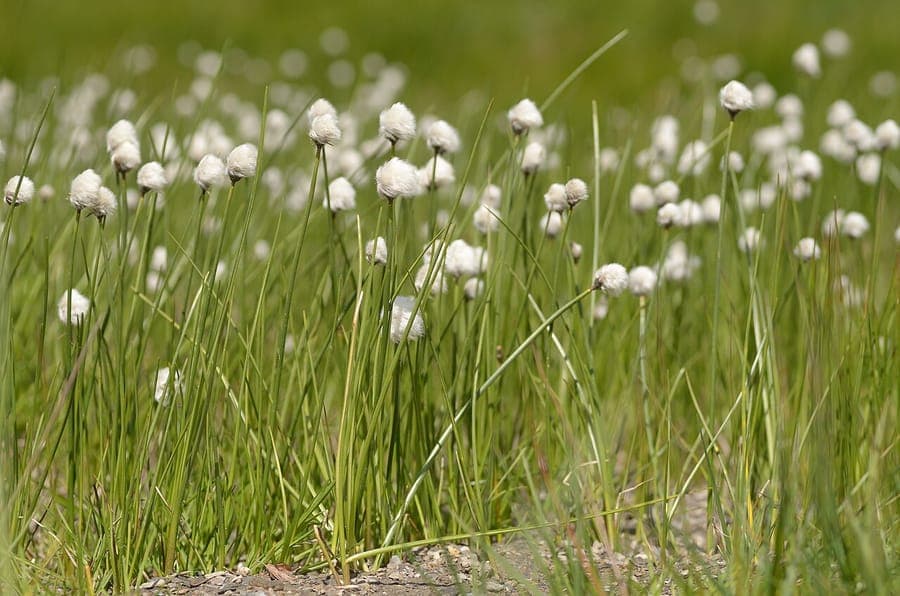
White cottonsedge, or Eriophorum scheuchzeri, is a graceful, tufted perennial sedge from the Cyperaceae family that thrives in damp, acidic conditions. Native to cold regions like Alaska, British Columbia, and Finland, it's perfectly adapted to wetland edges and bog gardens. While not native to the UK or much of Western Europe, it grows well in gardens that mimic its natural habitat. Standing 20–30 cm tall, it spreads slowly via rhizomes, forming dense clumps over time. Its most striking feature is the cotton-like seed heads that appear in late spring, giving it a soft, cloud-like presence in the garden.
This plant is ideal for gardeners looking to create a naturalistic, low-maintenance wet area. On gardenworld.app, you can design a custom wetland layout that integrates white cottonsedge with other moisture-loving plants for year-round texture and interest.
Appearance & bloom cycle
White cottonsedge has narrow, dark green leaves that grow in tight basal rosettes. From May to June, slender stems rise to about 35 cm, each tipped with a single, fluffy white bristle. These aren't flowers but seed-bearing structures surrounded by long, silky hairs that catch the light beautifully. The plumes last three to four weeks and gradually turn tan by late summer, persisting into winter and providing subtle visual structure during the dormant months.
The plant grows slowly but steadily, forming circular clumps up to 25 cm across after three years. It doesn't self-seed aggressively, so you won't have to worry about it taking over. Its modest size and upright form make it excellent for the front or middle of a bog garden.
Ideal location
White cottonsedge prefers partial to full shade with a light value of 8-meaning bright, indirect light but protection from harsh afternoon sun. Full sun is acceptable only if the soil remains constantly moist. Ideal spots include the edges of ponds, damp woodland clearings, or under light-canopy trees like birch or alder.
Plant in groups of five or more for a natural drift effect. On gardenworld.app, you can visualise how Eriophorum scheuchzeri will fill out over time, helping you plan spacing and companion planting with precision.
Soil requirements
The soil must be acidic, with a pH between 4.0 and 4.5. Use a mix of peat moss, pine bark fines, and coarse sand in a 3:1:1 ratio. Avoid composted manure or lime-rich materials, as these raise pH and can cause yellowing leaves. The soil should stay consistently moist but not waterlogged-think boggy, not flooded. If planting in a container, ensure drainage holes are present but place the pot in a saucer of water to maintain humidity.
Free design
Want to see White cottonsedge: complete guide in your garden? Make a free design now.
Watering
Water regularly from April through September. In dry spells, check daily to ensure the top few centimetres of soil don't dry out. Use rainwater if possible-tap water with high lime content can gradually alter pH. A drip irrigation system or soaker hose works well for maintaining even moisture without disturbing the delicate plumes.
Pruning
Cut back old foliage and spent seed heads in early March, just before new growth emerges. Use clean, sharp shears to avoid disease. You can leave some plumes over winter for aesthetic interest and wildlife cover, but remove them by late February to make way for fresh shoots.
Maintenance calendar
- Jan: Check clump stability; protect from extreme frost with pine boughs if needed
- Feb: Leave standing; remove snow buildup to prevent matting
- Mar: Prune old growth, test soil pH
- Apr: Resume regular watering, watch for new shoots
- May: Bloom begins; ensure partial shade
- Jun: Peak bloom; no feeding required
- Jul: Monitor moisture; prevent drying in heatwaves
- Aug: Plumes fade; leave for winter texture
- Sep: Reduce watering slightly, but keep soil damp
- Oct: Leave undisturbed; adds autumn interest
- Nov: Check for fungal spots; no pruning
- Dec: Leave standing; provides shelter for insects
Winter hardiness
White cottonsedge is hardy to USDA zone 4 (-34°C). In the UK (zones 7–9), it survives winter with no protection as long as the soil stays moist. In exposed areas, a light mulch of pine needles can help insulate the crown during hard freezes.
Companion plants
Pair with other acid-loving, moisture-dependent plants like Carex vulcani, Molinia caerulea, Drosera anglica, and Iris versicolor. For contrast, add Sanguisorba officinalis or Ligularia przewalskii. Avoid plants that prefer alkaline soil, such as lavender or dianthus.
Closing
White cottonsedge isn't for every garden, but if you've got a soggy, shady corner begging for life, it's a gem. Its ethereal plumes and low upkeep make it a standout in ecological and naturalistic designs. Find Eriophorum scheuchzeri at garden centres across the UK-look for specialist bog plant suppliers or check online retailers. With the right conditions, you'll enjoy its soft, floating beauty for years. Plan your layout carefully, and use gardenworld.app to ensure your wetland garden thrives.
Want to see White cottonsedge: complete guide in your garden? Make a free design now.
Upload a photo, pick a style, and get a photorealistic design with plant list in under a minute.
No credit card required


Similar plants
Flat-stemmed club-rush: complete guide
Bolboschoenus planiculmis
Everything about Bolboschoenus planiculmis: growing conditions, watering, care, and use as a pond margin or wetland plant in garden design.
Great Plains flatsedge: complete guide
Cyperus lupulinus
Everything about Great Plains flatsedge (Cyperus lupulinus): growing conditions, care, garden uses, and ecological value. Tips for pond margins and dry sandy soils.
Golden beak sedge: complete guide
Rhynchospora corymbosa
Everything about golden beak sedge (Rhynchospora corymbosa): a dramatic tropical marginal for pond edges, bog gardens, and wet habitats.