
Wikimedia Commons / CC BY-SA 3.0, via Wikimedia Commons
Broad-leaved cottongrass: complete guide
Eriophorum latifolium
Want to see Broad-leaved cottongrass: complete guide in your garden?
1 minute, no credit card
Overview
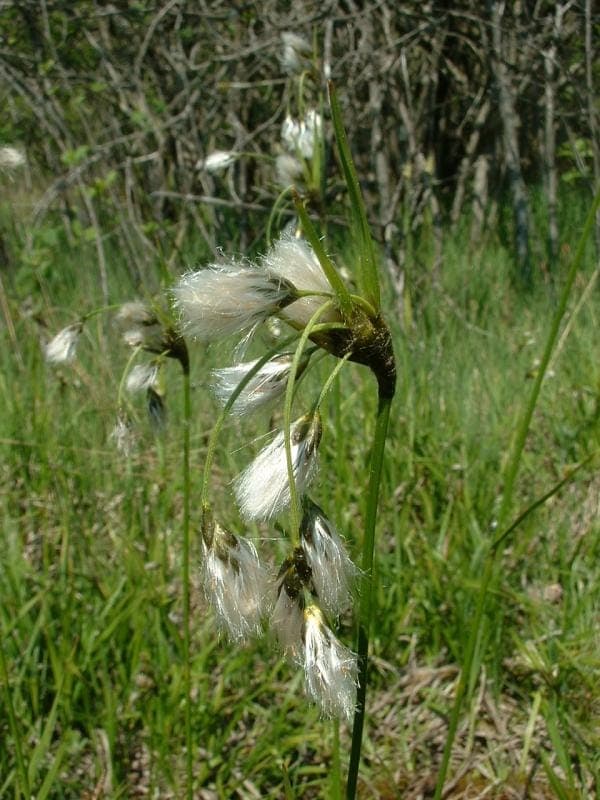
Eriophorum latifolium, commonly known as broad-leaved cottongrass, is a striking perennial sedge that brings texture and movement to damp garden spaces. Despite not being a true grass, it's widely appreciated for its fluffy white flower heads that float above the foliage like tufts of cotton. Native across much of northern and central Europe, it naturally colonises fens, wet heaths, and moist woodland clearings. In recent years, it's gained traction in designed gardens, especially those leaning into naturalistic planting schemes.
This plant is ideal for gardeners dealing with poorly drained soil or shallow standing water. It's not just decorative – it supports local ecology, providing structure and shelter for insects and small invertebrates. If you're working with a boggy corner or a pond margin, Eriophorum latifolium might be exactly what you've been looking for. On gardenworld.app, you can visualise how this plant fits into your garden layout, helping you plan moisture-loving planting zones with precision.
Appearance & bloom cycle
Broad-leaved cottongrass grows to around 40–60 cm in height, with a spread of about 30 cm. Its leaves are notably wider than those of other Eriophorum species – typically 5–10 mm – giving it a sturdier, more substantial presence. The foliage emerges in spring as bright green, semi-erect blades, forming loose clumps. From May onwards, wiry flower stems rise, culminating in single, white, cotton-like seed heads by early June.
The bloom period runs from May through July, peaking in June. These white plumes are actually clusters of feathery bristles (pappus) attached to seeds, evolved for wind dispersal. They remain intact well into autumn, sometimes lasting until December if not battered by heavy rain or wind. Even after flowering, the plant retains visual interest, with seed heads gradually turning beige and catching the low light of late summer and early autumn.
Ideal location
This sedge thrives in full sun to light shade, scoring an 8 out of 10 for light requirement. That means it needs at least 6–8 hours of direct sunlight daily. While it tolerates partial shade, flowering diminishes significantly if light drops below this threshold. The best spots are open, sunny areas near water – think pond edges, bog gardens, or rain gardens where water naturally collects.
Avoid planting under dense tree canopies or behind tall perennials that cast shade. Position it where it can catch morning and midday sun, and where its plumes can catch the breeze. On gardenworld.app, you can map sun exposure across your garden to identify optimal zones for moisture-loving, sun-dependent plants like this one.
Soil requirements
Eriophorum latifolium prefers consistently moist to wet soil, but not waterlogged in a stagnant way. It grows best in soils rich in organic matter – think peat, muck, or humus-heavy clay loams. Unlike many bog plants, it tolerates slightly alkaline conditions, thriving in pH levels from 7.5 to 8. This makes it a rare option for calcareous wetlands or gardens with chalky subsoil.
If your soil drains too quickly, amend it with plenty of well-rotted compost or leaf mould, and consider creating a shallow depression to retain water. For pond plantings, it can be grown in 5–15 cm of standing water, in aquatic baskets filled with loam-based compost. Avoid sandy, fast-draining soils unless you're able to irrigate frequently.
Free design
Want to see Broad-leaved cottongrass: complete guide in your garden? Make a free design now.
Watering
Keep the soil constantly moist. In dry spells, especially during the first growing season, water deeply once or twice a week. In prolonged droughts, daily watering may be necessary. Rainwater is preferable, as tap water with high calcium content can gradually raise pH beyond the plant's tolerance over time.
If planted in a bog garden or pond margin, natural rainfall may suffice in temperate climates. However, in hot summers, supplemental watering is essential. Mulching with leaf litter or pine needles helps retain moisture and mimics natural conditions.
Pruning
No pruning is needed during the growing season. However, in early spring (March or April), cut back all dead foliage from the previous year. This clears the way for new growth and prevents old material from smothering emerging shoots. Use clean, sharp secateurs and remove only the browned leaves – avoid cutting into green, live tissue.
Leave the old flower heads over winter if possible. They add texture and movement to the dormant garden and can provide nesting material for birds. Cut them back only when new growth begins to emerge.
Maintenance calendar
- Jan: Dormant; no action needed
- Feb: Inspect for winter damage, prepare tools
- Mar: Cut back old foliage
- Apr: New growth appears; resume watering if soil dries
- May: Flower stems emerge; monitor moisture
- Jun: Peak bloom; plumes fully developed
- Jul: Seed heads mature; maintain consistent moisture
- Aug: Plumes persist; no maintenance required
- Sep: Observe for pests; avoid overwatering as temperatures drop
- Oct: Plant begins to die back; leave standing
- Nov: Dormancy sets in; no pruning
- Dec: Fully dormant; protect from extreme frost if in containers
Winter hardiness
Broad-leaved cottongrass is hardy to USDA zone 5 (-29°C to -23°C). It survives most UK and northern European winters without protection. The plant dies back to ground level in autumn, but the rhizomes remain viable underground. In container plantings, consider insulating the pot or moving it to a sheltered spot to prevent root damage from freeze-thaw cycles.
Companion plants
Pair Eriophorum latifolium with other moisture-loving species such as Carex riparia, Iris versicolor, or Molinia caerulea. It also combines well with ferns like Matteuccia struthiopteris, or flowering perennials like Astilbe and Persicaria bistorta. For structural contrast, plant near dark-stemmed shrubs like Cornus alba 'Sibirica'. In the wild, it's often found with Sphagnum moss and bog asphodel, but in gardens, it adapts well to cultivated wetland edges.
Closing
Broad-leaved cottongrass is a resilient, low-maintenance plant that delivers high ornamental value in the right conditions. Its ethereal plumes bring softness and movement to wet areas where few plants thrive. With proper siting and consistent moisture, it can become a long-term feature in your garden. You can find it at many UK garden centres, especially those specialising in water plants or native species. Look for it in spring – and remember, the key to success is matching its needs: sun, wet soil, and patience in the first season.
Want to see Broad-leaved cottongrass: complete guide in your garden? Make a free design now.
Upload a photo, pick a style, and get a photorealistic design with plant list in under a minute.
No credit card required


Similar plants
Flat-stemmed club-rush: complete guide
Bolboschoenus planiculmis
Everything about Bolboschoenus planiculmis: growing conditions, watering, care, and use as a pond margin or wetland plant in garden design.
Great Plains flatsedge: complete guide
Cyperus lupulinus
Everything about Great Plains flatsedge (Cyperus lupulinus): growing conditions, care, garden uses, and ecological value. Tips for pond margins and dry sandy soils.
Golden beak sedge: complete guide
Rhynchospora corymbosa
Everything about golden beak sedge (Rhynchospora corymbosa): a dramatic tropical marginal for pond edges, bog gardens, and wet habitats.