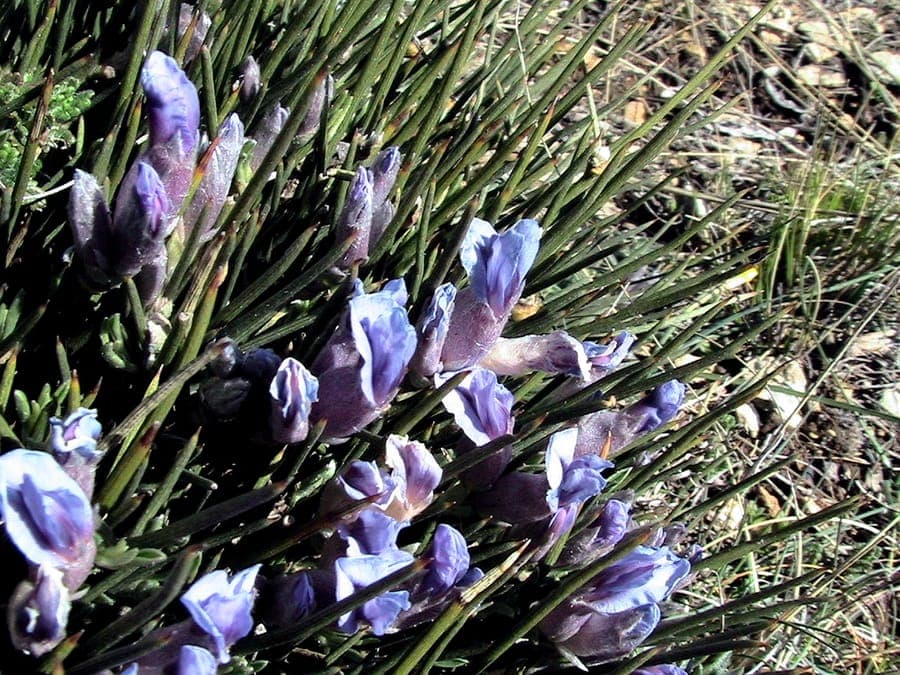
Isidre blanc / CC BY-SA 3.0, via Wikimedia Commons
Hedgehog-broom (Erinacea anthyllis): complete guide
Erinacea anthyllis
Want to see Hedgehog-broom (Erinacea anthyllis): complete guide in your garden?
Full design in HD: €7.99
Look after your Hedgehog-broom with the GardenWorld app
Identify plants with your camera and get a care calendar with reminders for this plant.


Overview
Hedgehog-broom (Erinacea anthyllis), also known as blue spiny broom or Igelginster, is a remarkable subshrub belonging to the Fabaceae family. Native to the western Mediterranean region spanning North Africa through southern Spain and Portugal, this distinctive plant forms incredibly dense, spiny mounds. Mature specimens measure 30-60 centimeters in diameter, creating a botanical spectacle with brilliant purple-blue flowers visible even from great distances.
Appearance and bloom
Hedgehog-broom creates distinctive, tightly-packed hemispherical cushions composed entirely of stiff, spiny branches. The stems are green to grey-green, completely covered with sharp spikes that give the plant its distinctive character. The flowers are diminutive, measuring 5-7 millimeters, displaying stunning deep purple to violet coloration. Blooms appear in extraordinary abundance during May and June, completely obscuring the plant beneath flowers. Small, flattened brown seed pods develop following flowering. The plant grows extremely slowly but accumulates perfect spherical form year after year.
Ideal location
Hedgehog-broom requires very sunny, intensely hot locations with maximum light and heat exposure. Full sun is absolutely essential - minimum 8-10 hours of direct daily sunlight. The plant cannot tolerate any shading. Provide a sheltered location if gardening in cold regions. In hot, arid Mediterranean climates, plants flourish with greatest vigor. This species is entirely unsuitable for wet or humid climates.
Soil
Perfect drainage is absolutely critical for success. Hedgehog-broom naturally grows in poor, sandy, gravelly, or rocky soils and actually prefers infertile substrates. Rich, moist soils invariably cause root rot. For optimal growth, incorporate abundant grit, sand, and gravel throughout the planting medium. A soil pH of 7.0 to 7.5 is ideal. Ensure exceptional drainage by incorporating drainage geotextile beneath the root zone.
Free preview
Want to see Hedgehog-broom (Erinacea anthyllis): complete guide in your garden? Make a free preview of your design.
Watering
Hedgehog-broom requires virtually no supplemental watering. Once established, minimal water is needed. The plant thrives in dry, even extreme drought conditions. Water only during severe dry spells. Ensure water drains completely - waterlogging is fatal. Regular watering nearly guarantees plant death. This is truly a zero-maintenance plant regarding irrigation.
Pruning
Pruning is neither required nor advisable. The plant naturally forms perfect spherical specimens without intervention. Remove only genuinely dead wood. Never practice heavy pruning as this destroys the plant's natural form and may cause damage. Light cleaning of dead material is sufficient.
Maintenance calendar
May through June: Abundant flowering period. June through July: Seed capsules mature. July through October: Very slow growth. November through April: Winter dormancy. Minimal maintenance required year-round except during extreme drought.
Winter hardiness
Hedgehog-broom is hardy to approximately -12 to -15 degrees Celsius (USDA zone 7-8). In regions with severe winters, protect plants with a dry mulch. Wet frost proves far more dangerous than dry cold. Ensure excellent water drainage during winter months to prevent ice damage.
Companion plants
Hedgehog-broom performs best as a specimen plant. If combining with companions, select other Mediterranean plants carefully including lavender, alpine fleabane, and other xeric plants. Lay gravel mulch around the plant to suppress competing weeds, reduce evaporation, and improve drainage during rainfall. Avoid pairing with moisture-loving plants.
Closing
Hedgehog-broom is a spectacular centerpiece for dry, sunny gardens. This truly unique plant captivates with spiny spherical forms and stunning purple-blue flowers. Perfect for Mediterranean gardens, rock gardens, or as a singular focal point in a dry border. Visit gardenworld.app for more dry garden inspiration and discover how this remarkable plant elevates your landscape. This specimen will certainly astonish passersby with its extraordinary botanical beauty.
Frequently asked questions about Hedgehog-broom
Is Hedgehog-broom winter hardy?
Hedgehog-broom is hardy to approximately -12 to -15 degrees Celsius (USDA zone 7-8). In regions with severe winters, protect plants with a dry mulch.
When and how do you prune Hedgehog-broom?
Pruning is neither required nor advisable. The plant naturally forms perfect spherical specimens without intervention.
How much water does Hedgehog-broom need?
Hedgehog-broom requires virtually no supplemental watering. Once established, minimal water is needed.
Where does Hedgehog-broom grow best?
Hedgehog-broom requires very sunny, intensely hot locations with maximum light and heat exposure. Full sun is absolutely essential - minimum 8-10 hours of direct daily sunlight.
What soil does Hedgehog-broom need?
Perfect drainage is absolutely critical for success. Hedgehog-broom naturally grows in poor, sandy, gravelly, or rocky soils and actually prefers infertile substrates.

See it in your garden
See Hedgehog-broom in your garden
One photo of your garden and a few questions. You see the result in about a minute.
Try it with a photoIdentify this plant in your own garden. Identify a plant
Similar plants
Pineapple broom (Argyrocytisus battandieri): complete guide
Argyrocytisus battandieri
Everything about pineapple broom (Argyrocytisus battandieri), the Moroccan wall shrub with silver leaves and pineapple-scented flowers: site, pruning and hardiness.
Blue false indigo: complete guide
Baptisia australis
Everything about blue false indigo (Baptisia australis): position, soil, watering, cutting back, hardiness and toxicity. A long-lived prairie perennial with indigo flowers.
Warminster broom (Cytisus × praecox): complete guide
Cytisus × praecox
Everything about Warminster broom (Cytisus × praecox): position, poor soil, pruning after flowering, hardiness and what you need to know about its toxicity.
