
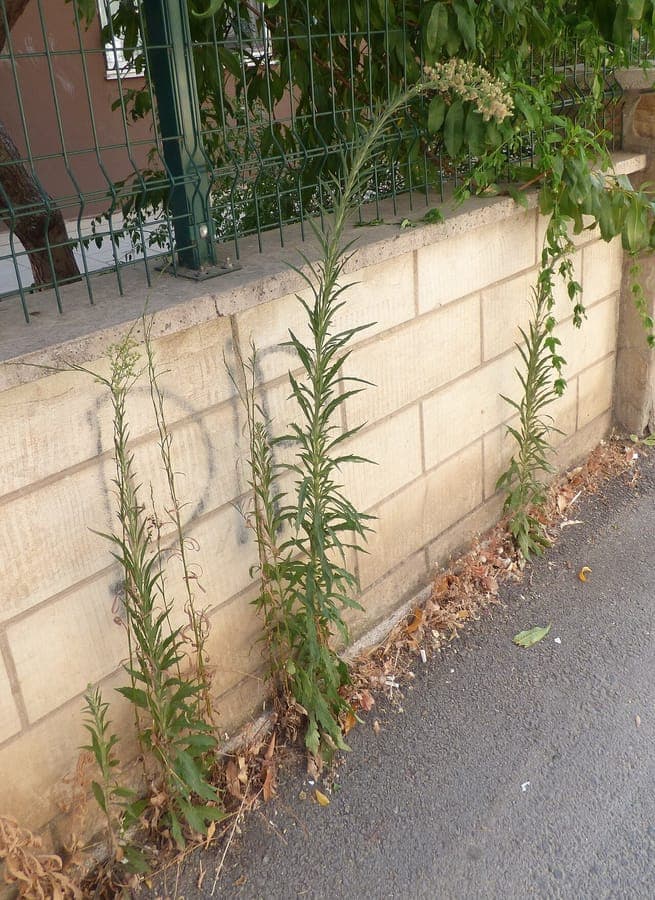
Meteorquake / CC BY 4.0, via Wikimedia Commons
Tall fleabane: complete guide
Erigeron sumatrensis
Want to see Tall fleabane: complete guide in your garden?
1 minute, no credit card
Overview
Tall fleabane (Erigeron sumatrensis) is a striking yet often overlooked herbaceous perennial that brings airy elegance to late summer borders. Despite its misleading species name, it's not from Sumatra - it's native to a wide swath of South and Central America, including Brazil, Bolivia, Colombia, and parts of Argentina and Belize. In the UK and US, it's gaining popularity for its resilience, long bloom window, and ability to thrive in lean, sunny conditions.
Reaching 60 to 90 cm in height, Tall fleabane is perfect for the middle or back of borders. It's particularly effective when planted in loose drifts among ornamental grasses or alongside late-season bloomers. On gardenworld.app, you can design a garden layout that shows how Tall fleabane fits into your planting scheme, both in height and bloom timing.
Appearance & bloom cycle
From August through September, Tall fleabane produces clusters of daisy-like flowers, each about 2–3 cm wide. The blooms feature dozens of fine white ray florets surrounding a bright yellow center, creating a soft, cloud-like effect. The foliage is narrow, medium green, and slightly hairy, arranged along upright, branching stems.
This is a magnet for pollinators - bees, hoverflies, and especially small butterflies like skippers and blues visit the flowers regularly. After blooming, the seed heads persist into winter, adding texture and movement to the dormant garden. Leaving the stems intact until early spring also provides shelter for overwintering insects.
Ideal location
Tall fleabane thrives in full sun - aim for a light level of 8 out of 10. It performs best in south- or southwest-facing borders where it receives at least 6–8 hours of direct sunlight daily. In shadier spots, the plant becomes leggy, flops over, and produces fewer flowers.
Space plants 40–50 cm apart to allow good airflow and prevent mildew. It combines beautifully with plants like Echinacea, Rudbeckia, and Panicum virgatum. For a naturalistic look, pair it with grasses such as Calamagrostis x acutiflora 'Karl Foerster' or *Sporobolus heterolepis'.
You can plan these combinations with precision using gardenworld.app, where you can simulate seasonal changes and plant spread.
Soil requirements
The ideal soil pH is between 6.5 and 7.0 - slightly acidic to neutral. Tall fleabane prefers well-drained, sandy, or loamy soils and tolerates poor fertility. It struggles in heavy clay or waterlogged conditions, where root rot can develop.
If your soil is dense, amend it with grit or composted bark to improve drainage. Avoid rich, heavily amended soils, as these encourage weak, floppy growth. A light top-dressing of compost in spring is sufficient - no high-nitrogen fertilisers.
Free design
Want to see Tall fleabane: complete guide in your garden? Make a free design now.
Watering
During establishment (first spring and early summer), water regularly to help roots develop. Once established, Tall fleabane is drought-tolerant and rarely needs supplemental watering except during prolonged dry spells.
Water at the base to keep foliage dry and reduce the risk of fungal diseases. Drip irrigation or soaker hoses work well in larger plantings.
Pruning
After flowering in September, you can cut back the spent stems if you prefer a tidy winter garden. However, leaving them standing until March adds winter interest and supports beneficial insects.
In early spring, prune old growth down to about 10 cm above ground. This encourages bushier growth and prevents the plant from becoming too open in the center. Use clean, sharp secateurs and disinfect between cuts if disease has been an issue.
Maintenance calendar
- Jan: Leave old stems; inspect for crown rot in wet soils
- Feb: No action needed
- Mar: Cut back to 10 cm; apply light compost if desired
- Apr: Watch for aphids on new shoots
- May: Water if dry; ensure good spacing
- Jun: Continue watering during dry periods
- Jul: Monitor for mildew in humid areas
- Aug: Bloom begins; check for stem support needs
- Sep: Peak flowering; pollinators active
- Oct: Decide whether to cut back or leave for winter
- Nov: No care needed
- Dec: Maintain structure or clear debris
Winter hardiness
Tall fleabane is hardy in USDA zones 7–10. In zone 7 (including much of the UK and Pacific Northwest US), it typically survives winter with mulch protection in wet soils. In colder zones, it may act as a short-lived perennial or self-seed modestly.
Avoid winter mulch that holds moisture - use dry straw or leaf litter, and remove it early in spring to prevent rot.
Companion plants
Pair Tall fleabane with late bloomers for extended interest. Aster novae-angliae 'Harrington's Pink' offers a soft pink contrast, while Verbena bonariensis adds verticality and bridges bloom gaps. Sedum 'Matrona' provides architectural form and pinkish stems.
For a prairie-style garden, combine with Eutrochium maculatum and Sorghastrum nutans. The fine texture of fleabane softens bolder foliage and seed heads.
Closing
Tall fleabane is a quiet achiever - not flashy, but reliable, long-blooming, and full of ecological value. It's available at garden centres across the UK and US, often under its common name or listed as Erigeron sumatrensis. Look for it at independent nurseries or larger retailers.
With minimal care and the right spot, it returns year after year, filling late summer gaps with effortless charm. Use gardenworld.app to visualise how Tall fleabane enhances your garden's rhythm and to explore companion planting ideas that suit your climate and style.
Want to see Tall fleabane: complete guide in your garden? Make a free design now.
Upload a photo, pick a style, and get a photorealistic design with plant list in under a minute.
No credit card required


Similar plants
Calendula stellata: complete guide
Calendula stellata
Complete guide to Calendula stellata, the star-flowered marigold from Sicily: location, soil, watering and companion planting tips.
Korean chrysanthemum: complete guide
Chrysanthemum x rubellum
Chrysanthemum x rubellum is a hardy autumn perennial with single pink to copper flowers from August to November. Care and combinations.
Helianthus divaricatus: complete guide
Helianthus divaricatus
Helianthus divaricatus is a North American woodland sunflower with yellow summer blooms, ideal for naturalistic borders and shady edges.