
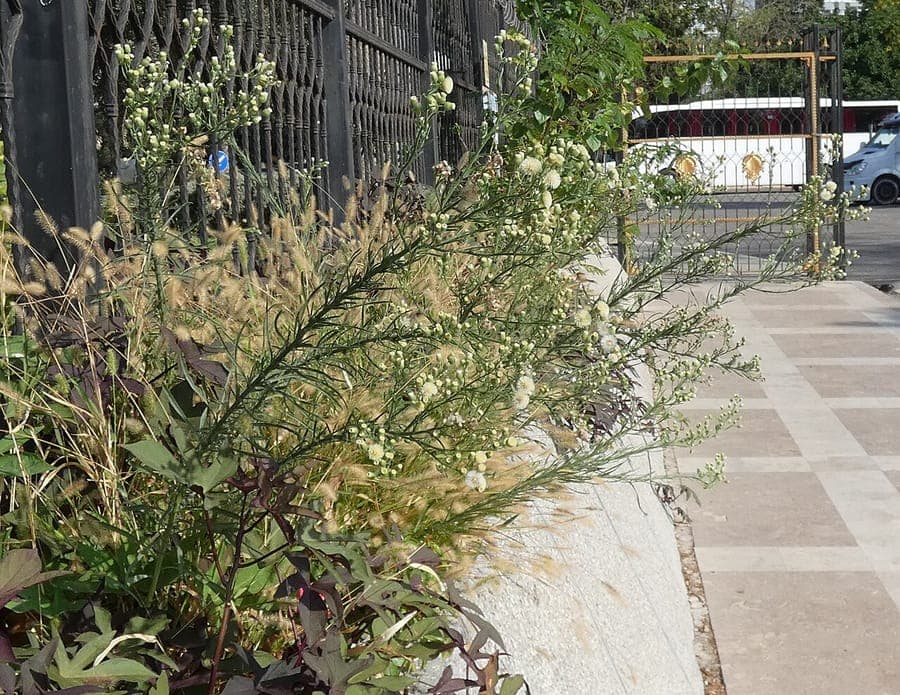
Meteorquake / CC BY 4.0, via Wikimedia Commons
Argentine fleabane: complete guide
Erigeron bonariensis
Want to see Argentine fleabane: complete guide in your garden?
1 minute, no credit card
Overview
Argentine fleabane (Erigeron bonariensis) is a resilient annual or short-lived perennial that hails from South America but has naturalised across temperate and subtropical regions worldwide. While often dismissed as a weed, it's a valuable plant for gardeners seeking low-effort, high-reward species that support pollinators and thrive in challenging conditions. On gardenworld.app, you can design a garden layout that integrates Argentine fleabane with complementary drought-tolerant plants and optimises sun exposure.
A member of the Asteraceae family, this plant grows quickly from seed and can self-seed aggressively, forming colonies in disturbed soils. It's not native to most temperate gardens, but its long bloom season and adaptability make it a useful addition in wildflower meadows, gravel gardens, or dry borders. Use it thoughtfully - its free-spirited nature means it can outcompete more delicate species if left unchecked.
Appearance & bloom cycle
Argentine fleabane reaches 30–70 cm in height, with multiple slender, branching stems. The leaves are narrow, slightly toothed, and often curled at the edges - giving them a 'crisped' look, hence one of its French common names, Érigeron crépu. They're covered in fine hairs, which reduce moisture loss and help the plant endure dry spells.
From June to October, the plant produces countless small daisy-like flowers, each 1–2 cm wide. The blooms feature pale purple to white ray florets surrounding a bright yellow centre. The flowering period is impressively long, especially in USDA zones 8–10, where mild autumns extend the season. These flowers are highly attractive to bees, hoverflies, and small butterflies, making this plant a functional addition to any pollinator garden.
Ideal location
This species thrives in full sun - rate 7 out of 10 for light. That translates to at least 6 hours of direct sunlight daily. South- or southwest-facing borders are ideal. While it tolerates light afternoon shade, especially in hotter climates, flowering diminishes in lower light.
It's an excellent choice for dry, poor soils where other plants struggle. Think gravel paths, rocky slopes, or urban cracks in pavement. It performs well in xeriscapes and low-maintenance gardens. On gardenworld.app, use the sun mapping tool to identify the best planting spots based on your garden's microclimate and seasonal sun angles.
Soil requirements
Argentine fleabane is not fussy about soil texture but demands good drainage. It grows well in sandy, loamy, or even shallow clay soils, as long as water doesn't pool. The ideal pH range is 6.5 to 7.0 - slightly acidic to neutral. Avoid highly alkaline or acidic soils, which can stunt growth.
Crucially, it hates waterlogged conditions. If your soil is heavy clay, amend it with grit or plant on a raised mound. Do not enrich the soil with compost or fertiliser - fertile ground encourages leafy growth at the expense of blooms. Lean soil = more flowers.
Free design
Want to see Argentine fleabane: complete guide in your garden? Make a free design now.
Watering
Once established, Argentine fleabane is extremely drought-tolerant. During germination and the first few weeks, keep the soil lightly moist. After that, rainfall is usually sufficient, even through dry summers. In prolonged droughts (3+ weeks without rain), a light soak helps, but avoid frequent watering - it invites root rot and weakens the plant.
Use rainwater when possible. Tap water, especially in hard water areas, can raise soil pH over time and affect plant health.
Pruning
Pruning isn't essential, but it helps manage spread and prolong flowering. Deadhead spent blooms regularly to prevent self-seeding and encourage new flowers. In late summer or early autumn (September), cut back the entire plant to about 15 cm above the ground. This reduces seed drop and may trigger a fresh flush of blooms.
Use clean, sharp shears to avoid disease transfer. Never prune in winter - the plant typically dies back naturally.
Maintenance calendar
- January: No action needed. Remove old plant debris if desired.
- February: Clear winter litter. Prepare seed trays indoors if starting early.
- March: Sow seeds indoors in a cold frame or on a sunny windowsill.
- April: Harden off seedlings. Plant out after last frost (mid-April in milder zones).
- May: Direct sow in garden. Keep soil lightly moist until germination.
- June: First flowers appear. Watch for aphids and slugs on young plants.
- July–August: Peak bloom. Minimal care required.
- September: Cut back for tidy appearance and reduced reseeding.
- October: Allow late blooms to support pollinators. Remove plants by late October.
- November–December: Leave bare. Seeds will overwinter and germinate next spring.
Winter hardiness
Argentine fleabane is not reliably winter-hardy in colder zones. It's typically grown as an annual in USDA zones below 8. In zones 8–10, it may survive mild winters as a rosette, but usually dies after flowering. The plant relies on self-seeding to return each year.
Don't mulch heavily - excess moisture causes rot. Let nature handle reseeding by leaving seed heads in place over winter.
Companion plants
Pair with other sun-loving, drought-tolerant species: Echinacea purpurea, Salvia officinalis, Coreopsis verticillata, and Ornamental grasses like Stipa tenuissima. These combinations create textural contrast and extend seasonal interest.
Avoid moisture-loving plants such as Astilbe or ferns - they demand different conditions and won't thrive nearby. Position Argentine fleabane towards the front or middle of borders for best visibility.
Closing
Argentine fleabane isn't a traditional garden standout, but it's a smart, functional choice for dry, sunny spots. It's easy to grow, supports pollinators, and requires almost no maintenance. Use it strategically - and keep an eye on its seeding habit.
You can find seeds or young plants at garden centres across the UK and US. Always check local regulations - in some areas, it's considered invasive. When planning your layout, gardenworld.app offers visual tools to model plant spacing and seasonal growth patterns.
Want to see Argentine fleabane: complete guide in your garden? Make a free design now.
Upload a photo, pick a style, and get a photorealistic design with plant list in under a minute.
No credit card required


Similar plants
Calendula stellata: complete guide
Calendula stellata
Complete guide to Calendula stellata, the star-flowered marigold from Sicily: location, soil, watering and companion planting tips.
Korean chrysanthemum: complete guide
Chrysanthemum x rubellum
Chrysanthemum x rubellum is a hardy autumn perennial with single pink to copper flowers from August to November. Care and combinations.
Helianthus divaricatus: complete guide
Helianthus divaricatus
Helianthus divaricatus is a North American woodland sunflower with yellow summer blooms, ideal for naturalistic borders and shady edges.