
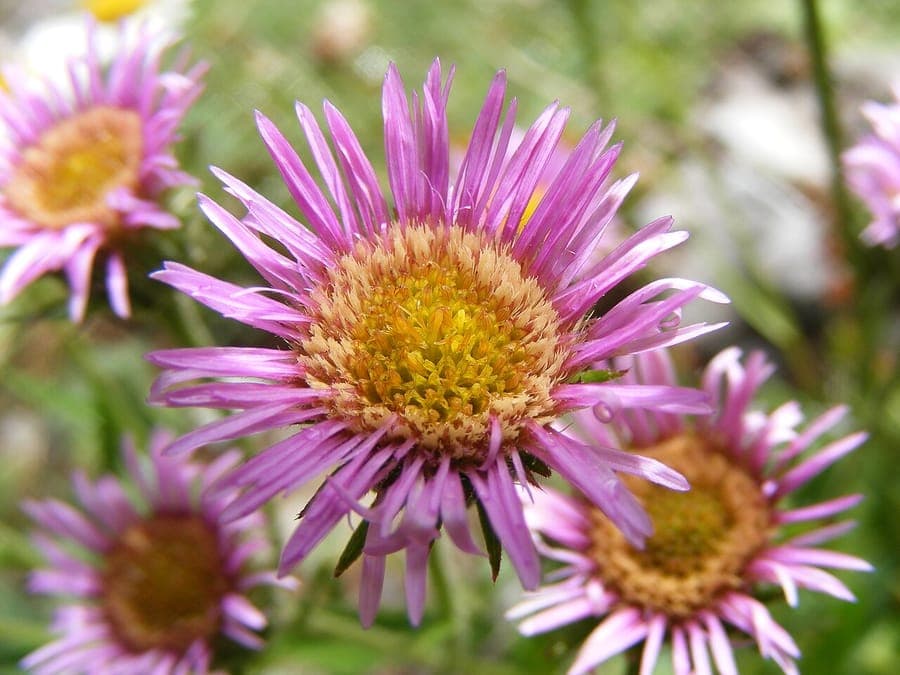
Teun Spaans / CC BY 2.5, via Wikimedia Commons
Greek fleabane (Erigeron atticus): complete guide
Erigeron atticus
Want to see Greek fleabane (Erigeron atticus): complete guide in your garden?
1 minute, no credit card
Overview
Greek fleabane (Erigeron atticus), also known as Villars' fleabane, is a delightful alpine perennial belonging to the Asteraceae family. Native to the mountains of Europe from the Alps through Turkey, this hardy plant reaches 20 to 45 centimeters in height. Erigeron atticus produces abundant yellow to purple flowers during July and August, making it an excellent choice for rock gardens, alpine troughs, and mountain-themed borders.
Appearance and bloom
Greek fleabane forms compact, densely-packed mats with fine, hair-like foliage. The leaves are small, narrow, linear, and grey-green in color. The flowers are characteristic of Asteraceae with yellow centers surrounded by fine purple or yellow ray florets. Blooms appear in such profusion during July and August that the entire plant becomes obscured by flowers. The display continues into September with regular deadheading. Each flower head measures approximately 8-12 millimeters across, creating a cottage garden appearance when massed together.
Ideal location
Greek fleabane thrives best in full, bright sun with at least 8-10 hours of direct daily light. The plant tolerates heat exceptionally well and prefers warm, dry locations. Good air circulation and ventilation at the planting site is beneficial. This species excels in rock gardens, alpine troughs, dry borders, containers on sunny terraces, or rocky outcrops. Avoid shaded locations where plants become weak and leggy. Positioning near south-facing walls maximizes heat and light exposure.
Soil
Greek fleabane is undemanding regarding soil type, thriving in virtually any soil composition. Critical to success is excellent drainage - this cannot be overstated. The plant actively prefers poor, dry soils where it actually performs better than in rich, moist conditions. Wet soil inevitably causes root rot. For rock gardens or troughs, incorporate grit or crushed stone with planting medium. A soil pH between 6.5 and 7.0 is optimal, though the plant tolerates slightly alkaline conditions.
Watering
Greek fleabane requires minimal watering. Once established, supplemental water is needed only during exceptionally dry periods. The plant actively thrives in drought conditions. Water only when soil is genuinely dry - at least 5 centimeters below the surface should be dry. Ensure excellent drainage to prevent water accumulation. During rainy periods, withhold additional watering entirely. Overwatering is the primary cause of plant failure.
Free design
Want to see Greek fleabane (Erigeron atticus): complete guide in your garden? Make a free design now.
Pruning
Pruning requirements are minimal. After flowering ceases, remove spent flower heads for neatness and to encourage prolonged blooming. In spring, remove any damaged or dead stems. The plant naturally maintains a compact form requiring little intervention. Excessive pruning should be avoided as it can damage the plant structure. Light shearing of dead material is sufficient.
Maintenance calendar
April through May: Propagate from seed or division. May through June: Transplant to permanent locations. July through September: Peak flowering period; remove spent flowers regularly. October through November: Allow seed heads to mature naturally. December through March: Winter dormancy; no maintenance required.
Winter hardiness
Erigeron atticus is exceptionally winter hardy, tolerating temperatures to -20 degrees Celsius (USDA zone 5) without protection. This makes it ideal for mountain gardens and cold climates. No special winter protection is required. Severe frosts actually help the plant develop a more compact form.
Companion plants
Greek fleabane combines beautifully with fellow alpine plants. Stonecrop (Sedum species), edelweiss (Leontopodium), alpine aster, and dwarf phlox create harmonious combinations. For foliage texture, pair with grey-leaved plants like senecio or artemisia. Under strong sun exposure, combine successfully with lavender, thyme, and salvia. In rock gardens, this species pairs excellently with other alpine fleabane species and sedums. Careful color selection creates dynamic alpine meadow effects.
Closing
Greek fleabane is a low-maintenance alpine plant that provides years of garden pleasure. With minimal care, plants grow vigorously and reward gardeners with abundant yellow-purple blooms every summer. Perfect for dry, sunny locations, this plant deserves attention from serious alpine gardeners. Visit gardenworld.app for additional garden design inspiration and discover how to incorporate this charming alpine flower into your landscape scheme. Enjoy bringing mountain magic to your garden.
Want to see Greek fleabane (Erigeron atticus): complete guide in your garden? Make a free design now.
Upload a photo, pick a style, and get a photorealistic design with plant list in under a minute.
No credit card required


Similar plants
Calendula stellata: complete guide
Calendula stellata
Complete guide to Calendula stellata, the star-flowered marigold from Sicily: location, soil, watering and companion planting tips.
Korean chrysanthemum: complete guide
Chrysanthemum x rubellum
Chrysanthemum x rubellum is a hardy autumn perennial with single pink to copper flowers from August to November. Care and combinations.
Helianthus divaricatus: complete guide
Helianthus divaricatus
Helianthus divaricatus is a North American woodland sunflower with yellow summer blooms, ideal for naturalistic borders and shady edges.