
contri from Yonezawa-Shi, Yamagata, Japan / CC BY-SA 2.0, via Wikimedia Commons
Daisy fleabane: complete guide
Erigeron annuus
Want to see Daisy fleabane: complete guide in your garden?
1 minute, no credit card
Overview
Daisy fleabane (Erigeron annuus) is a graceful annual or short-lived perennial forb in the Asteraceae family. Native to regions across North America-including Alabama, Florida, and British Columbia-it thrives in open fields, roadsides, and disturbed soils. In garden settings, it brings a soft, airy texture to borders and wildlife gardens. Its clusters of daisy-like flowers bloom for months, making it a reliable choice for low-maintenance, ecologically rich landscapes.
On gardenworld.app, you can design a planting scheme that highlights Daisy fleabane's natural charm, pairing it with complementary textures and bloom times.
Appearance & bloom cycle
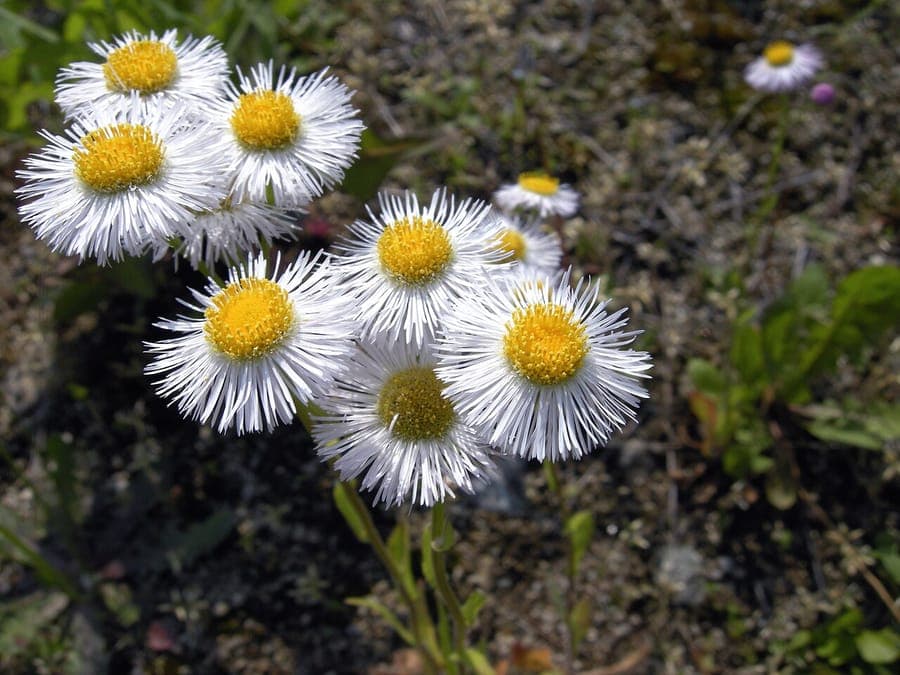
Daisy fleabane grows 60–90 cm tall with upright, branched stems and narrow, lance-shaped leaves. Basal leaves form a loose rosette and are coarser, while stem leaves are smaller and more linear. The flowers are small-about 1.5 cm across-featuring white ray florets surrounding a bright yellow center. Each plant produces dozens of flower heads over a long season.
Blooming begins in June and can continue through October, peaking from July to September in USDA zones 6–8. The extended flowering period supports pollinators like native bees, hoverflies, and small butterflies. Unlike showy garden hybrids, this species blooms modestly but persistently, adding subtle movement to sunny borders.
Ideal location
This plant thrives in full sun-rate it an 8 out of 10 for light needs. It tolerates partial shade, but flowering diminishes and stems may stretch. Plant in open areas where it can receive at least 6–8 hours of direct sunlight daily.
It works well in meadow-style gardens, cottage borders, or dry slopes. Avoid dense shade or competitive groundcovers that might smother young seedlings. For best results, give it space: plant at 30 cm intervals to allow air circulation and natural self-seeding.
Soil requirements
Daisy fleabane isn't fussy about soil, as long as drainage is good. It grows well in sandy, loamy, or rocky soils with a neutral to slightly alkaline pH (7.0–7.5). Avoid heavy clay or waterlogged conditions, which can lead to root rot.
Fertility isn't a priority-too rich soil promotes leafy growth at the expense of flowers. If your soil retains moisture, mix in coarse sand or gravel to improve drainage. This plant actually performs better in lean soils, making it ideal for neglected corners or urban gardens.
Watering
Once established, Daisy fleabane is drought-tolerant. Young plants need consistent moisture for the first 3–4 weeks after sowing or transplanting. Water deeply once or twice a week, depending on rainfall and temperature.
After establishment, reduce watering to occasional deep soakings during prolonged dry spells. Overhead watering should be avoided to prevent fungal issues. Water at the base, especially in humid conditions. In average UK or Pacific Northwest summers, rainfall is often sufficient.
Free design
Want to see Daisy fleabane: complete guide in your garden? Make a free design now.
Pruning
Pruning isn't essential, but it can improve form and prolong blooming. In midsummer, cut back stems by one-third after the first flush of flowers. This encourages bushier growth and a second wave of blooms in late summer.
Leave plants standing in fall to provide seed for birds and overwintering habitat for beneficial insects. Cut back to 10 cm in late winter before new growth emerges. If self-seeding becomes excessive, remove spent flower heads before seeds mature.
Maintenance calendar
- March–April: Start seeds indoors at 18°C in well-draining mix. Keep moist.
- May–June: Transplant outdoors after last frost (mid-May in zone 7). Space at 30 cm.
- July: Peak bloom begins. Monitor for aphids; water young plants if dry.
- August: First pruning possible to reinvigorate growth.
- September–October: Continued flowering. Allow some plants to set seed.
- November–February: Leave stems for winter structure. Cut back in late winter.
Winter hardiness
Daisy fleabane is typically grown as an annual but may behave as a biennial in milder climates. It's hardy in USDA zones 3–8, though the parent plant usually dies after setting seed. The seeds overwinter in soil and germinate in spring when temperatures rise.
In colder zones, mulch lightly to protect overwintering seedlings. In warmer areas, self-seeding is reliable. Avoid thick organic mulch in fall, as it can inhibit germination.
Companion plants
Pair Daisy fleabane with plants that share its sun and soil preferences. Good companions include:
- Black-eyed Susan (Rudbeckia hirta) – for bold yellow contrast
- Yarrow (Achillea millefolium) – for structural foliage
- Little bluestem (Schizachyrium scoparium) – for texture and movement
- Coneflower (Echinacea purpurea) – for pollinator synergy
It also blends well in informal plantings with ornamental grasses or native wildflowers. Plan your combinations on gardenworld.app to visualize how height, color, and bloom time interact across seasons.
Closing
Daisy fleabane is a quiet achiever-unassuming but valuable. It asks little, tolerates neglect, and rewards with months of bloom and ecological benefit. While not always stocked in mainstream garden centres, it's available through specialty seed suppliers or native plant nurseries.
Look for seeds at local garden centres in spring, or check online sources. With thoughtful placement and minimal care, Daisy fleabane becomes a dependable part of your garden's rhythm-fluttering in the breeze, feeding pollinators, and quietly reappearing each year.
Want to see Daisy fleabane: complete guide in your garden? Make a free design now.
Upload a photo, pick a style, and get a photorealistic design with plant list in under a minute.
No credit card required


Similar plants
Calendula stellata: complete guide
Calendula stellata
Complete guide to Calendula stellata, the star-flowered marigold from Sicily: location, soil, watering and companion planting tips.
Korean chrysanthemum: complete guide
Chrysanthemum x rubellum
Chrysanthemum x rubellum is a hardy autumn perennial with single pink to copper flowers from August to November. Care and combinations.
Helianthus divaricatus: complete guide
Helianthus divaricatus
Helianthus divaricatus is a North American woodland sunflower with yellow summer blooms, ideal for naturalistic borders and shady edges.