
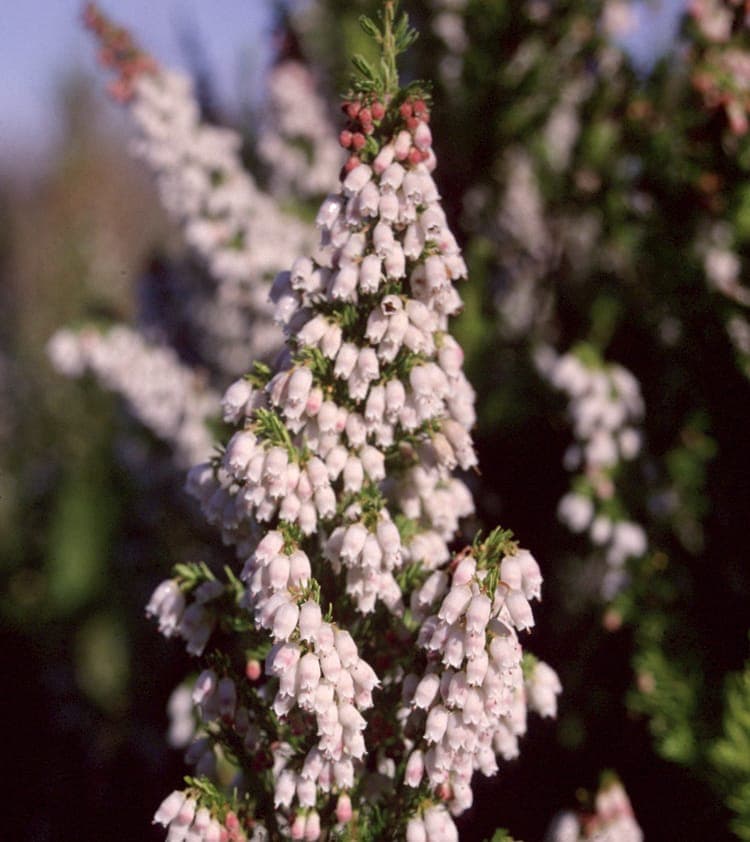
Gordon Leppig & Andrea J. Pickart / Public domain, via Wikimedia Commons
Portuguese heath: complete guide
Erica lusitanica
Want to see Portuguese heath: complete guide in your garden?
1 minute, no credit card
Overview
Portuguese heath (Erica lusitanica), also known as Spanish heath or lusitanian heath, is an elegant flowering shrub from the Ericaceae family native to the Iberian Peninsula and southern France. This ornamental plant stands out for its abundant white flowers that bloom primarily in winter through early spring. Naturally adapted to acid moorland soils, it brings Mediterranean charm and winter interest to gardens. With its compact growth habit and delicate blooms, Portuguese heath is an excellent choice for creating season-long appeal in acidic garden settings.
Appearance and bloom
Portuguese heath grows as a compact, finely-branched shrub typically reaching 60 to 120 cm in height. The needle-like foliage is narrow and greyish-green, arranged in small clusters along the stems. The flowers are the main attraction: numerous small, tubular white flowers appear in dense terminal clusters. The flowering period extends from January through March, making it invaluable for winter gardens. The blooms attract early-season pollinators and provide visual interest when few other plants are flowering.
Ideal location
Select a sunny to lightly shaded position for Portuguese heath. At least 6-8 hours of direct sunlight daily ensures optimal growth and abundant flowering. Protect from harsh winds, particularly winter gales. In regions with intense summer heat, dappled afternoon shade is beneficial. Ensure good air circulation around the plant to prevent disease. South-facing walls or sheltered garden corners provide ideal conditions for this Mediterranean species.
Soil
Portuguese heath requires acidic, well-draining soil with pH 4.5-5.0. Consistent moisture without waterlogging is essential for healthy growth. Incorporate humus-rich amendments such as peat or leaf mold to improve water retention while maintaining excellent drainage. Heavy clay soils must be improved with sand and organic matter. Consider raised beds if native soil cannot be adequately amended. For container cultivation, use acid-loving plant compost.
Free design
Want to see Portuguese heath: complete guide in your garden? Make a free design now.
Watering
Water when the top 2-3 cm of soil feels dry, particularly during the growing season. Regular moisture is critical without waterlogging. Summer may require more frequent watering, especially during dry spells. In winter, as growth slows, reduce watering gradually but never allow the plant to dry completely. Rainwater is preferable to hard tap water. For container plants, ensure drainage holes and avoid saucers that collect standing water.
Pruning
Light pruning maintains a compact, full-bodied plant. Following bloom in March or April, gently remove about 5-10 cm from the shoot tips to encourage branching and dense growth. Heaths respond poorly to severe cutting into old wood, so avoid heavy pruning. Remove dead or damaged branches throughout the year. Annual light pruning maintains shape without causing vegetative shock.
Maintenance calendar
January-March: Flowering period, minimal pruning. March-April: Post-bloom, light shaping. May-September: Growing season, regular watering, no fertilization needed. October-December: Winter preparation, adjust watering. Year-round: Remove dead foliage, inspect for damage.
Winter hardiness
Portuguese heath is moderately hardy to USDA zone 8 (minimum temperatures around -12 to -9 degrees Celsius). In cold regions, winter protection may be beneficial. Mulch around the base with 5-10 cm of leaf mold or heather mulch for root protection. Site selection near south-facing walls or under winter cloth protects during severe freezes. In areas with regular hard frosts, container cultivation allowing indoor overwintering may be necessary.
Companion plants
Pair Portuguese heath with other acid-loving plants: additional Erica species, ornamental grasses like Festuca glauca, winter-active groundcovers, and small Japanese maples. Early spring snowdrops and hellebores add color beneath the heather. Azaleas and rhododendrons are excellent companions. Avoid lime-loving plants.
Closing thoughts
Portuguese heath offers remarkable value: winter flowering when most gardens are bare, graceful form, minimal maintenance, and pollinator appeal. This shrub earns its place in any Mediterranean or acid-soil garden. With attention to soil preparation and drainage, you'll enjoy years of delicate blooms and year-round foliage interest. Start with one or more plants in a grouping, and you'll discover why gardeners treasure this winter-flowering gem.
Want to see Portuguese heath: complete guide in your garden? Make a free design now.
Upload a photo, pick a style, and get a photorealistic design with plant list in under a minute.
No credit card required


Similar plants
Zenobia pulverulenta: complete guide
Zenobia pulverulenta
Everything about Zenobia pulverulenta (honeycup): siting, acid soil, pruning and the fragrant white bells, in this complete care guide.
Dwarf huckleberry: complete guide
Gaylussacia dumosa
Everything about dwarf huckleberry (Gaylussacia dumosa): acidic soil, partial shade, pruning and care for this compact North American berry shrub.
Drooping leucothoe: complete guide
Leucothoe fontanesiana
Everything about drooping leucothoe (Leucothoe fontanesiana): shade tolerance, soil, watering, pruning, hardiness and companion plants.