
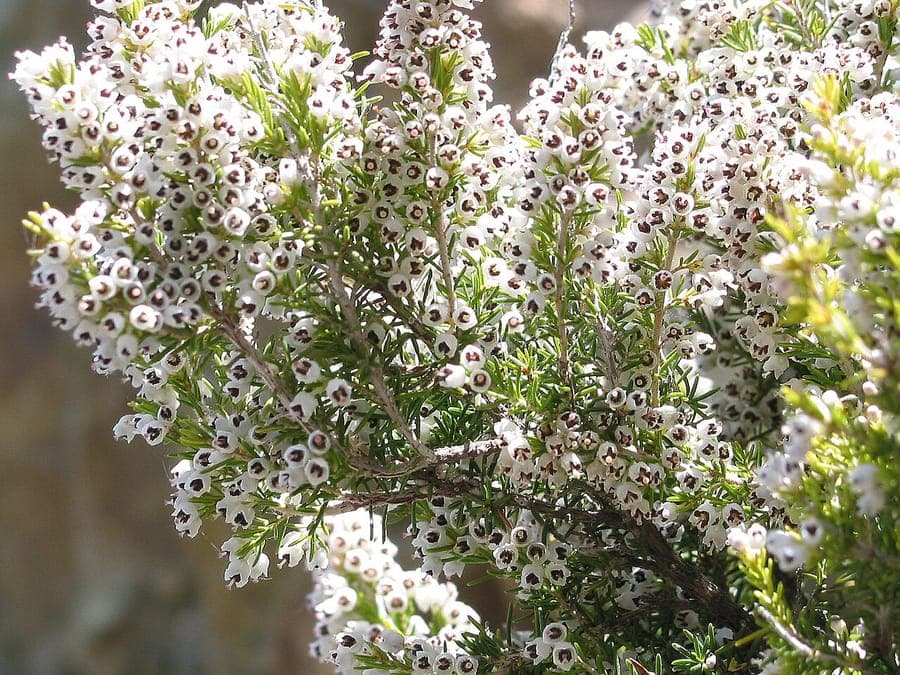
Jean-Pol GRANDMONT / CC BY 3.0, via Wikimedia Commons
Tree heath: complete guide
Erica arborea
Want to see Tree heath: complete guide in your garden?
1 minute, no credit card
Overview
Erica arborea, commonly known as tree heath, stands out in the heather family for its upright, almost tree-like form - a rare trait among ericas. While most heathers stay low to the ground, this species can reach up to 3 meters in height over time, making it a striking structural addition to the garden. Native to southern Europe and North Africa, it thrives in sunny, well-drained, acidic conditions and brings year-round greenery to landscapes.
Its slow but steady growth makes it ideal for long-term garden planning. It won't dominate, but it does provide vertical interest, especially useful in Mediterranean-style gardens or coastal sites. Whether grown as a specimen shrub, informal hedge, or part of a mixed heath bed, tree heath adds texture and resilience. On gardenworld.app, you can design a planting scheme that positions Erica arborea for maximum impact, balancing height and bloom timing with companion plants.
Appearance & bloom cycle
Tree heath features narrow, dark green leaves arranged in whorls of three along slender stems. Each leaf measures about 8–12 mm and gives the plant a fine, feathery texture. From March through May, clusters of small, bell-shaped white flowers appear at the tips of the branches. These blooms are not only delicate in appearance but also attract early pollinators like bees and hoverflies.
The flowering period bridges late winter and early summer, making it a valuable link in the garden's seasonal rhythm. Mature plants can produce so many flowers that they almost obscure the foliage. After blooming, small woody capsules form and may remain on the plant for several years before releasing seed.
Ideal location
Plant Erica arborea in full sun - aim for a light level of 8 or higher, meaning at least 6 hours of direct sunlight daily. South- or southwest-facing spots work best. It tolerates coastal exposure and light salt spray, making it a solid choice for seaside gardens. However, avoid shady areas; insufficient light leads to sparse growth and poor flowering.
While it handles wind well, young plants benefit from some protection during their first few winters. A nearby wall, fence, or windbreak can shield tender shoots. In colder microclimates, even mature plants may suffer tip dieback during harsh spells.
Soil requirements
Tree heath demands acidic, well-drained soil with a pH between 5.0 and 5.5. Sandy or gravelly soils are ideal. If your garden has heavy clay, amend it with coarse sand, pine bark, and ericaceous compost to improve drainage and lower pH. Avoid liming the soil - this plant cannot tolerate alkaline conditions.
In areas with high soil pH, consider growing Erica arborea in raised beds or large containers filled with ericaceous compost. Look for suitable mixes at garden centres like B&Q, Wyevale, or local independents. Ensure containers have adequate drainage holes to prevent waterlogging.
Free design
Want to see Tree heath: complete guide in your garden? Make a free design now.
Watering
Water young plants weekly during dry spells in spring and summer. Use rainwater when possible - tree heath is sensitive to lime in tap water. Once established, it becomes moderately drought-tolerant, but prolonged dry periods still require supplemental watering.
Mulch with pine needles or bark chips to conserve moisture and suppress weeds. Never let the roots sit in soggy soil. Overwatering is a common cause of failure, especially in winter.
Pruning
Pruning is rarely needed, but light trimming after flowering (in June) helps maintain shape and encourages bushiness. Cut back only into green wood - avoid cutting into old, bare stems, as regrowth is unlikely. Use clean, sharp shears and remove any dead or damaged branches as needed.
For hedges or formal plantings, light annual shaping is acceptable. Avoid heavy pruning; this species does not recover well from severe cuts. Keep the centre of the plant open to allow airflow and reduce fungal issues.
Maintenance calendar
- Jan: Check for frost damage, remove broken stems
- Feb: Monitor for early bud swell, no watering needed
- Mar: Flowers begin, watch for dry spells
- Apr: Peak bloom, ensure consistent moisture
- May: Flowering ends, light pruning window opens
- Jun: Trim lightly if desired, refresh mulch
- Jul: Minimal care, check for pests like aphids
- Aug: Water during extended droughts
- Sep: No feeding, plant enters dormancy
- Oct: Leave fallen debris as natural mulch
- Nov: Protect young plants with fleece or burlap
- Dec: Final winter check, secure wind protection
Winter hardiness
Erica arborea is hardy in USDA zones 8–10. In the UK and Ireland (zone 8), it generally survives mild winters but may suffer in exposed sites or during prolonged freezes below -10°C. Young plants are more vulnerable - protect them with horticultural fleece or by planting near a sheltered wall.
Mature specimens tolerate cold better but can still experience tip dieback in severe winters. Avoid de-icing salts nearby, as both sodium and magnesium chloride can damage foliage.
Companion plants
Pair tree heath with other acid-loving shrubs such as Calluna vulgaris, Rhododendron 'PJM', and Pieris 'Forest Flame'. Low-growing companions like Thymus pseudolanuginosus or Sedum spurium add ground-level contrast. For Mediterranean schemes, combine with Lavandula, Cistus, or Phlomis fruticosa.
Its upright form contrasts well with mounding plants like Euphorbia characias or grasses such as Stipa tenuissima. Use it as a backdrop for shorter perennials or as a vertical accent in gravel gardens.
Closing
Erica arborea is a rewarding choice for gardeners seeking structure, subtle beauty, and year-round presence. It's not flashy, but its quiet elegance and resilience make it a garden staple in the right setting. With patience, it develops into a striking, long-lived shrub.
Whether you're designing a coastal retreat or a drought-tolerant border, gardenworld.app helps you place tree heath exactly where it will thrive. Explore layout ideas, get plant recommendations, and build a garden that works with your soil and light conditions.
Want to see Tree heath: complete guide in your garden? Make a free design now.
Upload a photo, pick a style, and get a photorealistic design with plant list in under a minute.
No credit card required


Similar plants
Zenobia pulverulenta: complete guide
Zenobia pulverulenta
Everything about Zenobia pulverulenta (honeycup): siting, acid soil, pruning and the fragrant white bells, in this complete care guide.
Dwarf huckleberry: complete guide
Gaylussacia dumosa
Everything about dwarf huckleberry (Gaylussacia dumosa): acidic soil, partial shade, pruning and care for this compact North American berry shrub.
Drooping leucothoe: complete guide
Leucothoe fontanesiana
Everything about drooping leucothoe (Leucothoe fontanesiana): shade tolerance, soil, watering, pruning, hardiness and companion plants.