
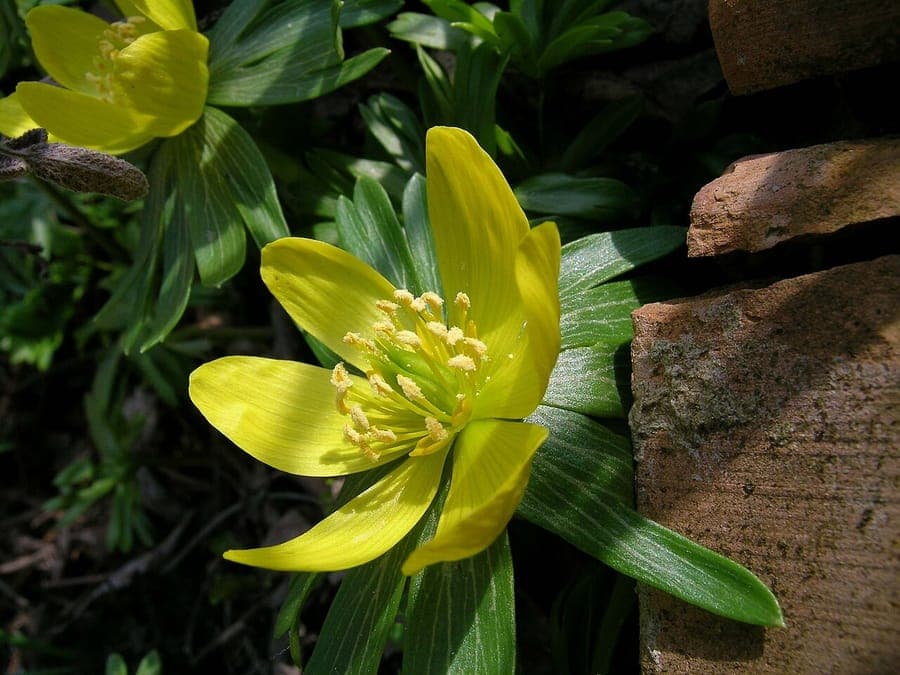
Wikimedia Commons / CC BY-SA 3.0, via Wikimedia Commons
Winter-aconite: complete guide
Eranthis hyemalis
Want to see Winter-aconite: complete guide in your garden?
1 minute, no credit card
Overview
Eranthis hyemalis, commonly known as winter-aconite, is one of the earliest heralds of spring in the garden. A member of the Ranunculaceae family, this small herbaceous perennial hails from parts of southern Europe, including Bulgaria, France, Italy, and the Lebanon-Syria region. With its cheerful yellow blooms appearing as early as January, it's a lifeline for gardeners weary of winter's grey skies. Standing just 5 to 10 cm tall, it's perfect for naturalising under shrubs, trees, or along pathways.
This plant thrives in informal, woodland-style gardens and spreads gently over time through self-seeding. If you're designing a low-maintenance spring display, check out gardenworld.app for layout ideas featuring winter-aconite paired with snowdrops or crocus. It fits beautifully into cottage gardens or under deciduous trees where it gets early sun before the canopy fills in.
Appearance & bloom cycle
Winter-aconite blooms from January to mid-March, depending on local climate. Its bright yellow, cup-shaped flowers sit just above a ruff of deeply divided, dark green bracts. The flowers open fully in sunlight and close during cold or overcast weather - a charming survival tactic. Each bloom lasts two to three weeks, and in mild winters, you might even see them pushing through light snow.
What makes it special is not just its timing, but its resilience. The foliage dies back completely by late April or May, so it doesn't clash with later perennials. It's a true ephemeral: short-lived above ground, but deeply rooted in the soil's rhythm.
Ideal location
Winter-aconite prefers a light level of 4 out of 10, meaning it does best in partial to full shade. Ideal spots include beneath deciduous trees like maples or birches, where it gets early sun but summer shade. Avoid hot, south-facing borders with all-day sun - these dry out too fast and shorten the plant's active period.
Plant in groups of 10 to 15 tubers for visual impact. For best results, plant in the autumn (September to November). On gardenworld.app, you'll find garden plans showing how to layer winter-aconite with hellebores and early violets for a seamless spring transition.
Soil requirements
This plant likes moist, well-drained soil rich in organic matter. The ideal pH range is 6.5 to 7 - slightly acidic to neutral. Heavy clay soils should be amended with compost or leaf mould, while sandy soils benefit from added humus or well-rotted manure.
Plant tubers 5 to 8 cm deep, with the growing tip facing up. They thrive in woodland conditions, where the soil is loose and enriched by years of fallen leaves. Avoid waterlogged sites - wet soil in summer leads to tuber rot.
Free design
Want to see Winter-aconite: complete guide in your garden? Make a free design now.
Watering
During active growth (January to March), winter-aconite needs consistent moisture. If your winter is dry, water lightly during frost-free periods. Once the foliage yellows in April, stop watering entirely - the plant enters dormancy and doesn't need moisture until the next winter.
Mulching with leaf litter or compost helps retain moisture and mimics natural forest floor conditions. This also protects tubers from temperature swings and improves soil structure over time.
Pruning
No pruning is required. The plant dies back naturally after flowering. Never cut the leaves while they're still green - they're busy photosynthesising and storing energy for next year's bloom. Wait until the foliage turns yellow and collapses before removing it.
If you dislike the look of dying foliage, plant winter-aconite near later-emerging perennials like hostas or ferns that will cover the bare spots by May.
Maintenance calendar
- January–March: Monitor for blooms, water lightly if dry
- April: Let foliage die back naturally; no pruning
- May–August: Dormant period - no care needed
- September–October: Ideal time to plant new tubers
- November–December: Check drainage; avoid waterlogging
Winter hardiness
Winter-aconite is extremely cold-hardy, surviving down to -20°C (USDA zones 4–8). The flowers are frost-tolerant and often bloom through snow. In milder regions like the UK or Pacific Northwest, it naturalises easily in woodlands and rock gardens.
In colder zones, ensure the planting site has good snow cover or mulch to insulate the tubers. Avoid areas prone to ice crusts or repeated freeze-thaw cycles, which can heave the tubers to the surface.
Companion plants
Pair winter-aconite with other early bloomers like Galanthus (snowdrops), Crocus tommasinianus, or Chionodoxa. Under trees, it combines beautifully with Pulmonaria, Helleborus, or Epimedium. It also works well in rock gardens or at the base of ornamental shrubs.
Bees and early hoverflies love the nectar, making this a wildlife-friendly choice. Avoid planting too close to aggressive spreaders like ivy or mint, which can crowd it out.
Closing
Winter-aconite is one of the most reliable and cheerful early bloomers you can grow. With minimal effort and the right spot in your garden, it returns year after year with a burst of golden cheer. Plant in drifts, give it partial shade and humus-rich soil, and you'll be rewarded with a carpet of light.
Available at garden centres across the UK and US in autumn, typically from September to November. Look for tubers at local nurseries or online suppliers. Plan your spring display now - and for design inspiration, browse gardenworld.app to see how winter-aconite fits into layered, naturalistic planting schemes.
Want to see Winter-aconite: complete guide in your garden? Make a free design now.
Upload a photo, pick a style, and get a photorealistic design with plant list in under a minute.
No credit card required


Similar plants
Drummond's anemone: complete guide
Anemone drummondii
Discover Drummond's anemone (Anemone drummondii): a silvery-grey mountain plant for cool rock gardens and alpine troughs.
Korean clematis: complete guide
Clematis serratifolia
Clematis serratifolia is a hardy climber with fragrant yellow bell flowers in August-September. Pruning group 3, location and care tips.
Aquilegia brevistyla: complete guide
Aquilegia brevistyla
Discover Aquilegia brevistyla, the elegant North American columbine. Growing tips, shade tolerance, and design ideas for woodland and shadowed gardens.