
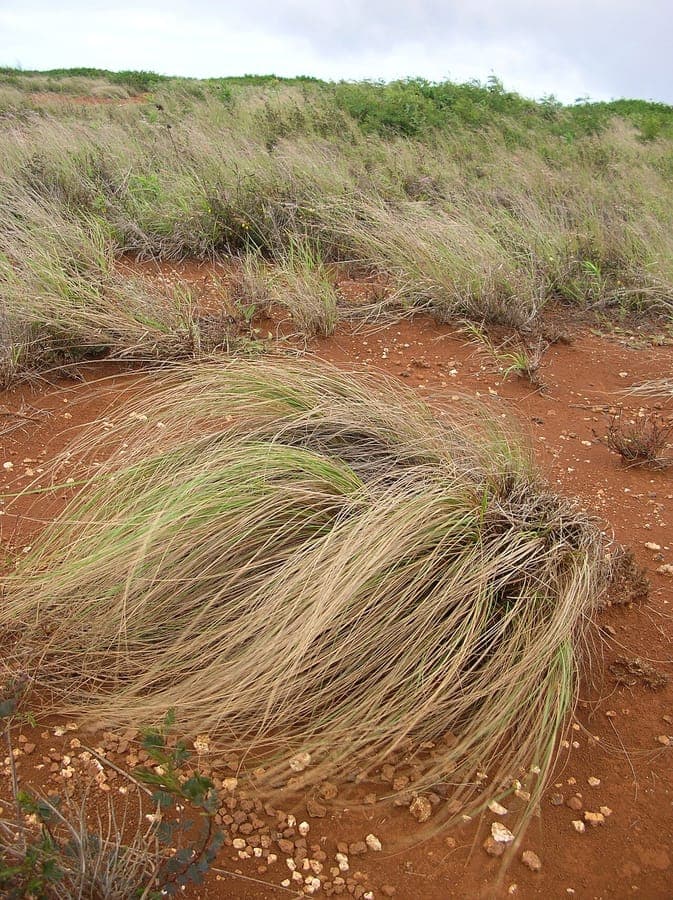
Forest & Kim Starr / CC BY 3.0, via Wikimedia Commons
African love grass: complete guide
Eragrostis curvula
Want to see African love grass: complete guide in your garden?
1 minute, no credit card
Overview
African love grass (Eragrostis curvula) is an ornamental grass known for its graceful, arching form and resilience in tough conditions. Native to regions across southern and eastern Africa-including Angola, Kenya, and South Africa-it belongs to the Poaceae family and adapts well to temperate climates. In the UK and northern Europe, it's often used in contemporary garden designs for its fine texture and drought tolerance. It thrives in dry, sunny borders, gravel gardens, and on slopes where other plants struggle.
One thing many gardeners overlook: African love grass can self-seed freely in ideal conditions. While not typically invasive in cooler climates, it's wise to deadhead the plumes before they fully mature if you want to prevent spread. On gardenworld.app, you can design a planting scheme that balances this grass with companion plants to reduce unwanted seeding while enhancing visual flow.
Appearance & bloom cycle
This clump-forming grass reaches 60–120 cm in height, with a spread of 40–60 cm. The foliage is fine, narrow (about 2 mm wide), and ranges from light green to grey-green. Leaves emerge densely from the base and arch outward and downward, creating a fountain-like effect. From August to October, airy flower panicles appear-pale yellow to golden brown, floating above the foliage like soft clouds. The bloom isn't flashy, but it adds texture and movement, especially in late summer and autumn.
In winter, the grass turns a warm golden-brown and remains upright, offering structure and interest when much of the garden has gone dormant. Leaving it standing through winter also provides shelter for beneficial insects.
Ideal location
African love grass loves full sun. Plant it where it gets at least 6 hours of direct sunlight daily for the tightest, most compact growth. It performs best on south- or southwest-facing banks, in gravel gardens, or in rockeries with minimal competition. Avoid shady, damp corners-these conditions lead to floppy, sparse growth. In cooler zones, a sheltered spot near a wall can help it survive colder winters.
Use gardenworld.app to assess sun exposure in your garden and test whether your soil drainage matches the needs of Eragrostis curvula before planting.
Soil requirements
This grass is incredibly adaptable. It grows in sandy, loamy, or even poor, stony soils. The pH range is broad-anywhere from 4.5 (acidic) to 8.5 (slightly alkaline). What it won't tolerate is waterlogged soil. Ensure excellent drainage by amending heavy clay with grit or sand. Raised beds or sloped areas work best. If your soil stays wet in winter, consider growing it in a container with a free-draining mix.
Free design
Want to see African love grass: complete guide in your garden? Make a free design now.
Watering
Once established, African love grass is highly drought-tolerant. During the first growing season, however, water weekly during dry spells to help roots settle. Deep, infrequent watering is better than daily sprinkling. After year one, it usually survives on rainfall alone-except during prolonged droughts.
Don't water in winter. The plant is dormant, and wet roots in cold soil can lead to rot.
Pruning
Minimal pruning is needed. Leave the grass standing over winter for visual interest. In early spring (late February to early March), cut back the old foliage to about 15–20 cm above ground level. Use sharp shears or grass cutters. Wear gloves-the leaves can be slightly abrasive. Removing old growth encourages fresh, tidy new blades.
Maintenance calendar
- Jan: Dormant; no action needed
- Feb: Check for damaged stems, prepare for pruning
- Mar: Cut back old growth to 20 cm, remove seed heads if desired
- Apr: Monitor new growth, apply light feed if soil is poor
- May: Watch for drought stress, especially in young plants
- Jun: No extra watering needed in average conditions
- Jul: Flowering begins; plant tolerates heat well
- Aug: Full bloom; plumes float above foliage
- Sep: Peak flowering; check for self-seeding
- Oct: Plumes fade; consider cutting back if not left for winter effect
- Nov: Leave standing for winter structure
- Dec: Dormant; protect base if wet winters
Winter hardiness
African love grass is hardy in USDA zones 7–10. In the UK (zone 8), it usually survives winter well, especially in dry, well-drained spots. In areas with cold, wet winters, crown rot can occur. Young plants benefit from a light mulch of dry leaves or straw around the base to shield from excess moisture.
Companion plants
Pair this grass with other drought-tolerant perennials like Sedum 'Autumn Joy', Stipa tenuissima, or Echinacea purpurea. Its fine texture contrasts beautifully with bold-leaved plants like Euphorbia characias or Geranium 'Johnson's Blue'. For naturalistic planting, combine with Verbena bonariensis or Thymus vulgaris on a sunny bank. Avoid pairing with moisture-loving plants or aggressive spreaders like mint or bindweed.
Closing
African love grass is a low-maintenance, high-impact plant that adds movement and structure to the garden. With full sun and sharp drainage, it thrives for years with little care. Buy it in spring from garden centres like those across the UK, where it's often sold in 2- or 3-litre pots. Remember to deadhead if you want to control spread. And don't forget: on gardenworld.app, you can build a custom planting plan that integrates this grass into a balanced, sustainable design.
Want to see African love grass: complete guide in your garden? Make a free design now.
Upload a photo, pick a style, and get a photorealistic design with plant list in under a minute.
No credit card required


Similar plants
Sporobolus pungens: complete guide
Sporobolus pungens
Sporobolus pungens is a stoloniferous Mediterranean coastal grass with outstanding salt and drought tolerance, perfect for seaside and dry gardens.
Mediterranean aegilops: complete guide
Aegilops biuncialis
Everything about Aegilops biuncialis, a Mediterranean annual grass with ornamental spikes and outstanding drought tolerance for dry gardens.
Silver bluestem: complete guide
Bothriochloa saccharoides
Full guide to Bothriochloa saccharoides (silver bluestem): site, soil, watering, winter hardiness, pruning, and garden companions.