
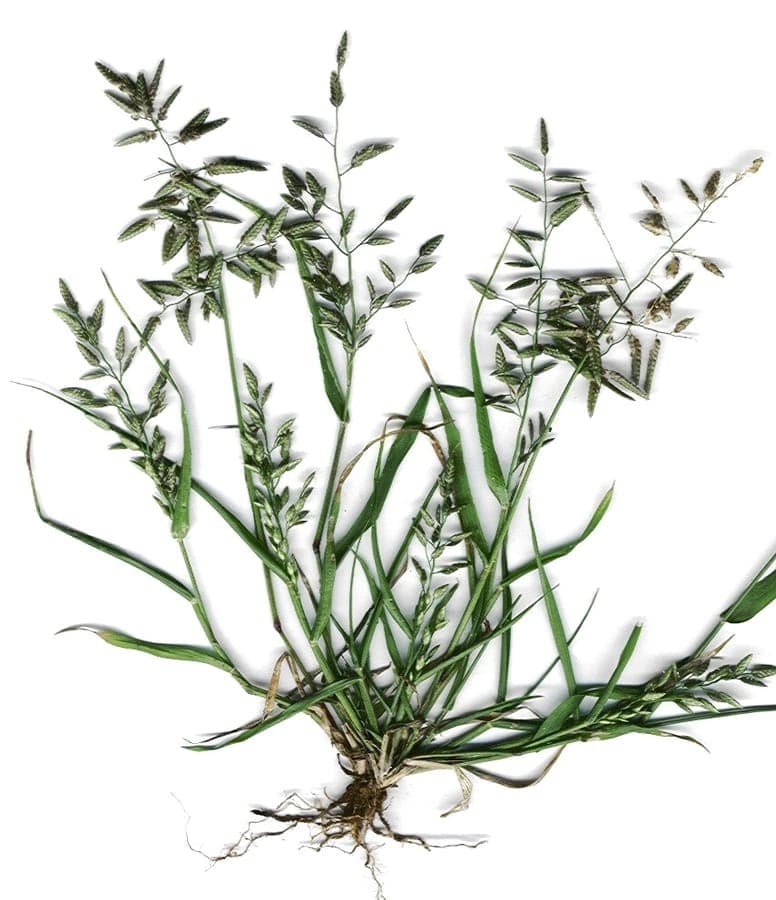
Forest & Kim Starr / CC BY 3.0, via Wikimedia Commons
Stinkgrass: complete guide
Eragrostis cilianensis
Want to see Stinkgrass: complete guide in your garden?
1 minute, no credit card
Overview
Stinkgrass (Eragrostis cilianensis) is an annual grass species that shows up where you least expect it - along pathways, in gravel beds, or in neglected corners of the garden. It's not a showstopper, but it has a quiet charm, especially when its delicate seed heads catch the late summer light. Native to parts of Africa, Asia and southern Europe, it's adapted to hot, dry conditions and thrives in poor soils.
While not commonly sold in garden centres, it sometimes appears as a volunteer. If you want to grow it intentionally, you can collect seed from wild plants in late summer or source it online. On gardenworld.app, you can design a drought-tolerant garden scheme where Stinkgrass adds subtle texture without demanding attention.
Appearance & bloom cycle
Stinkgrass grows 30–60 cm tall with a loose, open habit. The leaves are narrow, soft, and slightly hairy. Crush them, and you'll notice a faint, musky scent - not unpleasant, but distinctive enough to earn its common name. From June to September, airy panicles of tiny flowers appear, starting with a purplish tinge before fading to pale tan.
These flower spikes give the plant a light, dancing quality in the breeze. Each panicle produces numerous small seeds that disperse easily by wind. If you don't want it spreading, cut the seed heads before they mature. Otherwise, let them stand - birds like goldfinches will pick at the seeds in autumn.
Ideal location
Full sun is non-negotiable. Aim for at least 7 hours of direct sunlight daily. South- or southwest-facing spots work best. It tolerates heat and exposure, making it suitable for rock gardens, gravel beds, or between paving stones where other plants struggle.
Avoid shaded or damp areas. Stinkgrass won't flower well and may rot in heavy, waterlogged soil. It's ideal for xeriscaping or low-effort borders where you want greenery without constant care.
Soil requirements
It prefers lean, well-drained soils with a pH of 7.5–8.0. Chalky, sandy, or stony substrates are perfect. Rich garden soil with compost or fertilizer leads to weak, floppy growth. If your bed is too fertile, mix in grit or gravel to improve drainage and reduce nutrient levels.
No soil prep is needed if you're welcoming it as a volunteer. In fact, the more neglected the spot, the better it often performs.
Free design
Want to see Stinkgrass: complete guide in your garden? Make a free design now.
Watering
Once established, Stinkgrass needs no supplemental watering. Seedlings should be kept lightly moist for the first few weeks, but after that, it relies on natural rainfall. Overwatering increases the risk of fungal issues and root rot.
In exceptionally dry summers, a light soak every few weeks may help seedlings survive, but mature plants handle drought with ease. This is a grass built for survival, not luxury.
Pruning
No pruning is required. As an annual, it dies back completely in autumn. You can tidy up dead stems in late winter if they look messy, but leaving them provides winter structure and food for birds.
To control spread, cut the flowering stems before seeds ripen - late August is a good time. If you want self-seeding, let nature take its course.
Maintenance calendar
- January: Dormant; no action needed
- February: Check for early seedlings in mild, sunny spots
- March: Sow seeds directly outdoors from mid-March if soil has warmed and dried
- April: Protect young plants from cold snaps; avoid overwatering
- May: Plants establish; keep soil on the dry side
- June: First blooms appear; monitor for spreading
- July: Peak flowering; scent strongest on warm days
- August: Seeds begin to form; cut back if containment is needed
- September: Bloom fades; leave seed heads for wildlife or remove
- October: Clear dead foliage or leave for winter interest
- November: No care required
- December: Fully dormant
Winter hardiness
Stinkgrass is not winter-hardy as a mature plant. It completes its life cycle in one season. However, seeds can overwinter in the soil and germinate the following spring, especially in USDA zones 7–10. In milder areas, you might see early sprouts as early as December.
It doesn't provide winter colour, but dried stems add skeletal structure to the garden. Pair it with evergreen perennials or ornamental grasses like Panicum or Calamagrostis for year-round texture.
Companion plants
Grow Stinkgrass alongside drought-tolerant species: lavender, sedum, yarrow, or Russian sage. These share its preference for full sun and lean soil. Avoid pairing it with aggressive spreaders or heavy feeders that will outcompete it.
Use the plant combination tool on gardenworld.app to visualise how Stinkgrass fits into your existing borders. It works well as a filler, adding movement without dominating.
Closing
Stinkgrass won't win any beauty contests, but it's a survivor. It asks for little, gives texture and movement, and supports small wildlife. Whether you welcome it as a deliberate choice or a happy accident, it has a place in low-maintenance, ecologically minded gardens. Just be mindful of its tendency to spread - and embrace its quirky charm.
Want to see Stinkgrass: complete guide in your garden? Make a free design now.
Upload a photo, pick a style, and get a photorealistic design with plant list in under a minute.
No credit card required


Similar plants
Sporobolus pungens: complete guide
Sporobolus pungens
Sporobolus pungens is a stoloniferous Mediterranean coastal grass with outstanding salt and drought tolerance, perfect for seaside and dry gardens.
Mediterranean aegilops: complete guide
Aegilops biuncialis
Everything about Aegilops biuncialis, a Mediterranean annual grass with ornamental spikes and outstanding drought tolerance for dry gardens.
Silver bluestem: complete guide
Bothriochloa saccharoides
Full guide to Bothriochloa saccharoides (silver bluestem): site, soil, watering, winter hardiness, pruning, and garden companions.